Golf cart troubleshooting often feels like a puzzle, especially when your trusty vehicle decides to act up right before a round of golf or a crucial errand. From a sudden loss of power to mysterious grinding noises, golf cart problems can be frustrating. However, with a systematic approach and the right knowledge, many common issues can be diagnosed and resolved, saving you time and money.
This comprehensive guide provides essential fixes and insights into effective golf cart troubleshooting, empowering you to understand and address your cart’s needs.
Whether you are a seasoned golf cart owner or new to the world of electric and gas carts, understanding the basics of how these machines operate is key. We will delve into common symptoms, their underlying causes, and practical steps you can take to get your golf cart running smoothly again. For residents of Pompano Beach, FL, Phoenix Golf Car stands ready to assist with expert diagnostics and repairs when DIY solutions aren’t enough.
Key Takeaways for Effective Golf Cart Troubleshooting
- Master the essential steps for diagnosing common golf cart problems, from power issues to performance dips.
- Understand the critical role of battery health and charging practices in preventing frequent breakdowns.
- Learn how to identify and test key components like solenoids and controllers, crucial for accurate golf cart troubleshooting.
- Discover when a DIY fix is appropriate and when it’s time to seek professional golf cart repair services for complex issues.
Understanding Common Golf Cart Troubleshooting Challenges
Every golf cart owner eventually faces a moment of uncertainty when their vehicle doesn’t perform as expected. Effective golf cart troubleshooting begins with understanding the most frequent culprits behind these issues. These often include battery problems, electrical component failures, motor wear, or even simple maintenance oversights. Recognizing the symptoms early can prevent minor glitches from escalating into major repairs.
Modern golf carts, whether electric or gas-powered, are complex machines with interconnected systems. A problem in one area, such as a faulty battery, can manifest as symptoms in another, like a slow motor. This interconnectedness makes a systematic approach to diagnosis crucial. We will explore the common areas where problems arise, providing a roadmap for your golf cart troubleshooting efforts.
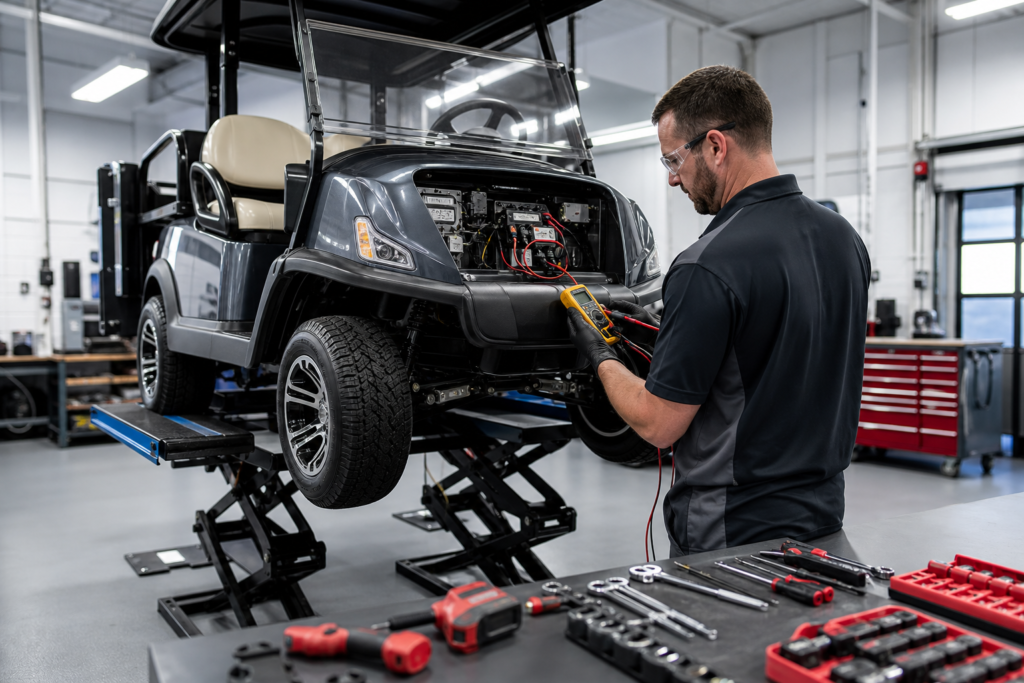
Before diving into specific fixes, it is essential to gather some basic tools. A multimeter, a wrench set, battery terminal cleaner, and safety glasses are fundamental for most diagnostic tasks. Having these items on hand will streamline your diagnostic process and ensure you are prepared for various scenarios.
Essential Tools for Golf Cart Maintenance
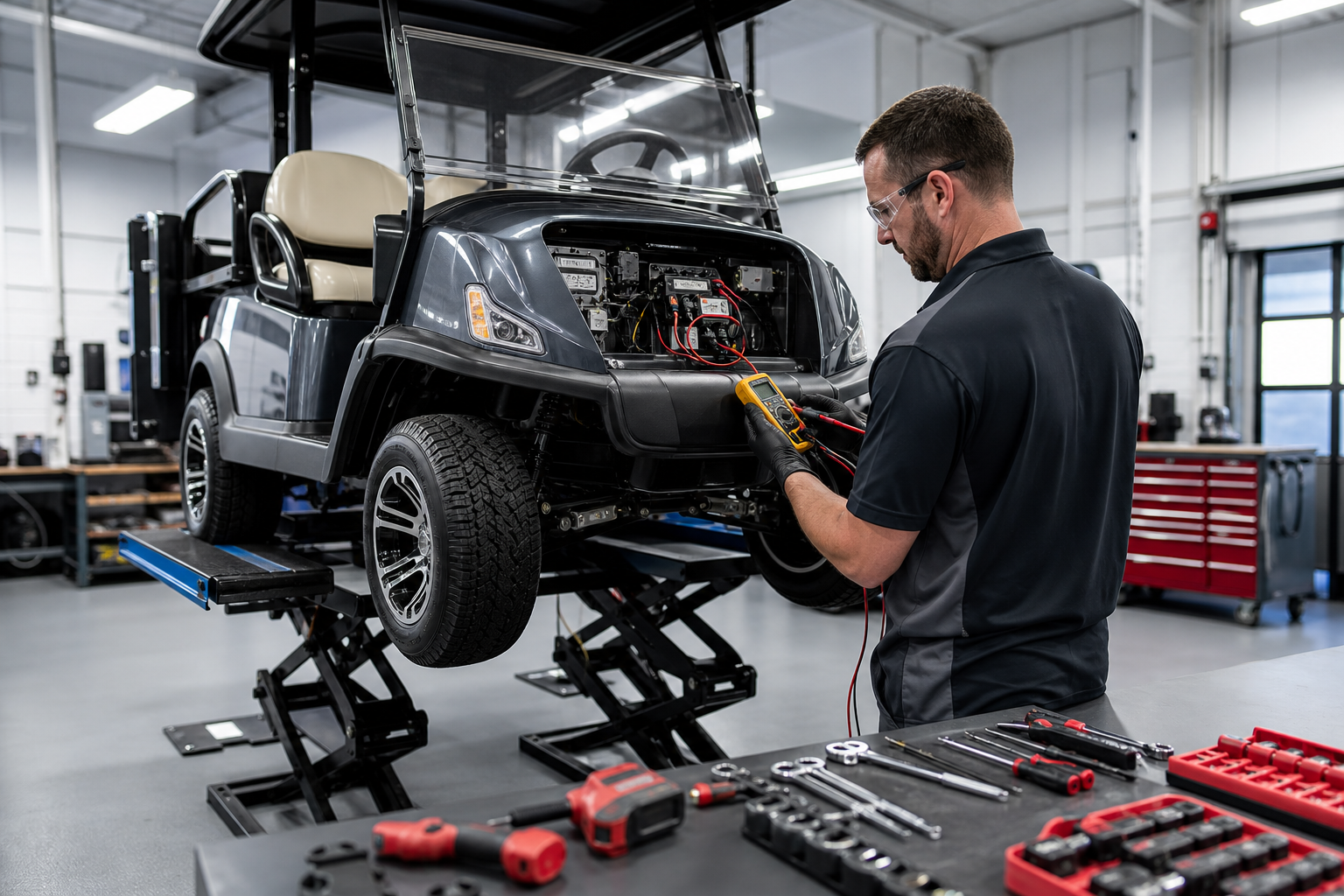
For any serious golf cart owner, a basic toolkit is indispensable. A digital multimeter is perhaps the most critical tool, allowing you to check voltage, continuity, and resistance across various components. This is vital for diagnosing electrical issues, which are common in both electric and gas carts. Additionally, a socket set, screwdrivers, and battery terminal brushes are necessary for routine maintenance and part replacement.
Safety equipment, such as gloves and eye protection, should always be worn when working with golf cart batteries or electrical systems. These precautions protect you from potential acid splashes or electrical shocks. Always disconnect the main battery pack before performing any significant work to prevent accidental power surges or short circuits during your maintenance efforts.
Fix 1: Addressing Power Loss and Starting Issues in Golf Cart Troubleshooting
One of the most alarming problems for any golf cart owner is when the cart simply refuses to move. This can be caused by a variety of issues, ranging from simple battery problems to more complex electrical failures. Effective golf cart troubleshooting for power loss starts with the most obvious suspects and systematically works through the possibilities.
Why Won’t My Golf Cart Move? A Troubleshooting Guide
If your golf cart won’t move when you press the pedal, several components could be at fault. First, check the battery pack’s charge. Low voltage is a common culprit. Next, inspect the forward/reverse switch to ensure it’s fully engaged. A loose connection or a faulty switch can prevent power from reaching the motor. The accelerator pedal sensor or microswitch also plays a crucial role; if it’s not signaling correctly, the cart won’t engage.
Another key component to examine is the solenoid. This acts as a large relay, connecting the battery power to the motor when the pedal is pressed. If you hear a click but the cart doesn’t move, the solenoid might be activating but failing to pass current. If you hear no click, the issue could be with the pedal switch, the solenoid itself, or the controller. A systematic approach to diagnosis is essential here.
For gas golf carts, a no-start condition might involve checking the fuel level, spark plug, air filter, and carburetor. Ensure there’s fuel reaching the engine and that the spark plug is clean and firing correctly. A clogged fuel filter or a dirty carburetor can significantly impede engine startup. Always refer to your owner’s manual for specific model diagnostics.
Fix 2: Resolving Battery and Charging Problems with Golf Cart Troubleshooting
Batteries are the heart of an electric golf cart, and their health directly impacts performance. Issues with charging or maintaining a charge are incredibly common and often require careful golf cart troubleshooting. Even gas carts rely on a 12-volt battery for starting and accessories, making battery care universal.
Common Reasons Your Golf Cart Battery Won’t Charge
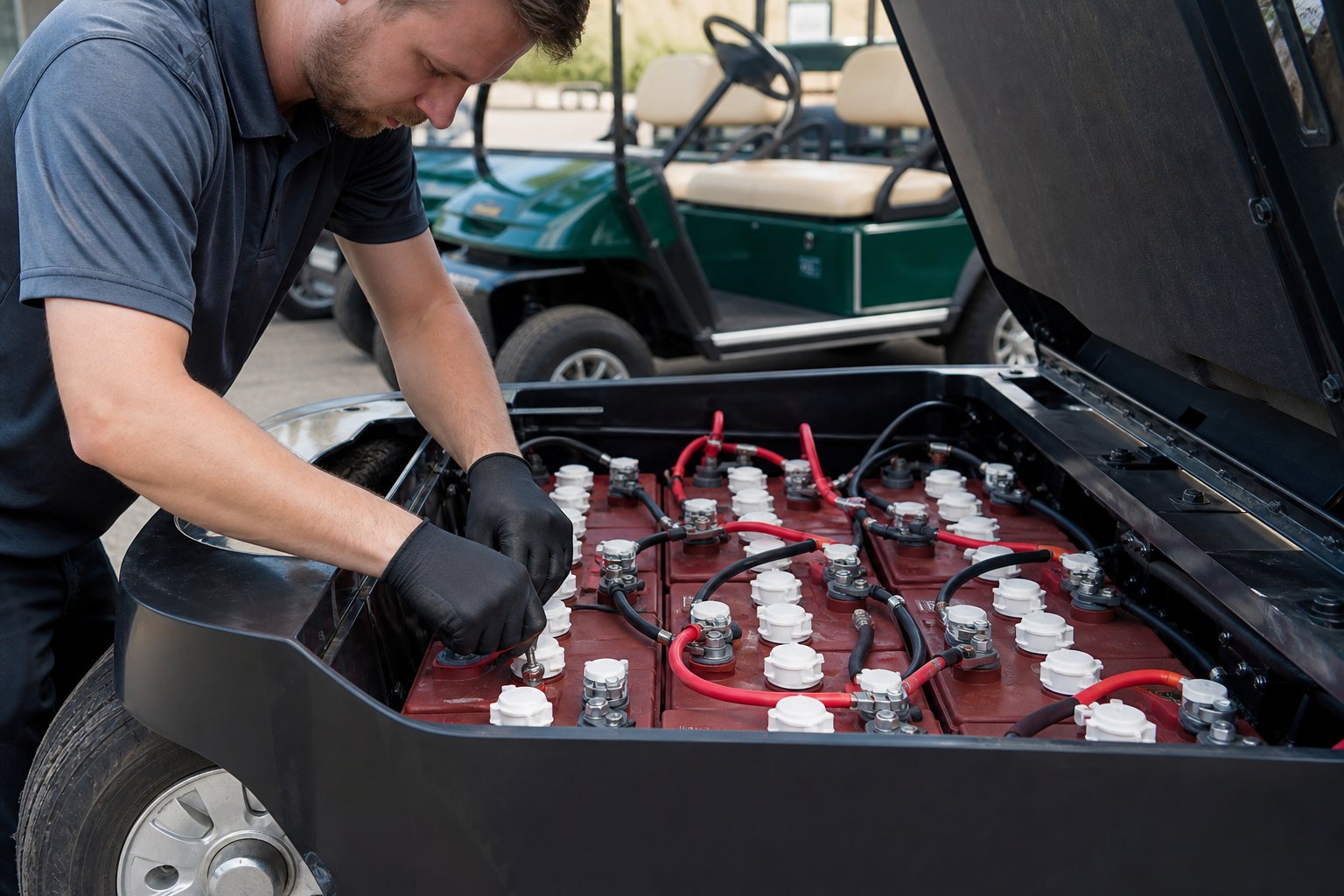
If your golf cart battery won’t charge, begin by inspecting the charger itself. Ensure it’s plugged in correctly and receiving power. Check the charger’s output voltage with a multimeter; if it’s not producing the correct voltage, the charger might be defective. Next, examine all battery connections for corrosion or looseness. Poor connections can prevent a proper charge.
Sulfated batteries are another frequent cause. This occurs when lead-acid batteries are left discharged for extended periods, forming sulfate crystals that impede charging. A battery hydrometer can test individual cell health. In some electric golf carts, a faulty onboard computer (OBC) or a defective battery charger receptacle can also prevent charging. These require specialized diagnostics or professional attention.
How Often Should Golf Cart Batteries Be Replaced?
Golf cart batteries typically need replacement every 3-5 years, depending on usage, maintenance, and battery type. Deep cycle lead-acid batteries, common in electric carts, have a finite number of charge cycles. Proper charging habits, regular water checks (for lead-acid), and keeping terminals clean can extend their lifespan. However, eventual replacement is inevitable for optimal performance and to avoid constant power-related issues.
Fix 3: Diagnosing Solenoid and Controller Failures in Golf Cart Troubleshooting
The solenoid and controller are critical electrical components in electric golf carts. A malfunction in either can lead to a complete loss of power or erratic performance. Pinpointing the exact issue requires careful diagnostic steps, making them central to advanced golf cart troubleshooting.
Testing Golf Cart Solenoids: A Key Step in Diagnosis
To test a golf cart solenoid, first ensure your batteries are fully charged and the cart is in neutral with the key on. When you press the accelerator pedal, you should hear a distinct “click” from the solenoid. If you hear the click, use a multimeter to check for continuity across the main terminals. With the pedal pressed, you should read full battery voltage across the two large terminals.
If there’s a significant voltage drop or no voltage, the solenoid is likely faulty.
If you don’t hear a click, check the small activation terminals. You should read battery voltage across them when the pedal is pressed. No voltage indicates an issue with the pedal switch, wiring, or controller. A working solenoid is crucial for proper power delivery, and its failure is a common reason for a cart not moving. This systematic approach is vital for effective diagnosis.
What is the Cost to Replace a Golf Cart Controller?
The cost to replace a golf cart controller varies significantly based on the golf cart’s make, model, and the controller’s features. Standard replacement controllers can range from a few hundred dollars to over a thousand, with high-performance or specialized controllers costing even more. Labor costs for installation will add to this. Given the complexity, controller replacement is often best left to professionals at a reputable service center like Phoenix Golf Car in Pompano Beach, FL.
This ensures proper installation and programming, avoiding further golf cart troubleshooting.
Fix 4: Tackling Performance and Speed Issues Through Golf Cart Troubleshooting
A golf cart that runs sluggishly or struggles on inclines can significantly detract from your experience. Performance issues, especially reduced speed or power, are common complaints that require specific golf cart troubleshooting techniques to resolve. These problems often point to underlying issues with the power system or drivetrain.
Why Your Golf Cart Runs Slow Uphill: Advanced Troubleshooting
If your golf cart runs slow uphill, it’s a strong indicator of weakened batteries, a failing motor, or an issue with the controller. For electric carts, undercharged or old batteries are the primary suspects. Test individual battery voltages under load to identify any weak links in the pack. A motor that is overheating or showing signs of wear will also lose power, especially when stressed by an incline.
Improperly inflated tires can also contribute to reduced performance and range, making the cart work harder. Check tire pressure regularly. For gas carts, a lack of power uphill could indicate issues with the fuel system (clogged filter, weak fuel pump), spark plugs, or engine compression. Addressing these factors is key to effective performance diagnosis.
Can I Upgrade My Golf Cart’s Motor for More Speed?
Yes, upgrading your golf cart’s motor is a common way to increase speed and torque, particularly for electric models. Aftermarket motors are available that offer higher RPMs or more power. However, a motor upgrade often requires a compatible controller and heavy-duty wiring to handle the increased current. It’s crucial to ensure all components are matched to avoid damage. Consult with a golf cart specialist to discuss compatible upgrades and avoid potential issues during your upgrade journey.
Fix 5: Steering and Noise Problems: Practical Golf Cart Troubleshooting
Beyond power and performance, steering difficulties and unusual noises can indicate mechanical problems that need immediate attention. Ignoring these symptoms can lead to safety hazards or more extensive damage. Prompt golf cart troubleshooting for these issues is crucial for safe operation.
How to Fix a Steering Problem on a Yamaha Golf Cart?
Steering problems on a Yamaha golf cart, or any make, can range from loose steering wheels to worn-out tie rods or ball joints. Start by checking the steering column for any play. A loose steering wheel nut is an easy fix. Next, inspect the tie rods and ball joints for excessive wear or damage. These components connect the steering mechanism to the wheels and are prone to wear over time, leading to loose or imprecise steering.
Additionally, check the steering box for leaks or excessive play. Lubrication of steering components can sometimes resolve minor stiffness. If the problem persists, it may indicate a more serious issue with the steering rack or gearbox, which often requires professional repair. Proper diagnosis ensures your steering is responsive and safe.
Why Is My Golf Cart Making a Grinding Noise?
A grinding noise from your golf cart is a serious symptom that should not be ignored. It often indicates a problem within the drivetrain, such as worn gears in the differential, issues with the motor’s internal components, or brake problems. For electric carts, it could be a motor bearing failure or a problem with the transaxle. For gas carts, it might point to transmission issues or clutch wear.
Immediately stop using the cart if you hear grinding. Continuing to operate it can cause catastrophic damage. Professional inspection is highly recommended to accurately diagnose the source of the grinding noise and prevent further damage. This type of diagnosis typically requires specialized tools and expertise.
Fix 6: Understanding Golf Cart Charger Diagnostics for Effective Golf Cart Troubleshooting
The charger is a vital external component that directly impacts your golf cart’s battery health and overall usability. When the charger malfunctions or displays error codes, it’s a clear signal for immediate golf cart troubleshooting. Understanding these signals can help you determine if the charger itself is the problem or if it’s indicating a deeper issue with your batteries.
What Does a Golf Cart Charger Do When It Blinks Red?
A blinking red light on a golf cart charger typically indicates an error condition. The specific meaning can vary by manufacturer (e.g., EZ-GO, Club Car, Yamaha), but common interpretations include: a bad battery connection, a battery pack that is too low to accept a charge, a faulty charger, or an internal fault within the cart’s charging system (like a bad onboard computer or receptacle). Always consult your charger’s manual for precise error code definitions.
If your charger blinks red, first ensure all connections are secure and clean. Test the battery pack voltage; if it’s extremely low, some chargers won’t initiate a charge. If the batteries seem fine, the charger itself might be the issue. This is a critical area for diagnosis, as a non-charging cart is a non-functional cart.
Need Expert Golf Cart Troubleshooting in Pompano Beach?
Don’t let golf cart problems slow you down. Phoenix Golf Car offers authoritative diagnostics and efficient repairs to get you back on the course.
Fix 7: When to Seek Professional Golf Cart Troubleshooting and Repair
While many minor golf cart issues can be resolved with DIY diagnostics, there are times when professional expertise is indispensable. Attempting complex repairs without the proper tools, knowledge, or safety precautions can lead to further damage or personal injury. Knowing when to call in the experts is a sign of responsible golf cart ownership.
Where Can I Find a Wiring Diagram for My EZ-GO Golf Cart?
Wiring diagrams for EZ-GO golf carts are often found in the owner’s manual, service manual, or on the manufacturer’s official website. Many online golf cart forums and specialized parts retailers also provide these resources. These diagrams are invaluable for complex electrical golf cart troubleshooting, helping to trace circuits and identify faulty components. Always use the diagram specific to your cart’s year and model.
Who Can Repair My Club Car Golf Cart in Pompano Beach, FL?
For residents in Pompano Beach, FL, Phoenix Golf Car specializes in Club Car repair and comprehensive golf cart troubleshooting services. Their expert technicians are equipped to handle all major golf cart brands, including EZ-GO, Club Car, and Yamaha. They offer authoritative diagnostics and efficient repairs to ensure your vehicle runs smoothly and reliably. Scheduling service with a trusted local provider ensures quality workmanship and peace of mind.
Where Can I Buy Replacement Golf Cart Parts Online?
Replacement golf cart parts can be purchased online from authorized dealers like Phoenix Golf Car, specialized e-commerce sites, or large general auto parts retailers. When buying parts, always ensure compatibility with your golf cart’s specific make, model, and year. Using genuine or high-quality aftermarket parts is crucial for the longevity and performance of your repairs, preventing the need for repeat diagnostics.
For more in-depth technical information on golf cart components and their functions, you might find resources from reputable automotive engineering sites helpful, such as SAE International’s technical papers, which often cover electric vehicle systems relevant to golf carts.
Why won’t my golf cart move when I press the pedal?
This issue can stem from several problems, including a faulty solenoid, issues with the forward/reverse switch, a malfunctioning accelerator pedal sensor, or low battery voltage. Checking these components systematically is key to golf cart troubleshooting.
What are common reasons a golf cart battery won’t charge?
Common reasons a golf cart battery won’t charge include a defective charger, poor connections, sulfated batteries, a bad battery charger receptacle, or a faulty onboard computer (OBC) in some models. Always inspect connections first during golf cart troubleshooting.
How do I test golf cart solenoids for proper function?
To test a golf cart solenoid, first ensure the batteries are fully charged. You can use a multimeter to check for continuity across the main terminals when the ignition is on and the pedal is pressed. A click indicates activation, but a voltage drop test across the main terminals is more definitive.
Where can I find a wiring diagram for my EZ-GO golf cart?
Wiring diagrams for EZ-GO golf carts are often found in the owner’s manual, service manual, or on the manufacturer’s official website. Many online golf cart forums and specialized parts retailers also provide these resources to assist with golf cart troubleshooting.
Why does my golf cart run slow uphill?
A golf cart running slow uphill often indicates weakened batteries, a failing motor, an issue with the controller, or improperly inflated tires. For electric carts, undercharged or old batteries are a primary suspect in golf cart troubleshooting for speed issues.
What tools do I need for basic golf cart maintenance?
Basic golf cart maintenance requires a multimeter, a wrench set, a socket set, battery terminal cleaner, a hydrometer (for lead-acid batteries), and safety glasses. These tools are essential for effective golf cart troubleshooting and routine care.
How often should golf cart batteries be replaced?
Golf cart batteries typically need replacement every 3-5 years, depending on usage, maintenance, and battery type. Proper charging habits and regular water checks (for lead-acid) can extend their lifespan, but eventual replacement is inevitable for optimal performance.
Who can repair my Club Car golf cart in Pompano Beach – FL?
Phoenix Golf Car specializes in Club Car repair and comprehensive golf cart troubleshooting services in Pompano Beach, FL. They have expert technicians capable of handling all major golf cart brands, ensuring your vehicle runs smoothly.
Where can I buy replacement golf cart parts online?
Replacement golf cart parts can be purchased online from authorized dealers like Phoenix Golf Car, specialized e-commerce sites, or large general auto parts retailers. Ensure compatibility with your golf cart’s make and model.
What is the cost to replace golf cart controller?
The cost to replace a golf cart controller varies significantly based on the golf cart’s make, model, and the controller’s features (e.g., standard vs. high-performance). Prices can range from a few hundred dollars to over a thousand, including labor.
Conclusion: Mastering Golf Cart Troubleshooting for a Smooth Ride
Mastering golf cart troubleshooting empowers you to address common issues with confidence, extending the life and enhancing the performance of your vehicle. From understanding battery health to diagnosing electrical glitches and mechanical noises, a proactive approach to maintenance and repair is invaluable. While many problems can be tackled with a DIY mindset, recognizing the limits of your expertise and knowing when to seek professional assistance is equally important.
Regular maintenance, combined with a solid understanding of basic diagnostics, will ensure your golf cart remains a reliable companion for years to come. For those in Pompano Beach, FL, and surrounding areas, Phoenix Golf Car remains your trusted partner for all complex golf cart repair and service needs. Keep these essential fixes in mind, and enjoy a smooth, uninterrupted ride every time.