Exploring Golf Cart Charger Types for Peak Battery Performance
Golf cart charger types are a critical component for maintaining the health and longevity of your electric golf cart’s battery system. Understanding the various options available is essential for optimal performance, ensuring your cart is always ready for the course or your daily errands. This guide will delve into the nuances of different chargers, helping you make an informed decision for your specific needs.
Choosing the right charger isn’t just about plugging it in; it’s about matching voltage, amperage, and connection types to your cart’s specifications. A mismatched charger can lead to inefficient charging, reduced battery life, or even damage. We’ll explore the ultimate choices that promise to extend your battery’s lifespan and keep your golf cart running smoothly.
Key Takeaways
- Discover the three primary golf cart charger types: off-board, on-board, and smart/automatic chargers, and their unique benefits.
- Learn how to accurately determine the correct voltage, amperage, and plug type for your golf cart to ensure compatibility.
- Understand the critical role of proper charging in extending battery life and preventing common issues.
- Identify key safety features and maintenance tips to maximize the longevity and efficiency of your charger.
Understanding the Different Golf Cart Charger Types
When it comes to powering your electric golf cart, not all chargers are created equal. The market offers a variety of golf cart charger types, each designed to meet specific needs and preferences. Knowing these distinctions is the first step toward optimizing your battery’s performance and ensuring a reliable ride every time. We will explore the primary categories that define these essential devices.
The main types available are typically categorized by their voltage output, amperage, and whether they are integrated into the cart or used externally. Automatic chargers are also a popular choice due to their advanced features and ease of use. These innovations simplify the charging process for all users.
Off-Board Golf Cart Charger Types: Portability and Power
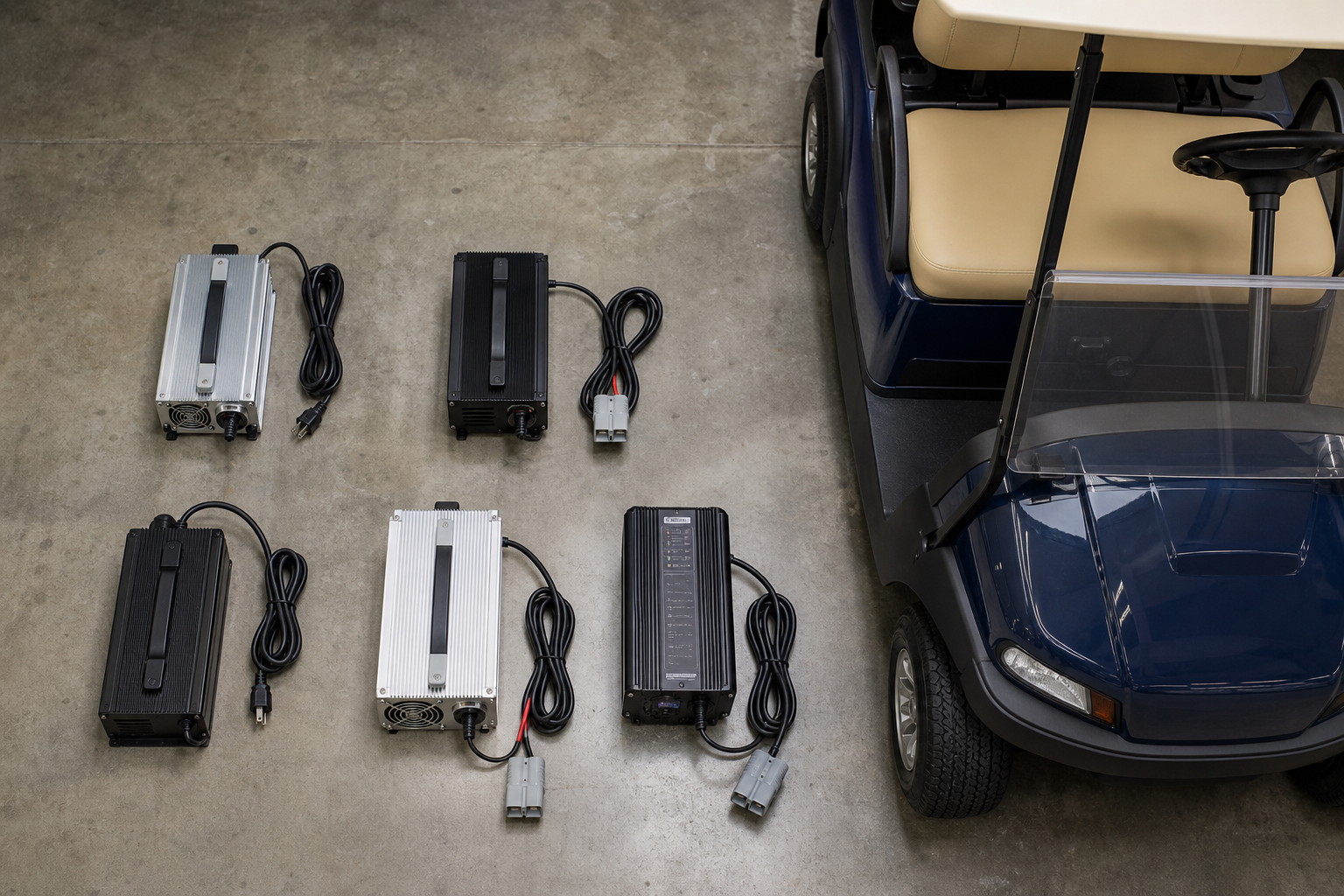
Off-board chargers are the most common and recognizable golf cart charger types. These are separate, portable units that you connect to your golf cart’s charging port when needed. They offer flexibility, allowing you to charge your cart anywhere there’s an accessible power outlet. Many off-board models come with various voltage and amperage options, catering to different cart models and desired charging speeds.
On-Board Golf Cart Charger Types: Convenience and Integration
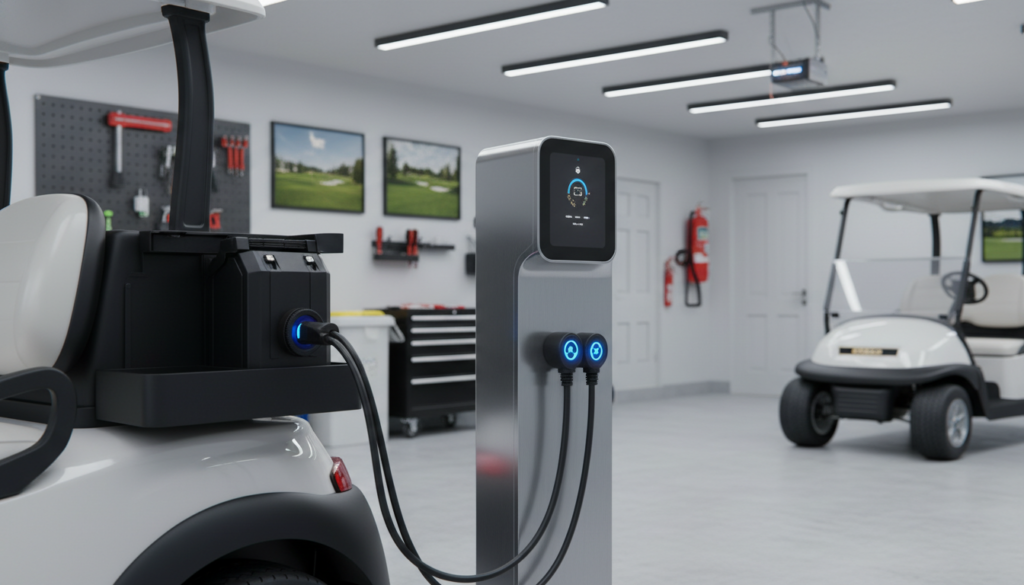
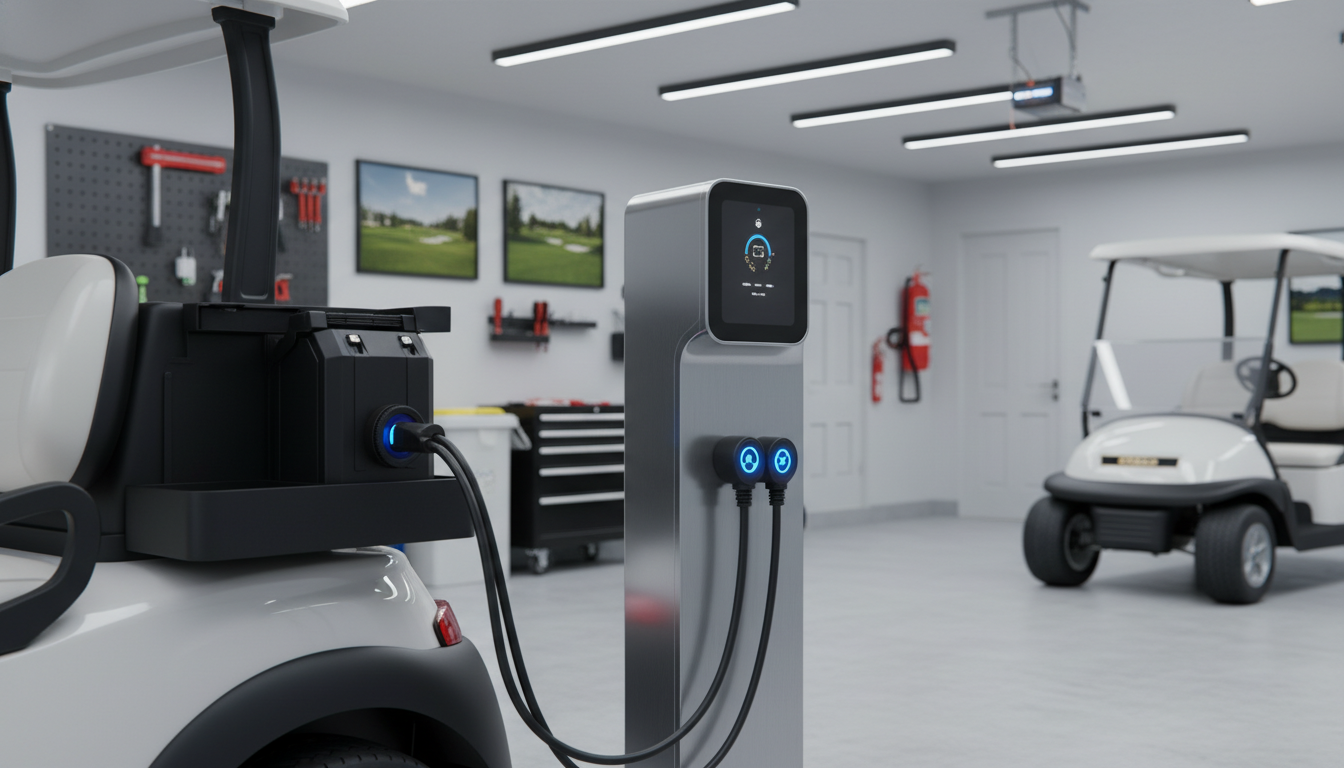
An on-board charger is permanently installed within the golf cart itself. This design offers unparalleled convenience, as you only need to plug an extension cord into the cart to begin charging. There’s no need to carry a separate, bulky charger. These golf cart charger types are often found in newer models and are ideal for users who prioritize a streamlined charging experience. They are designed to be robust and weather-resistant, given their constant exposure.
Smart/Automatic Golf Cart Charger Types: Advanced Battery Care
Modern advancements have led to the rise of smart or automatic golf cart charger types. These chargers incorporate microprocessors that monitor battery conditions and adjust the charging cycle accordingly. They prevent overcharging, which is a common cause of battery damage, and can even desulfate batteries to extend their lifespan. These intelligent units are a fantastic investment for anyone serious about optimal battery health.
How to Choose the Right Golf Cart Charger Types for Your Cart
Selecting the correct charger is paramount for your golf cart’s health and performance. It’s not a one-size-fits-all decision, as different carts have unique power requirements. Understanding these factors will guide you toward the ideal golf cart charger types that will serve you best.
Determining Your Golf Cart’s Voltage
The first and most crucial step is to identify your golf cart’s voltage. Most electric golf carts operate on either a 36-volt or 48-volt system. You can usually find this information on the battery pack itself, on the existing charger label, or in your golf cart’s owner’s manual. Mismatched voltage can severely damage your batteries and charger.
Matching the Amperage for Charging Speed
Amperage (amps) dictates how quickly your batteries will charge. Higher amperage chargers will replenish your batteries faster. While a higher amp charger is convenient, ensure it’s compatible with your battery type to avoid overheating. Most standard chargers range from 15 to 25 amps. Consider your usage patterns to decide if faster charging is a priority.
Identifying the Correct Charging Plug Type
Golf cart manufacturers use various plug designs, so identifying the correct charging plug type for your golf cart is essential. Common types include the Club Car crowfoot, EZ-GO D-plug, and Yamaha 2-pin or 3-pin plugs. Visually inspect the receptacle on your cart and compare it to common plug designs to ensure a perfect fit. Phoenix Golf Car provides expert assistance in identifying the right connector for various golf cart charger types.
Voltage and Amperage: Why Golf Cart Charger Types Vary
The varying voltage and amperage outputs among golf cart charger types are not arbitrary; they are precisely engineered to match the diverse battery systems found in golf carts. This customization is vital for efficient and safe charging, directly impacting battery longevity and performance.
Understanding Voltage Requirements
Golf carts typically use a series of 6-volt or 8-volt batteries. A 36-volt system usually consists of six 6-volt batteries, while a 48-volt system uses six 8-volt batteries. The charger’s voltage must exactly match the total voltage of your cart’s battery bank. Using a 36V charger on a 48V system, or vice-versa, will either fail to charge or cause significant damage.
The Role of Amperage in Charging Speed
Amperage determines the rate at which electrical current flows into the batteries. A higher amperage charger delivers more current, resulting in faster charging times. For instance, a 20-amp charger will charge a battery pack faster than a 15-amp charger. However, excessively high amperage can generate too much heat, potentially shortening battery life. It’s a balance between speed and battery health.
On-Board vs. Off-Board Golf Cart Charger Types: A Comparison
The distinction between on-board and off-board golf cart charger types is a key consideration when purchasing. Both have unique advantages and disadvantages that cater to different user preferences and operational needs.
Advantages of On-Board Chargers
On-board chargers offer supreme convenience. They are integrated into the cart, meaning you only need an extension cord to charge, eliminating the need to transport a separate unit. This makes them ideal for daily use and for those who frequently charge in different locations. They are also often designed to be more robust and weather-resistant.
Benefits of Off-Board Chargers
Off-board chargers provide greater flexibility and often more power. They are portable and can be used with multiple carts (if compatible), making them a versatile option for fleets or multi-cart owners. They can also be more easily replaced or upgraded than integrated units. Many high-amperage, fast-charging golf cart charger types are off-board models.
Identifying Your Golf Cart Charger Plug Type
Ensuring you have the correct charging plug is as important as matching voltage. Different golf cart brands utilize distinct plug designs. Misidentifying this can lead to frustration and the inability to charge your cart.
Common Plug Designs for Golf Cart Charger Types
- Club Car: Often uses a “crowfoot” or “round 3-pin” plug.
- EZ-GO: Typically features a “D-plug” (also known as a “TXT” or “RXV” plug) or a “powerwise” plug.
- Yamaha: Commonly uses a “2-pin” or “3-pin” rectangular plug.
- Universal: Some aftermarket golf cart charger types come with interchangeable plugs or universal connectors.
Visually inspecting your cart’s charging receptacle is the most reliable method. Note the shape, number of pins, and any locking mechanisms.
Maintaining Your Golf Cart Charger Types for Longevity
Proper maintenance of your golf cart charger is crucial for its longevity and for ensuring it continues to deliver optimal performance to your batteries. A well-maintained charger is a reliable charger.
Tips for Charger Care
- Keep it Clean: Regularly wipe down your charger to remove dust, dirt, and debris that can impede ventilation.
- Store Properly: Store your charger in a dry, well-ventilated area, away from extreme temperatures and direct sunlight.
- Inspect Cables and Connectors: Periodically check cables for fraying, cuts, or exposed wires. Ensure connectors are clean and free of corrosion. Damaged cables can be a fire hazard.
- Avoid Physical Damage: Do not drop the charger or expose it to moisture. Treat it with care to prevent internal component damage.
- Follow Manufacturer Guidelines: Always adhere to the specific maintenance recommendations provided by the charger’s manufacturer.
Ultimate Choices for Golf Cart Charger Types and Brands
When considering a new or replacement charger, it’s wise to look at reliable brands and models known for their quality and safety features. Investing in a high-quality charger is an investment in your golf cart’s battery life.
Reliable Brands and Safety Features
Many reputable manufacturers produce excellent golf cart charger types. Brands like Lester Electrical, Delta-Q Technologies, and DPI are highly regarded in the industry for their durability and advanced features. When purchasing, look for chargers with:
- Automatic Shut-off: Prevents overcharging, which can damage batteries.
- Reverse Polarity Protection: Guards against incorrect connections.
- Spark-Proof Connections: Ensures safe hook-up.
- Short-Circuit Protection: Protects against electrical faults.
- Temperature Compensation: Adjusts charging based on ambient temperature.
- Diagnostic Indicators: LEDs or displays that show charging status and error codes.
These features not only protect your batteries but also ensure user safety.
Where to Purchase and Cost Considerations
You can purchase replacement golf cart charger types from specialized golf cart dealerships like Phoenix Golf Car, online retailers, or direct from manufacturers. Prices for new golf cart chargers typically range from $200 to $600, depending on voltage, amperage, brand, and features. High-quality automatic chargers with advanced safety features may be at the higher end of this spectrum but offer superior battery protection. It is generally not recommended to use a standard car battery charger for your golf cart, as they are not designed for the specific voltage and charging profiles of golf cart battery banks, which can lead to undercharging or overcharging. If your golf cart charger is not charging properly, common issues include incorrect plug connection, a faulty charger, or deeply discharged batteries, all of which warrant professional inspection.
For reviews on different golf cart charger types, consult reputable golf cart forums, product review websites, and manufacturer testimonials. These sources often provide valuable insights from other users regarding performance and reliability.
Find the Right Golf Cart Charger Types for Your Vehicle with Phoenix Golf Car
Phoenix Golf Car is your trusted authority for all electric golf cart power solutions. Our certified experts ensure you select the ideal charger type to maximize your battery’s life and performance.
For more in-depth information on golf cart battery maintenance and charging best practices, consider consulting resources from leading battery manufacturers. For example, Trojan Battery’s maintenance guide offers comprehensive advice on extending battery life, which directly relates to choosing the right golf cart charger types.
Conclusion: Choosing the Best Golf Cart Charger Types
Selecting the appropriate golf cart charger types is a foundational step in ensuring the longevity and peak performance of your electric golf cart. From understanding voltage and amperage to distinguishing between on-board and off-board models, each decision plays a vital role in your battery’s health. By prioritizing compatibility, safety features, and proper maintenance, you can significantly extend your battery’s lifespan and enjoy countless hours of reliable operation. Investing in the right charger is not just a purchase; it’s a commitment to the enduring power and efficiency of your golf cart.
What are the different types of golf cart chargers available?
There are several main golf cart charger types, primarily distinguished by their voltage output (e.g., 36V, 48V), amperage, and whether they are on-board or off-board units. Common types also vary by connector plug design specific to brands like Club Car, EZ-GO, and Yamaha. Automatic chargers are also popular for their convenience and safety features.
How do I determine which type of golf cart charger I need for my cart?
To determine the correct golf cart charger types, you first need to know your golf cart’s voltage (usually 36V or 48V, found on the battery pack or charger label). Next, identify the specific connector plug type your cart uses. Consider the amperage for charging speed and whether you prefer an on-board or off-board model. Consulting your golf cart’s manual or an expert at Phoenix Golf Car is highly recommended.
Why do golf cart chargers have varying voltage and amperage outputs?
Golf cart chargers have varying voltage outputs to match the specific voltage requirements of different golf cart battery systems (e.g., 36V for six 6-volt batteries, 48V for six 8-volt batteries). Amperage outputs determine the charging speed; higher amperage chargers can replenish batteries faster. These variations ensure proper and efficient charging for diverse golf cart charger types and battery configurations.
What is the distinction between an on-board and off-board golf cart charger?
An on-board golf cart charger is permanently installed within the golf cart itself, allowing for convenient charging by simply plugging an extension cord into the cart. An off-board charger, conversely, is a separate, portable unit that you connect to the golf cart’s charging port when needed. Both golf cart charger types have their advantages in terms of convenience and flexibility.
How can I identify the correct charging plug type for my golf cart?
Identifying the correct charging plug type for your golf cart involves visually inspecting the receptacle on your golf cart and comparing it to common plug designs. Popular types include the Club Car crowfoot, EZ-GO D-plug, Yamaha 2-pin or 3-pin, and universal connectors. Match the shape, number of pins, and locking mechanism of your cart’s receptacle to ensure compatibility with various golf cart charger types.
What are the common voltage types (e.g., 36V, 48V) for golf cart chargers?
The most common voltage types for golf cart chargers are 36V and 48V. Older or smaller golf carts typically use a 36-volt system, while newer, more powerful, or larger carts (like 4-seaters or limos) often utilize a 48-volt system. It is absolutely crucial to match your golf cart charger types voltage to your golf cart’s battery system to prevent damage during charging.
How do I maintain my golf cart charger to ensure its longevity?
To ensure the longevity of your golf cart charger types, keep it clean and free from dust and debris. Store it in a dry, well-ventilated area, away from extreme temperatures. Regularly inspect cables and connectors for wear or damage. Avoid dropping the charger or exposing it to moisture. Proper usage according to manufacturer guidelines also significantly extends its lifespan.
What safety features should I look for in a modern golf cart charger?
Modern golf cart charger types should include several key safety features. Look for automatic shut-off to prevent overcharging, reverse polarity protection to guard against incorrect connections, spark-proof connections for safe hook-up, and short-circuit protection. Temperature compensation and diagnostic indicators are also beneficial, ensuring both battery and user safety during the charging process.