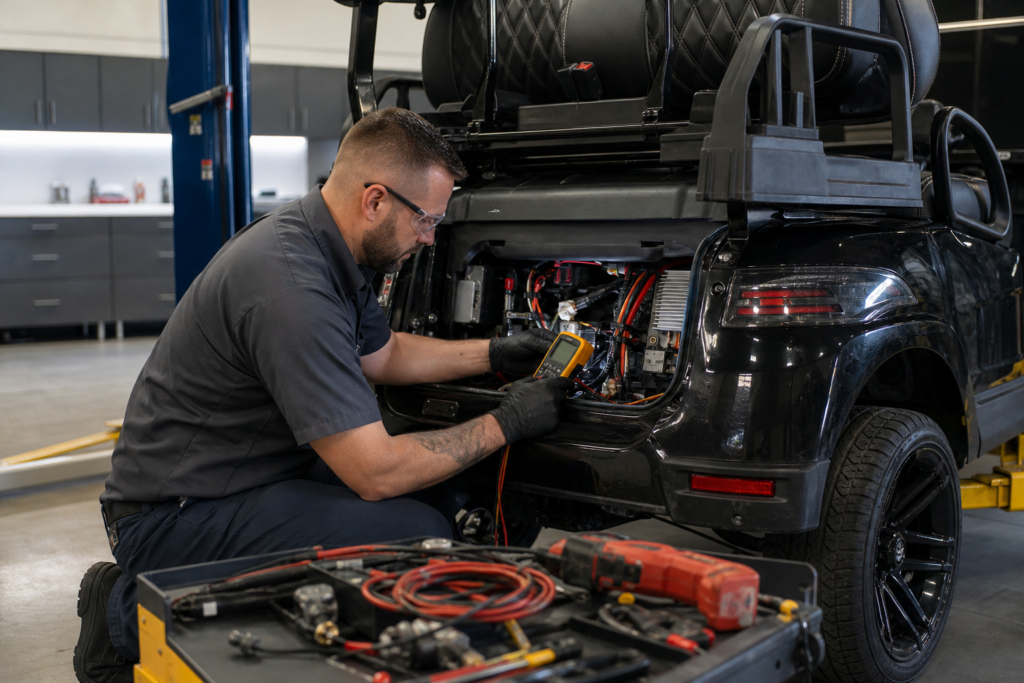
When your golf cart experiences electrical issues, finding a reliable solution is crucial for uninterrupted enjoyment on the course or around Pompano Beach. Golf Cart Wiring Repair is often the key to restoring performance and ensuring safety. Addressing these electrical challenges promptly can prevent minor glitches from escalating into major, costly breakdowns.
In this article, we will reveal 5 essential expert secrets for effective golf cart wiring repair. You will learn how to identify common problems, perform basic troubleshooting, and understand when to seek professional assistance from trusted experts like Phoenix Golf Car. Our goal is to equip you with the knowledge to keep your electric or gasoline golf cart running safely and reliably across South Florida.
Key Takeaways
- Recognize the 5 most frequent golf cart wiring issues, from loose connections to corrosion, to diagnose problems early.
- Master essential troubleshooting techniques, including multimeter use, to pinpoint electrical faults in your golf cart.
- Understand how specific wiring problems can prevent your golf cart from starting and what components to check.
- Implement proactive maintenance strategies to prevent wiring corrosion, especially vital for golf carts in South Florida’s humid climate.
- Learn why professional Golf Cart Wiring Repair from Phoenix Golf Car ensures expert diagnostics and lasting solutions for all major brands.
Understanding Common Golf Cart Wiring Problems
Golf carts, whether electric or gasoline-powered, rely on intricate electrical systems for everything from starting the engine to powering accessories. When these systems encounter issues, it can quickly lead to frustrating downtime. Common golf cart wiring problems often stem from a few key areas that are exposed to wear, vibration, and environmental factors.
One of the most frequent culprits is loose connections. Over time, vibrations from driving can cause terminals on batteries, solenoids, or controllers to loosen, leading to intermittent power or a complete loss of function. Similarly, frayed or damaged wires can result from rubbing against chassis components, rodent damage, or simply age, creating shorts or open circuits that disrupt electrical flow.
Corrosion is another significant issue, particularly in the humid South Florida climate. Battery terminals, wire connectors, and even internal wiring can develop rust or oxidation, increasing resistance and hindering electrical conductivity. This often manifests as dim lights, slow acceleration, or a cart that struggles to hold a charge. For instance, a common scenario we see at Phoenix Golf Car involves a customer’s EZGO cart experiencing sluggish performance due to corroded battery cables, a problem easily overlooked without a thorough inspection.
Signs Your Golf Cart Wiring Needs Attention
Recognizing the early warning signs can save you from more extensive Golf Cart Wiring Repair down the line. Keep an eye out for these indicators:
- Intermittent Power: Your cart loses power sporadically, or accessories like lights flicker.
- Failure to Start: The cart doesn’t click or engage when you press the pedal.
- Burning Smell: An unusual odor, often like burning plastic or rubber, indicates overheating wires.
- Visible Damage: Frayed insulation, exposed copper, or green/white powdery buildup on terminals.
- Dim Lights or Weak Horn: Components not receiving adequate voltage due to high resistance.
Addressing these symptoms promptly is essential for both your safety and the longevity of your golf cart. Neglecting minor wiring issues can lead to more severe damage to expensive components like controllers or motors.
Essential Troubleshooting Steps for Golf Cart Electrical Systems
When your golf cart exhibits electrical symptoms, a systematic approach to troubleshooting can help you identify the root cause. Before you begin any Golf Cart Wiring Repair, always ensure the cart is off, the key is removed, and the tow/run switch is in the “tow” position to prevent accidental engagement or electrical shock. Safety is paramount when working with electrical components.
The first step is a visual inspection. Look for obvious signs of damage: loose battery cables, corroded terminals, frayed wires, or melted insulation. Pay close attention to connections at the battery, solenoid, motor, and controller. Many issues are resolved simply by tightening a loose connection or cleaning a corroded terminal.
Next, you will need a multimeter, an indispensable tool for diagnosing electrical problems. This device allows you to test voltage, continuity, and resistance. For example, if your electric golf cart isn’t moving, you can use a multimeter to check the voltage across your battery pack. A fully charged 48-volt system should read around 50.9 volts, while a 36-volt system should be around 38.2 volts. If the voltage is significantly lower, your batteries might be the problem, not necessarily the wiring.
Step-by-Step Electrical Diagnostics
Here’s a simplified guide to diagnosing common electrical faults:
- Check Battery Voltage: Use a multimeter to test the voltage of each individual battery and the entire pack. Low voltage in one battery can affect the whole system.
- Inspect Battery Cables: Ensure all battery cables are clean, tight, and free of corrosion or damage. A single faulty cable can cause significant power loss.
- Test the Solenoid: The solenoid acts as a large relay. When you press the accelerator, you should hear a “click.” If not, test for voltage across its terminals. If it receives power but doesn’t click, it may be faulty.
- Examine Controller Connections: The motor controller is the brain of an electric golf cart. Check all wires leading to and from it for tightness and corrosion.
- Verify Ground Connections: A poor ground connection can cause intermittent power issues. Ensure all ground wires are securely fastened to the chassis and free of rust.
For more complex issues, such as those involving the motor controller or specific wiring harnesses found in modern Madjax X-Series or E-Series models, specialized diagnostic tools are often required. At Phoenix Golf Car, our technicians use advanced equipment to accurately pinpoint faults, saving you time and preventing unnecessary part replacements.
Need Expert Golf Cart Electrical Repair?
Phoenix Golf Car provides comprehensive diagnostics and reliable electrical repairs for all major golf cart brands. Our certified technicians ensure your vehicle runs perfectly and safely across South Florida.
Diagnosing Starting Issues: When Wiring is the Culprit
A golf cart that refuses to start can be incredibly frustrating, especially when you are ready to hit the links or cruise around Pompano Beach. While a dead battery is the most obvious culprit, wiring problems frequently play a significant role in starting failures. Understanding how wiring impacts the ignition system is crucial for effective diagnosis.
The starting sequence in a golf cart involves a chain of electrical events. When you press the accelerator pedal, a signal travels through various wires to the solenoid, which then sends power to the starter motor (in gas carts) or the motor controller (in electric carts). Any break or poor connection in this chain can prevent the cart from engaging.
One common wiring-related starting issue involves the battery cables. If these heavy-gauge cables are loose, corroded, or damaged, they cannot deliver sufficient current to the starter or controller. Even if your batteries show good voltage, a high-resistance connection will choke the power under load. We often find that customers experiencing a “no-click” scenario on their Club Car or EZGO models have simply overlooked a corroded terminal on their main battery cable.
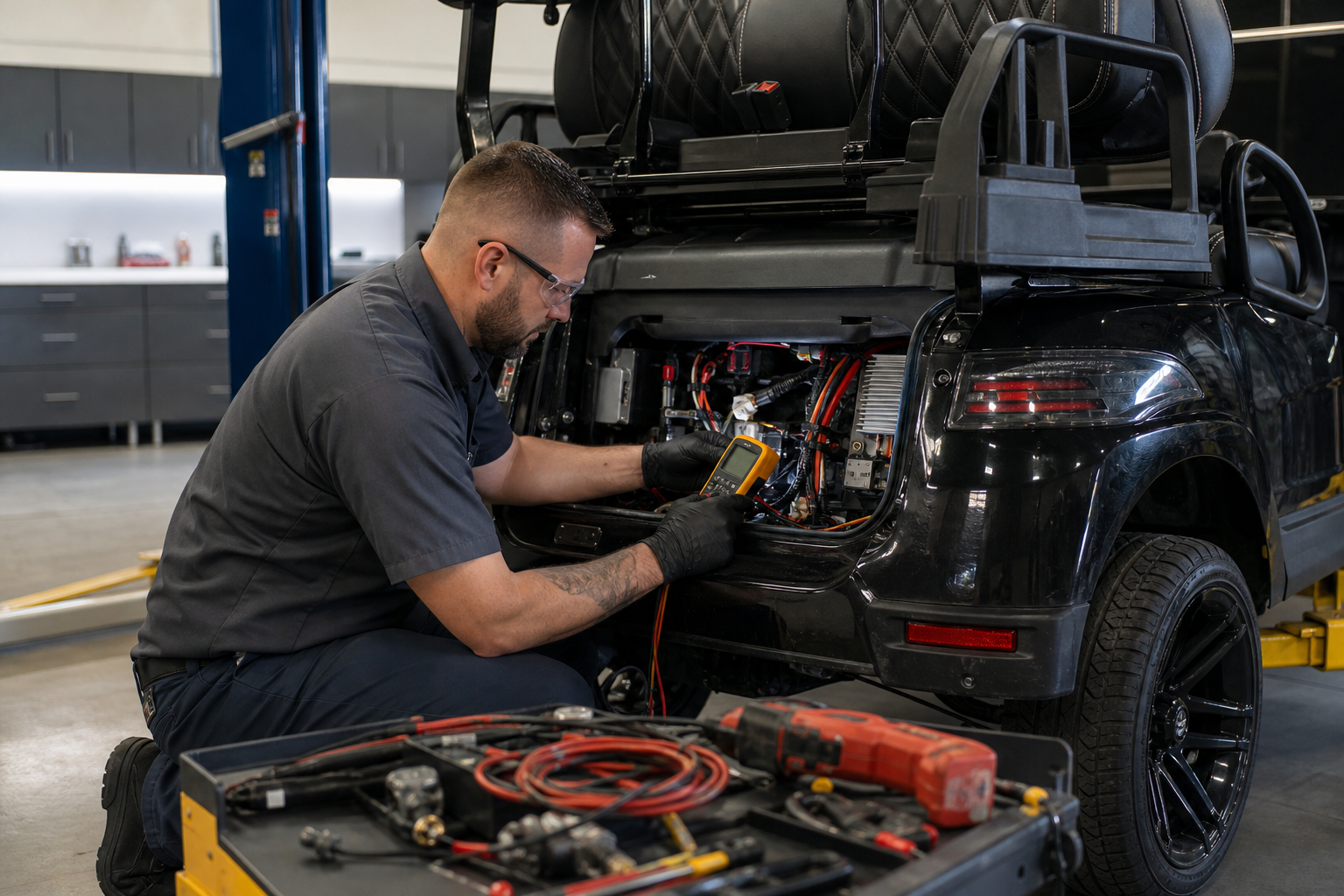
Key Wiring Points to Check for Starting Problems
When your golf cart won’t start, focus your inspection on these critical wiring components:
- Battery Cables: Ensure they are tight and free of corrosion at both the battery and the component ends (solenoid, motor).
- Solenoid Wires: Check the small activation wires leading to the solenoid, as well as the large power cables. A broken or loose activation wire will prevent the solenoid from clicking.
- Ignition Switch Wiring: In gasoline carts, the ignition switch sends power to the solenoid. Test for continuity through the switch and inspect its wiring for damage.
- Forward/Reverse Switch Wiring: Some carts will not start if the F/R switch wiring is faulty or if the switch itself is not fully engaged.
- Pedal Box Microswitches: Electric carts often have microswitches in the pedal box that signal the controller. Faulty wiring to these switches can prevent the cart from recognizing pedal input.
These components are interconnected, and a fault in one can cascade through the system. For instance, a loose ground wire can prevent the solenoid from engaging, leading to a no-start condition. If you’ve checked these basic points and your cart still won’t start, it’s often a sign that more advanced diagnostics are needed to trace the electrical path, a service Phoenix Golf Car regularly provides for all major golf cart brands.
Preventing Wiring Corrosion: The Key to Long-Term Reliability
Corrosion is the silent enemy of any electrical system, and golf carts are particularly susceptible, especially in the humid, salty air of South Florida. Preventing wiring corrosion is not just about aesthetics; it is a critical aspect of long-term reliability and safety. Corroded connections increase electrical resistance, leading to power loss, overheating, and ultimately, component failure.
The primary cause of corrosion is exposure to moisture, salt, and battery acid fumes. Battery terminals are especially vulnerable due to the acidic environment. Over time, a white or green powdery substance can build up, impeding the flow of electricity. This can cause your golf cart to run slower, lose charge quicker, or even fail to start. A simple maintenance step, performed every 3-6 months, can significantly extend the life of your wiring and batteries.
Regular cleaning and protection are your best defense. Start by disconnecting your batteries (always disconnect the negative terminal first) and thoroughly cleaning all battery terminals and cable ends with a wire brush and a baking soda and water solution. This neutralizes any acid buildup. After cleaning, rinse with clean water and dry completely. Applying a dielectric grease or battery terminal protector to the cleaned connections creates a barrier against moisture and corrosion.
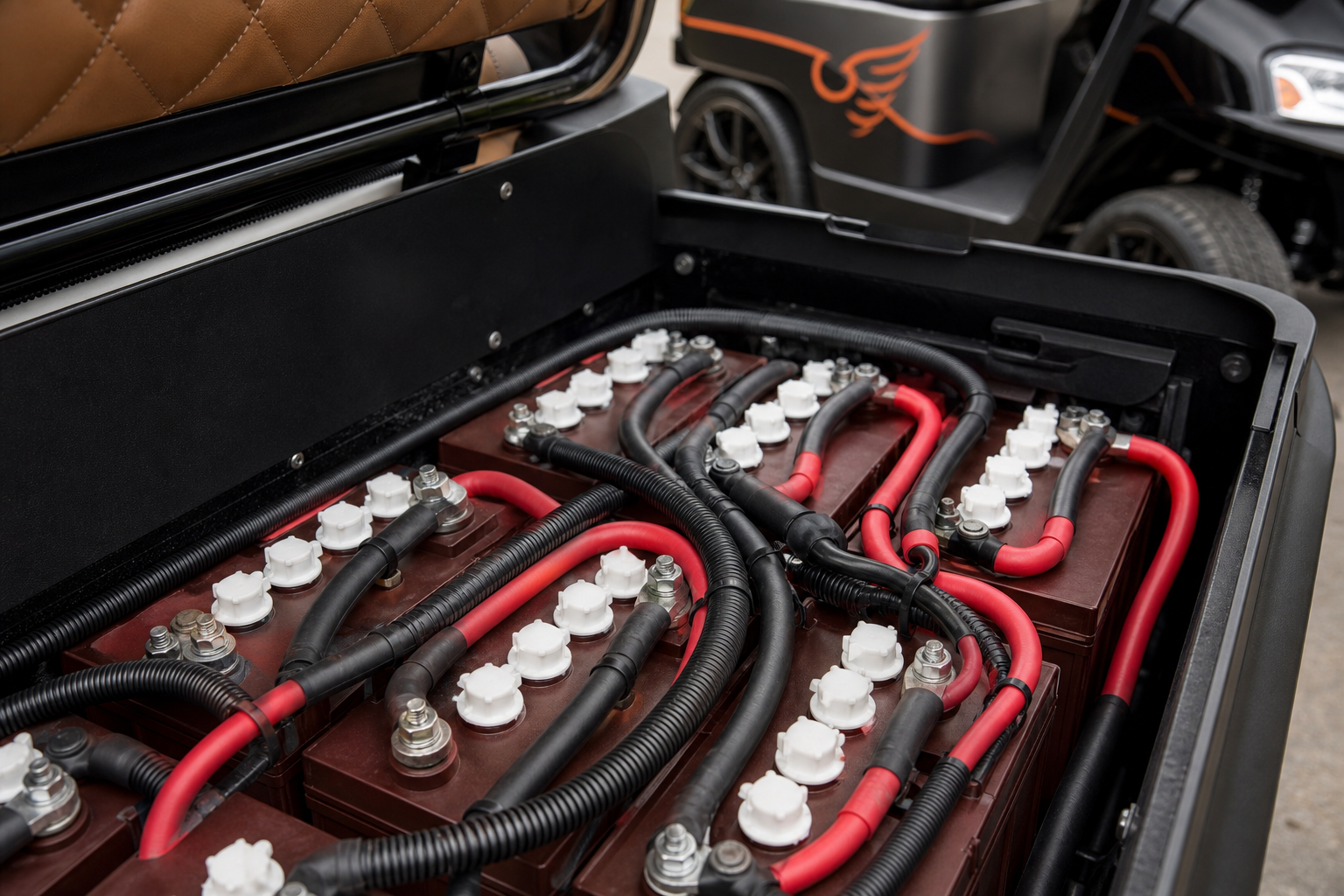
Maintenance Routines for South Florida Golf Carts
Given the unique climate in Pompano Beach and surrounding areas, specific maintenance routines are even more important for preventing Golf Cart Wiring Repair needs:
- Regular Inspections: Visually inspect all accessible wiring and connections every few weeks for any signs of fraying, cracking, or corrosion.
- Protective Sprays: Consider using anti-corrosion sprays on exposed electrical connections, especially those near the ground or under the cart.
- Proper Storage: When not in use, store your golf cart in a dry, covered area to minimize exposure to humidity and rain.
- Battery Tray Cleanliness: Keep the battery tray clean and free of debris or standing water, which can accelerate corrosion.
- Cable Management: Ensure all wiring is properly secured and routed away from moving parts, sharp edges, and heat sources to prevent physical damage.
By implementing these preventative measures, you can significantly reduce the likelihood of electrical issues and ensure your golf cart remains a dependable mode of transportation. Phoenix Golf Car offers comprehensive maintenance services, including detailed electrical system checks and corrosion prevention treatments, to help South Florida residents keep their carts in peak condition.
When to Call the Experts: Professional Golf Cart Wiring Repair by Phoenix Golf Car
While basic troubleshooting and preventative maintenance can resolve many minor electrical issues, there are times when professional intervention for Golf Cart Wiring Repair is not just recommended, but essential. Attempting complex electrical repairs without the proper knowledge, tools, or safety precautions can lead to further damage, personal injury, or even fire hazards. Knowing when to call in the experts saves you time, money, and ensures the job is done right.
If you’ve performed basic checks and your golf cart still isn’t performing correctly, or if you encounter symptoms like burning smells, smoking wires, or a complete electrical system shutdown, it’s time to contact a professional. These issues often indicate deeper problems within the motor controller, wiring harness, or other critical components that require specialized diagnostic equipment and expertise.
Phoenix Golf Car specializes in comprehensive electrical diagnostics and reliable repairs for all major golf cart brands, including Club Car, EZGO, Yamaha, and our own authorized Madjax X-Series and E-Series models. Our certified technicians in Pompano Beach, FL, are equipped with industry-standard tools and a deep understanding of both electric and gasoline golf cart electrical systems. We can accurately pinpoint issues that might be invisible to the untrained eye, such as intermittent shorts or subtle controller faults.
The Phoenix Golf Car Advantage for Electrical Repairs
Choosing Phoenix Golf Car for your golf cart electrical needs means you benefit from:
- Expert Diagnostics: We use advanced diagnostic tools to quickly and accurately identify the root cause of electrical problems, preventing guesswork and unnecessary repairs.
- Specialized Knowledge: Our team is highly trained in the intricacies of modern golf cart wiring, including complex systems found in newer electric models and lithium conversions.
- Quality Parts: We use only high-quality, OEM-compatible parts for all repairs, ensuring longevity and optimal performance. This includes everything from battery cables to full wiring harnesses.
- Safety Assurance: Electrical work carries inherent risks. Our technicians follow strict safety protocols, ensuring your cart is repaired safely and effectively.
- Comprehensive Service: Beyond just wiring, we offer a full range of services, including battery replacements, professional lithium conversions, and complete vehicle rebuilds, ensuring your entire electrical system is robust.
Whether your golf cart is experiencing intermittent power loss, starting issues, or needs a complete wiring overhaul, Phoenix Golf Car is your trusted partner in South Florida. We ensure your vehicle operates safely and reliably, allowing you to enjoy your golf cart without worry.
Key Takeaways
- Identify common golf cart wiring issues like loose connections, frayed wires, and corrosion to prevent larger problems.
- Utilize a multimeter and follow a 5-step diagnostic process to effectively troubleshoot electrical system faults.
- Recognize how specific wiring problems, such as faulty battery cables or solenoid wires, can cause starting failures.
- Implement consistent cleaning and protective measures every 3-6 months to prevent wiring corrosion, especially in South Florida.
- Trust Phoenix Golf Car’s certified technicians for expert Golf Cart Wiring Repair, ensuring safe and reliable operation for all major golf cart brands.
Effective Golf Cart Wiring Repair is crucial for maintaining the safety and reliability of your vehicle. By understanding common issues, performing basic troubleshooting, and taking preventative measures, you can significantly extend your golf cart’s lifespan. For complex electrical problems or when you need the assurance of expert service, Phoenix Golf Car is ready to provide professional diagnostics and lasting solutions. Contact us today to schedule your golf cart electrical service and keep your ride running smoothly.
Where can I find a wiring diagram for my Club Car golf cart?
Wiring diagrams for Club Car golf carts are typically available in the owner’s manual or can be found on the manufacturer’s official website. For older models, specialized online forums or repair guides may also offer diagrams. Phoenix Golf Car technicians often have access to a comprehensive database of diagrams for various models.
How much does it cost to repair golf cart wiring?
The cost of golf cart electrical repair varies widely depending on the complexity of the issue, the parts required, and the labor involved. Simple fixes like a loose connection might be inexpensive, while replacing an entire wiring harness could be more significant. Phoenix Golf Car provides transparent estimates after a thorough diagnostic evaluation.
How do you repair a broken golf cart battery cable?
Repairing a broken golf cart battery cable typically involves carefully disconnecting the battery, removing the damaged cable, and installing a new one of the correct gauge and length. Proper crimping and securing of terminals are crucial for safety and optimal electrical flow. It’s often best to have a professional handle this to prevent further damage or hazards.
What specialized tools are needed for golf cart electrical repair?
Specialized tools for golf cart electrical repair include a multimeter for testing voltage and continuity, wire crimpers, strippers, soldering irons, and insulated hand tools for safety. Diagnostic scan tools may also be used for more advanced electric cart systems. Phoenix Golf Car utilizes industry-standard tools and diagnostic equipment.
Can a bad ground wire cause golf cart power loss?
Yes, a bad or corroded ground wire is a common culprit for golf cart power loss, intermittent performance, or even a complete lack of power. A poor ground connection restricts the flow of electricity, preventing components from receiving adequate power. Ensuring clean, tight ground connections is essential for reliable operation.
Where can I buy a replacement wiring harness for an EZGO golf cart?
Replacement wiring harnesses for EZGO golf carts can be purchased from authorized dealers, reputable online golf cart parts suppliers, or directly from EZGO’s website. It’s crucial to ensure the harness is compatible with your specific EZGO model and year. Phoenix Golf Car can source and install the correct wiring harness for your EZGO vehicle.
What are the common signs of faulty golf cart wiring?
Common signs of faulty golf cart wiring include flickering lights, intermittent power loss, unusual burning smells, visible corrosion or fraying on wires, components not working, or the cart failing to start. These symptoms indicate underlying electrical issues that require prompt attention. Early diagnosis can prevent more significant problems.
Why is my electric golf cart losing power intermittently?
Intermittent power loss in an electric golf cart often points to loose or corroded battery connections, faulty solenoid, issues with the motor controller, or damaged wiring. It could also be a sign of a dying battery pack unable to hold a consistent charge under load. A professional diagnostic at Phoenix Golf Car can pinpoint the exact cause.