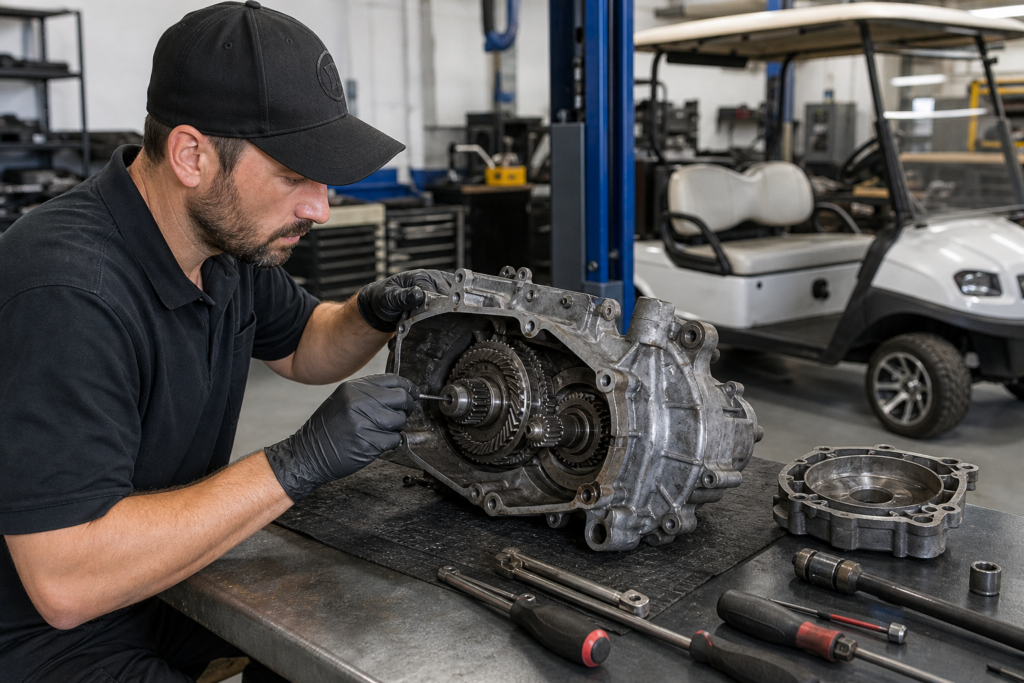
A well-maintained Golf Cart Transaxle is the silent workhorse behind your golf cart’s smooth operation and reliable power. Without proper care, this critical component can lead to frustrating breakdowns and costly repairs, especially for golf cart owners in South Florida who rely on their vehicles daily. Understanding the essential maintenance secrets of your transaxle is key to ensuring your cart delivers peak performance for years to come.
At Phoenix Golf Car in Pompano Beach, we understand the unique demands placed on golf carts in our region. From daily commutes to leisurely rounds on the course, your golf cart’s transaxle endures significant stress. This guide will reveal 5 essential expert maintenance secrets that will help you prevent common issues, extend the life of your vehicle, and keep your golf cart running smoothly, whether it’s electric or gasoline-powered.
Key Takeaways
- Regularly inspect the transaxle for leaks and unusual noises to catch problems early.
- Understand the specific fluid requirements for your golf cart’s transaxle and adhere to manufacturer-recommended change intervals.
- Proactive maintenance, including seal and bearing checks, can prevent major transaxle failures and extend component lifespan.
- Recognize common symptoms like grinding or loss of power as clear indicators that your transaxle needs immediate attention.
- Trust Phoenix Golf Car for expert diagnostics, fluid changes, and comprehensive repairs for all major golf cart brands.
Understanding Your Golf Cart Transaxle: The Core of Power Transfer
This vital component combines the functions of a transmission and an axle, effectively transmitting power from your engine or electric motor to the drive wheels. This integrated system is responsible for converting the rotational energy into the torque and speed needed to propel your cart forward, backward, and around turns. Without it, your golf cart simply wouldn’t move.
In both electric and gasoline-powered golf carts, the transaxle plays a crucial role in managing gear ratios and providing differential action. This differential allows your wheels to spin at different speeds when turning, preventing tire scrub and ensuring smooth maneuverability. Understanding its basic function is the first step toward appreciating the importance of its maintenance.
For electric golf carts, the transaxle typically integrates directly with the electric motor, often featuring a simpler gearing system due to the motor’s instant torque delivery. Gas golf cart transaxles, on the other hand, usually connect to the engine via a clutch and involve more complex gearing to manage varying engine speeds. Phoenix Golf Car services both types with expert care, ensuring optimal performance for all our South Florida customers.
Recognizing the Warning Signs: Common Golf Cart Transaxle Symptoms
Identifying early symptoms of a failing drivetrain can save you from more extensive and costly repairs down the line. Your golf cart often communicates problems through noticeable changes in its operation. Paying attention to these signals is crucial for timely intervention and maintaining your cart’s reliability.
Common symptoms of a transaxle issue include unusual noises, a noticeable loss of power, or difficulty shifting gears. If you experience any of these, it’s a clear indication that your transaxle requires immediate inspection.
Key Indicators of Transaxle Problems:
- Whining or Grinding Noises: These sounds often indicate worn gears, bearings, or insufficient lubrication within the transaxle. The noise may intensify during acceleration or deceleration.
- Clunking Sounds: A distinct clunking noise, especially when shifting between forward and reverse, can point to excessive play in the gears or worn universal joints.
- Loss of Power or Sluggish Acceleration: If your golf cart feels less responsive or struggles to maintain speed, a compromised transaxle might not be efficiently transferring power to the wheels.
- Fluid Leaks: Puddles or drips of fluid underneath your golf cart, particularly near the rear axle, are a strong sign of a leaking transaxle seal. Low fluid levels can quickly lead to severe internal damage.
- Difficulty Shifting Gears: For gas carts with a manual shift lever, stiffness or resistance when changing gears can indicate internal transaxle issues.
Ignoring these warning signs can lead to complete transaxle failure, leaving you stranded. Phoenix Golf Car technicians are skilled at diagnosing these symptoms accurately for all major golf cart brands, providing precise solutions to restore your cart’s performance.
Fluid Fundamentals: Checking and Replacing Transaxle Lubricant
Proper lubrication is the lifeblood of this vital component, ensuring its gears and bearings operate smoothly and without excessive wear. Regularly checking and replacing the transaxle fluid according to your manufacturer’s recommendations is one of the most critical maintenance tasks you can perform. This simple step prevents overheating, reduces friction, and extends the lifespan of the entire assembly.
The type of lubricant required varies significantly by golf cart make and model. Most golf cart transaxles use a specific weight of automotive gear oil, such as 80W-90, or a full synthetic equivalent designed for differentials. Using the wrong fluid can cause serious damage and void warranties, so always consult your owner’s manual.
Steps for Checking Transaxle Fluid:
- Park on a Level Surface: Ensure your golf cart is on flat ground to get an accurate fluid level reading.
- Locate the Fill Plug: The transaxle fill plug is typically found on the side or top of the transaxle housing. It might be labeled or easily identifiable as a large bolt.
- Clean the Area: Wipe away any dirt or debris around the plug to prevent contamination when removed.
- Remove the Plug: Carefully unscrew the fill plug. Some transaxles have a dipstick integrated into the plug, while others require you to check the level at the bottom edge of the fill hole.
- Check Fluid Level: The fluid should typically be at the bottom edge of the fill hole. If there’s a dipstick, check the level against the marked indicators.
- Add Fluid if Necessary: If the level is low, add the recommended gear oil slowly until it reaches the correct mark.
- Reinstall Plug: Securely tighten the fill plug once complete.
Phoenix Golf Car recommends a transaxle fluid check at least once a year, or every 125 operating hours, whichever comes first. For fluid replacement, consult your owner’s manual for specific intervals, which can range from every 2-5 years depending on usage and conditions. Our expert technicians in Pompano Beach can perform this service quickly and ensure the correct fluid is used for your specific golf cart model.
Beyond the Basics: Proactive Maintenance to Prevent Transaxle Failure
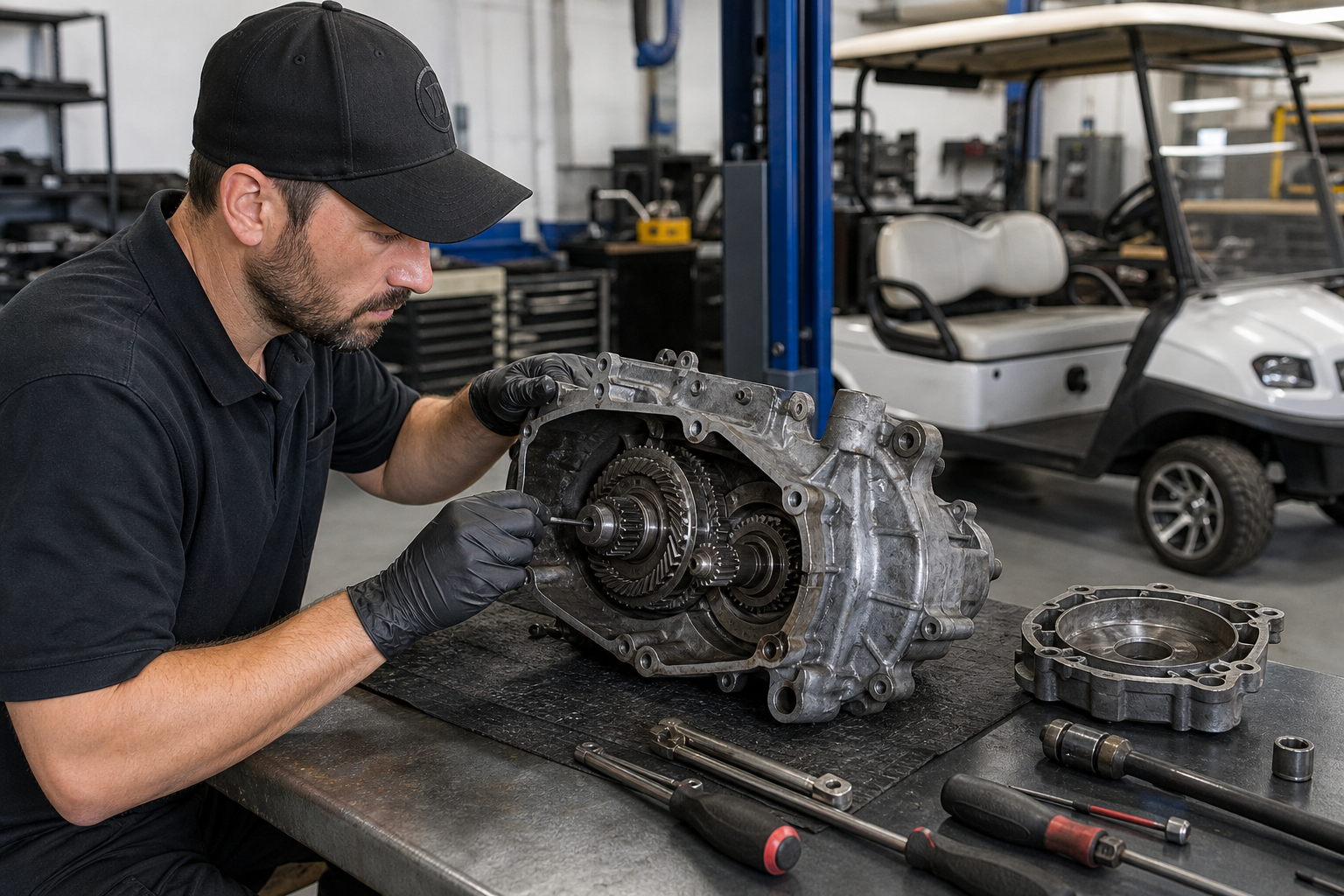
While fluid checks are fundamental, proactive maintenance for your golf cart’s drivetrain extends far beyond just lubrication. Addressing potential issues before they escalate into major failures is a smart strategy for any golf cart owner. This involves inspecting key components, understanding common wear points, and considering timely part replacements.
One critical aspect is regularly checking for worn seals and bearings. Seals prevent lubricant from escaping and contaminants from entering the transaxle. If you notice fluid leaks, it’s often a sign of a failing seal that needs immediate replacement. Worn bearings can cause excessive play in the shafts, leading to grinding noises and eventual component breakdown.
Proactive Maintenance Checklist:
- Inspect Seals and Gaskets: Visually check around the transaxle housing, axle shafts, and input shaft for any signs of fluid seepage or leaks. Replace hardened or cracked seals promptly.
- Check for Bearing Play: Gently try to move the drive shafts and wheels. Excessive play can indicate worn bearings that require professional attention.
- Examine Mounting Hardware: Ensure all bolts and fasteners securing the transaxle to the golf cart frame are tight and free from corrosion. Loose mounting can cause vibrations and premature wear.
- Clean the Transaxle Housing: Keep the exterior of the transaxle clean. A buildup of dirt and grime can insulate the unit, leading to higher operating temperatures and potentially masking fluid leaks.
- Consider Component Upgrades: For older carts or those used in demanding conditions, consider upgrading to heavy-duty seals or synthetic gear oils for enhanced protection. Phoenix Golf Car offers a wide array of high-quality parts for various makes and models, including authorized Madjax components for X-Series and E-Series models.
Regular inspection of these components can significantly prolong the life of the entire assembly. For those in South Florida, Phoenix Golf Car maintains an extensive inventory of high-quality parts, ensuring you get the exact components needed for a proper repair or upgrade.
When Professional Help is Essential: Phoenix Golf Car’s Expert Transaxle Services
While routine checks can be performed by owners, certain drivetrain issues demand the expertise of certified professionals. Complex diagnostics, internal repairs, or complete transaxle replacements are tasks best left to experienced technicians. Attempting these repairs without the proper tools or knowledge can lead to further damage and higher costs.
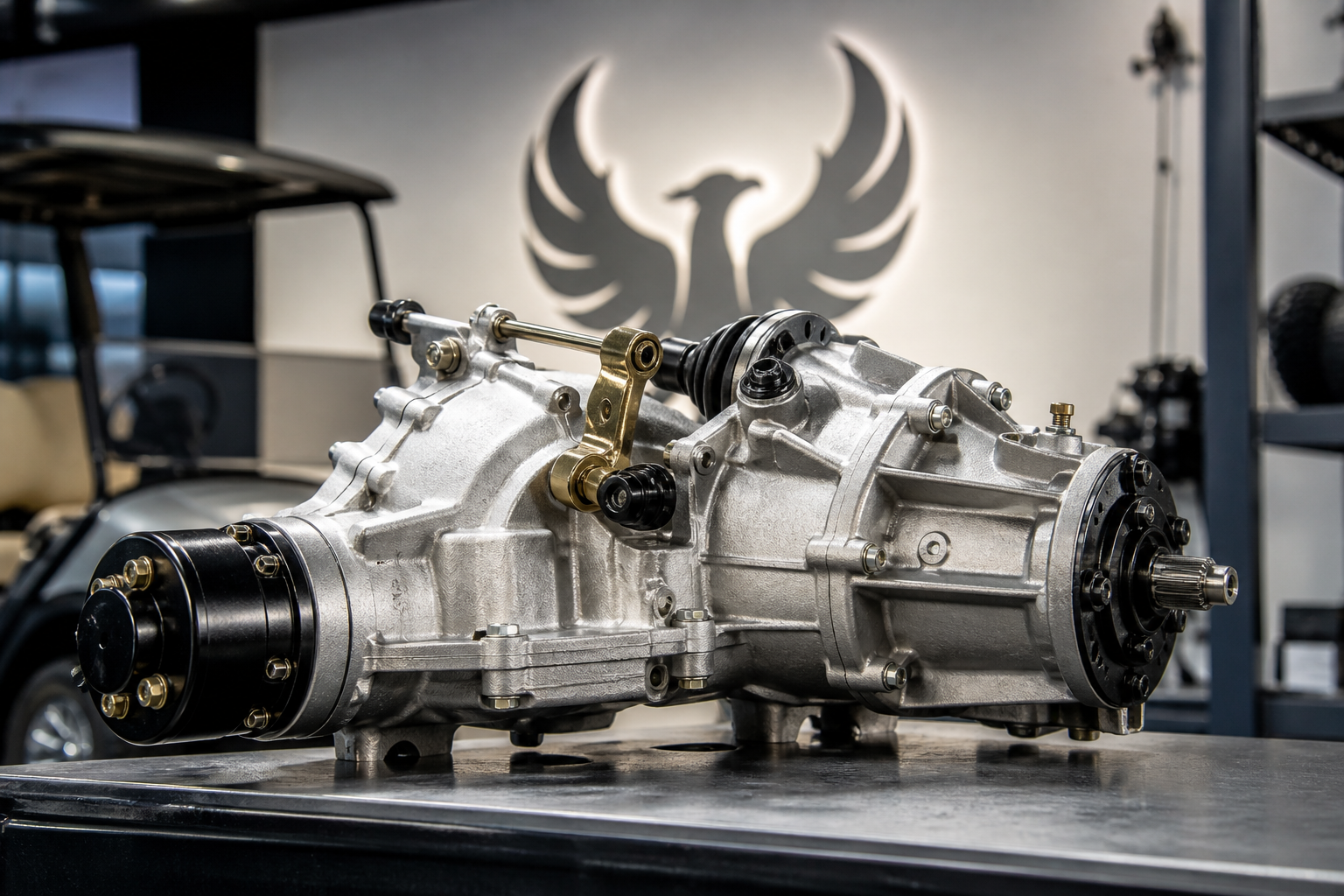
At Phoenix Golf Car, we specialize in comprehensive transaxle diagnostics, fluid changes, and repairs for all major golf cart brands. Our Pompano Beach facility is equipped with the latest tools and our technicians are highly trained to accurately identify and resolve any transaxle-related problem. We understand that a replacement transaxle can be a significant investment, with costs varying widely based on make and model.
We provide transparent quotes and help you determine whether a repair or replacement is the most cost-effective and reliable solution for your golf cart.
We offer specialized services that go beyond basic repairs. For instance, if your transaxle issues are tied to overall performance, we can assess your entire drivetrain, including professional lithium conversions and battery replacements for electric models, or engine overhauls for gas carts. Our goal is to restore your cart’s performance and extend its lifespan, ensuring it runs smoothly on the South Florida roads and courses.
Whether you’re experiencing unusual noises, a loss of power, or simply need a routine fluid service, Phoenix Golf Car is your trusted partner. We pride ourselves on providing expert maintenance and repair services, ensuring your golf cart receives the highest level of care. Our team can also assist with finding specific drivetrain parts, like seals or bearings, from our extensive inventory.
Need Expert Golf Cart Transaxle Service in South Florida?
Phoenix Golf Car provides comprehensive transaxle diagnostics, fluid changes, and repairs for all major golf cart brands. Trust our certified technicians to restore your cart’s performance.
Maintaining your Golf Cart Transaxle is paramount for the longevity and performance of your vehicle. By following these 5 essential maintenance secrets, you can proactively address potential issues and ensure your golf cart remains a reliable mode of transportation in South Florida. From regular fluid checks to recognizing warning signs, a little attention goes a long way in preventing major breakdowns.
For complex diagnostics, expert repairs, or simply peace of mind, trust the certified technicians at Phoenix Golf Car. We are dedicated to providing top-tier service for all major golf cart brands, ensuring your vehicle operates at its best. Don’t wait for a small issue to become a major problem; contact Phoenix Golf Car today to schedule your transaxle inspection or service.
What is the primary function of a golf cart transaxle?
The primary function of a golf cart’s transaxle is to transmit power from the engine or electric motor to the drive wheels. It combines the functions of a transmission, which manages gear ratios, and an axle, which supports the vehicle’s weight and provides differential action to allow wheels to rotate at different speeds during turns.
How does a golf cart transaxle transmit power from the engine/motor to the wheels?
In a golf cart, the transaxle receives rotational power from the engine’s clutch or the electric motor. This power is then routed through a series of gears that reduce speed and increase torque, finally transferring it to the axle shafts. These shafts are connected directly to the drive wheels, propelling the cart forward or in reverse.
What are the common symptoms of a failing golf cart transaxle?
Common symptoms of a failing transaxle include unusual noises like whining, grinding, or clunking sounds, especially during acceleration or deceleration. Other signs can be a loss of power, difficulty shifting gears, fluid leaks underneath the cart, or a general rough operation of the drive system. Addressing these quickly can prevent further damage.
How do I check the fluid level in my golf cart transaxle?
Checking the fluid level in your golf cart’s transaxle typically involves locating a fill plug or dipstick on the transaxle housing. The cart should be on a level surface. Unscrew the plug, and the fluid level should usually be up to the bottom edge of the fill hole. Always consult your golf cart’s owner’s manual for specific instructions and fluid specifications for your model.
What type of lubricant or gear oil is recommended for a golf cart transaxle?
The type of lubricant or gear oil recommended for a golf cart transaxle varies by manufacturer and model. Most require a specific weight of automotive gear oil, such as 80W-90 or a similar full synthetic equivalent, designed for differentials and transaxles. Always refer to your golf cart’s owner’s manual or consult with a service expert at Phoenix Golf Car to ensure you use the correct fluid, preventing damage and ensuring proper operation.
How much does a replacement golf cart transaxle typically cost?
The cost of a replacement golf cart transaxle can vary significantly depending on the golf cart’s make, model, whether it’s new or refurbished, and labor costs. Prices can range from a few hundred dollars for a used unit to over a thousand for a new assembly, plus installation. It’s best to get a specific quote from a trusted service provider like Phoenix Golf Car for an accurate estimate.
Can I rebuild a golf cart transaxle myself, or should I replace it?
Rebuilding a golf cart transaxle yourself is possible for experienced mechanics with the right tools and parts. However, it can be a complex and time-consuming task requiring precision. For most golf cart owners, replacement by a professional service is often more cost-effective and ensures reliability. Phoenix Golf Car can help you determine the best option based on the extent of the damage and your budget.
Why is my golf cart transaxle making a whining or grinding noise?
Whining or grinding noises from your transaxle often indicate worn gears, bearings, or insufficient lubrication. These sounds typically worsen under load or during specific driving conditions. Ignoring these noises can lead to complete transaxle failure. Prompt inspection by a qualified technician can identify the root cause and prevent extensive damage.
Where can I purchase specific golf cart transaxle parts, like seals or bearings?
You can purchase specific golf cart transaxle parts, such as seals, bearings, or gaskets, from authorized dealers, specialized golf cart parts suppliers, or reputable online retailers. For customers in South Florida, Phoenix Golf Car maintains an extensive inventory of high-quality parts for various makes and models, ensuring you get the exact components needed for a proper repair.
What are the key differences between electric and gas golf cart transaxles?
While both types perform the same core function, electric golf cart transaxles typically integrate directly with the electric motor, often featuring a simpler gearing system since electric motors provide instant torque. Gas golf cart transaxles usually connect to the engine via a clutch and often include more complex gearing to manage varying engine speeds and power delivery. Phoenix Golf Car services both types with expert care.