The reflection you see should be a source of confidence, not a reminder of time’s subtle touch. Yet, the search for facial rejuvenation often leads to a common concern: how to restore youthful volume without sacrificing the natural character of your features. For those in Coral Springs seeking a truly restorative solution that looks beautifully and authentically their own, Radiesse presents a sophisticated answer. This unique dermal filler offers a remarkable, dual-action approach that provides both immediate lift and long-term revitalization.
In this comprehensive guide, we will explore the science that sets this treatment apart. We’ll demystify how it differs from other popular fillers, detail what you can expect during your visit, and explain why the expert touch of a skilled injector is the key to achieving the defined jawline and smooth, refreshed appearance you desire. Consider this your personal invitation to discover a more radiant, revitalized you, built on a foundation of your own natural collagen.
Key Takeaways
- Understand how this unique filler provides an immediate lift while also stimulating your body’s own natural collagen for lasting results.
- Learn the crucial difference between fillers that simply add volume and those that rebuild your skin’s underlying structure for a more authentic rejuvenation.
- Discover why the injector’s artistic skill is just as important as the product itself for achieving refined, natural-looking contours with Radiesse.
- Evaluate if this treatment is the right investment for you by exploring its impressive longevity and how it delivers a sustained, youthful appearance.
9 Lifesaving Golf Cart Hurricane Prep Tips for South Florida Owners: 7 Essential Strategies for Unbeatable Protection
9 Lifesaving Golf Cart Hurricane Prep Tips for South Florida Owners are not just suggestions; they are essential strategies for safeguarding your valuable investment against the unpredictable power of tropical storms. In a region where hurricanes are a recurring threat, proactive preparation is the only way to minimize damage and ensure your golf cart remains operational after the storm passes. Ignoring these critical steps can lead to costly repairs or even total loss.
This comprehensive guide will walk you through the most vital actions you need to take. From securing your vehicle to managing its power systems and understanding insurance, we cover every aspect of effective hurricane readiness. By implementing these proven strategies, you can face hurricane season with greater confidence, knowing your golf cart is as protected as possible.
Key Takeaways
- Understand the critical importance of early and thorough preparation for your golf cart in South Florida’s hurricane-prone environment.
- Learn the safest storage options, including indoor facilities and robust outdoor securing methods, to protect against wind and water damage.
- Discover essential supplies, from heavy-duty tie-downs to battery disconnect tools, crucial for effective golf cart hurricane prep.
- Gain insights into how comprehensive golf cart insurance can mitigate financial risks from hurricane-related damage.
- Identify common hurricane damage types and critical post-storm inspection steps to ensure your golf cart’s safe recovery.
Understanding the Urgency of 9 Lifesaving Golf Cart Hurricane Prep Tips for South Florida Owners
South Florida’s unique climate, characterized by its beautiful coastal communities and lush golf courses, also brings the inherent risk of hurricanes. For golf cart owners, this means that routine maintenance must extend to include robust storm preparedness. The destructive potential of hurricane-force winds, torrential rain, and widespread flooding can turn a minor oversight into a significant loss.
Proactive measures are not merely about protecting property; they are about ensuring safety and maintaining functionality in the aftermath of a storm. Waiting until a hurricane warning is issued often leaves insufficient time for proper securing and can expose your golf cart to unnecessary risks. This is why understanding and implementing 9 Lifesaving Golf Cart Hurricane Prep Tips for South Florida Owners well in advance is paramount.
Why South Florida Needs Specialized 9 Lifesaving Golf Cart Hurricane Prep Tips for South Florida Owners
The specific challenges of South Florida, including its low elevation, proximity to the coast, and dense residential areas, amplify the need for specialized golf cart hurricane preparation. These factors increase the likelihood of storm surge, prolonged power outages, and flying debris. Standard precautions are often insufficient against the unique threats posed by a major hurricane.
Many South Florida communities also have specific guidelines or restrictions regarding golf cart storage and securing during severe weather. Being aware of these local regulations is a crucial part of your overall preparedness plan. Consulting local emergency management resources, like FloridaDisaster.org, can provide invaluable region-specific information and alerts.
The investment in a golf cart is significant for many South Florida residents, serving as primary transportation within communities. Protecting this asset means ensuring continuity and convenience, especially when other forms of transport might be disrupted. Therefore, a tailored approach to 9 Lifesaving Golf Cart Hurricane Prep Tips for South Florida Owners is not just recommended, but essential.
The First of the 9 Lifesaving Golf Cart Hurricane Prep Tips for South Florida Owners: Secure Indoor Storage
When a hurricane threatens, the safest place for your golf cart is indoors. This fundamental step is at the core of effective 9 Lifesaving Golf Cart Hurricane Prep Tips for South Florida Owners. An enclosed, sturdy structure offers the best defense against high winds, flying debris, and heavy rainfall that can cause catastrophic damage to an exposed vehicle. Prioritizing indoor storage can save you significant repair costs and stress.
If you have access to a garage, shed, or a commercial storage facility designed to withstand hurricane-force winds, utilize it. Ensure that the structure itself is sound and that all doors and windows can be securely latched or boarded up. Parking your golf cart inside and securing it further can provide an unbeatable layer of protection.
Safest Storage: Where to Keep Your Golf Cart During a Hurricane
The ideal location for your golf cart during a hurricane is a reinforced garage or a dedicated hurricane-rated storage unit. These facilities are built to higher structural standards, offering superior protection. Avoid carports or open-sided structures, as these provide minimal defense against wind and debris, potentially becoming traps rather than shelters.
Consider the risk of flooding in your chosen storage area. If your garage is prone to water intrusion, elevate your golf cart on sturdy blocks or a raised platform to keep it above potential floodwaters. Even a few inches of water can severely damage electrical components and batteries, making elevation a crucial part of your 9 Lifesaving Golf Cart Hurricane Prep Tips for South Florida Owners.
If indoor storage is absolutely not an option, you must resort to robust outdoor securing methods. This involves heavy-duty tie-downs and strategic placement to minimize exposure. However, always remember that indoor storage remains the gold standard for hurricane protection.
Securing an Outdoor Golf Cart: Best Methods for Hurricane Protection
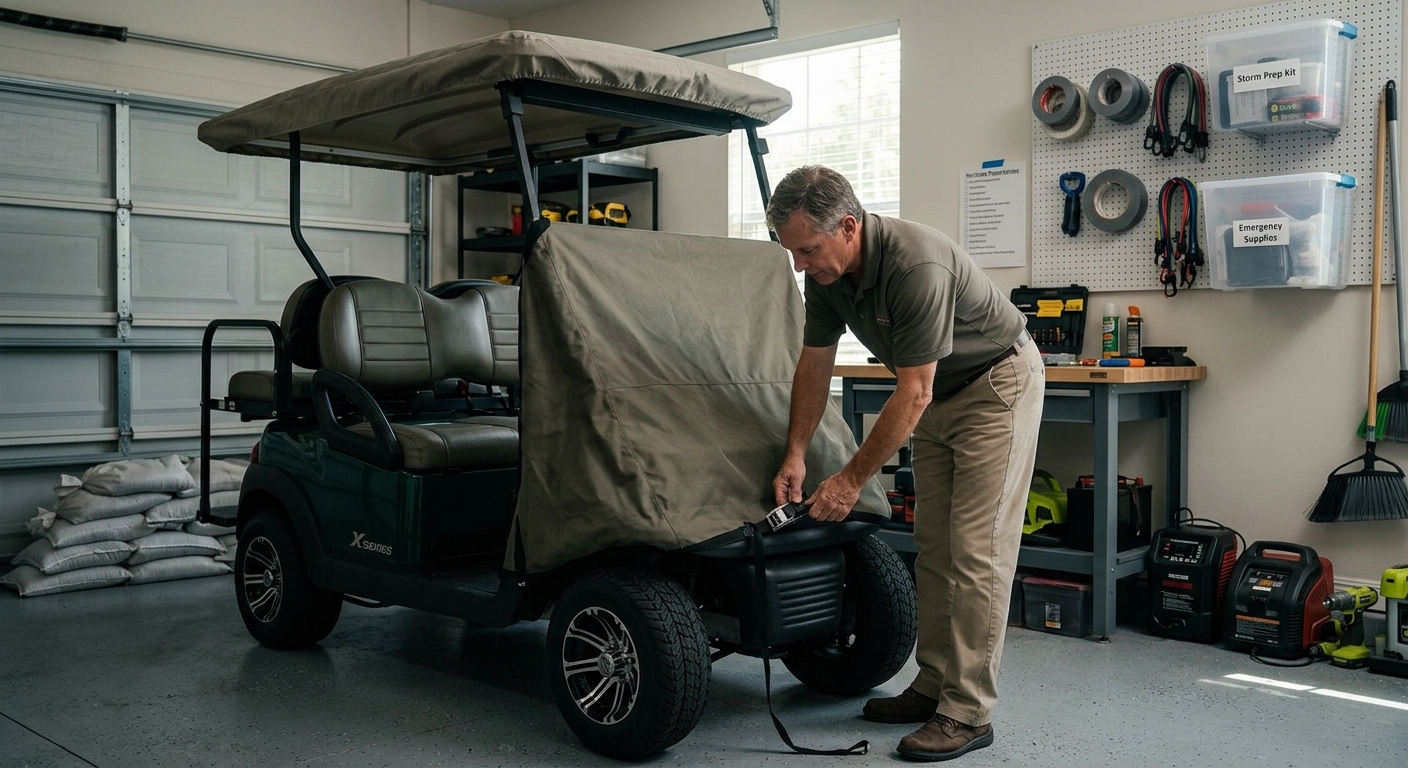
For golf carts that must remain outdoors, securing them properly is paramount. The best method involves using heavy-duty, weather-resistant tie-down straps anchored to a solid structure or ground anchors. These straps should be rated for high winds and fastened tightly over the frame of the golf cart, not just the canopy, to prevent it from being lifted or overturned.
Parking your golf cart in a location sheltered by a sturdy building, away from large trees, power lines, or potential projectiles, can also reduce risk. Remove any loose accessories such as canopies, windshields, seat cushions, and storage bins, as these can easily become airborne debris. Even with the best outdoor securing, the risk of damage remains significantly higher than with indoor storage.
Essential Supplies for 9 Lifesaving Golf Cart Hurricane Prep Tips for South Florida Owners
Effective hurricane preparation for your golf cart relies on having the right tools and supplies readily available. These items are crucial for implementing the 9 Lifesaving Golf Cart Hurricane Prep Tips for South Florida Owners and ensuring your vehicle is as resilient as possible. Gathering these supplies well before hurricane season begins will prevent last-minute rushes and potential shortages.
A well-stocked hurricane kit for your golf cart should include items for securing, protecting electrical components, and facilitating post-storm recovery. Investing in quality supplies now can prevent much larger expenses later. This foresight is a hallmark of responsible golf cart ownership in South Florida.
What Essential Hurricane Supplies Are Needed for Golf Cart Owners?
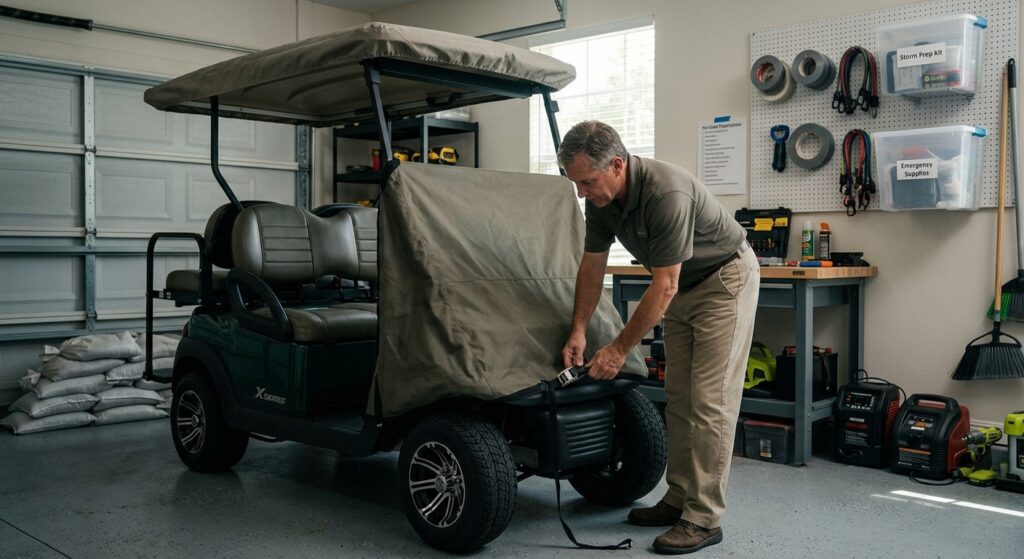
For golf cart owners, a hurricane supply checklist should include: heavy-duty tie-down straps (rated for high winds), ground anchors (if securing outdoors), a durable, waterproof tarp or specialized hurricane-grade cover, and wooden blocks or cinder blocks for elevation. You will also need tools for battery maintenance, such as a battery terminal wrench.
Additionally, a fully charged portable battery jump starter can be invaluable for post-storm recovery, especially if your main power is out. Keep a basic toolkit with wrenches and screwdrivers for removing accessories. Having these items on hand ensures you can perform all necessary preparations efficiently and effectively.
Disconnecting Batteries: A Critical Step in 9 Lifesaving Golf Cart Hurricane Prep Tips for South Florida Owners
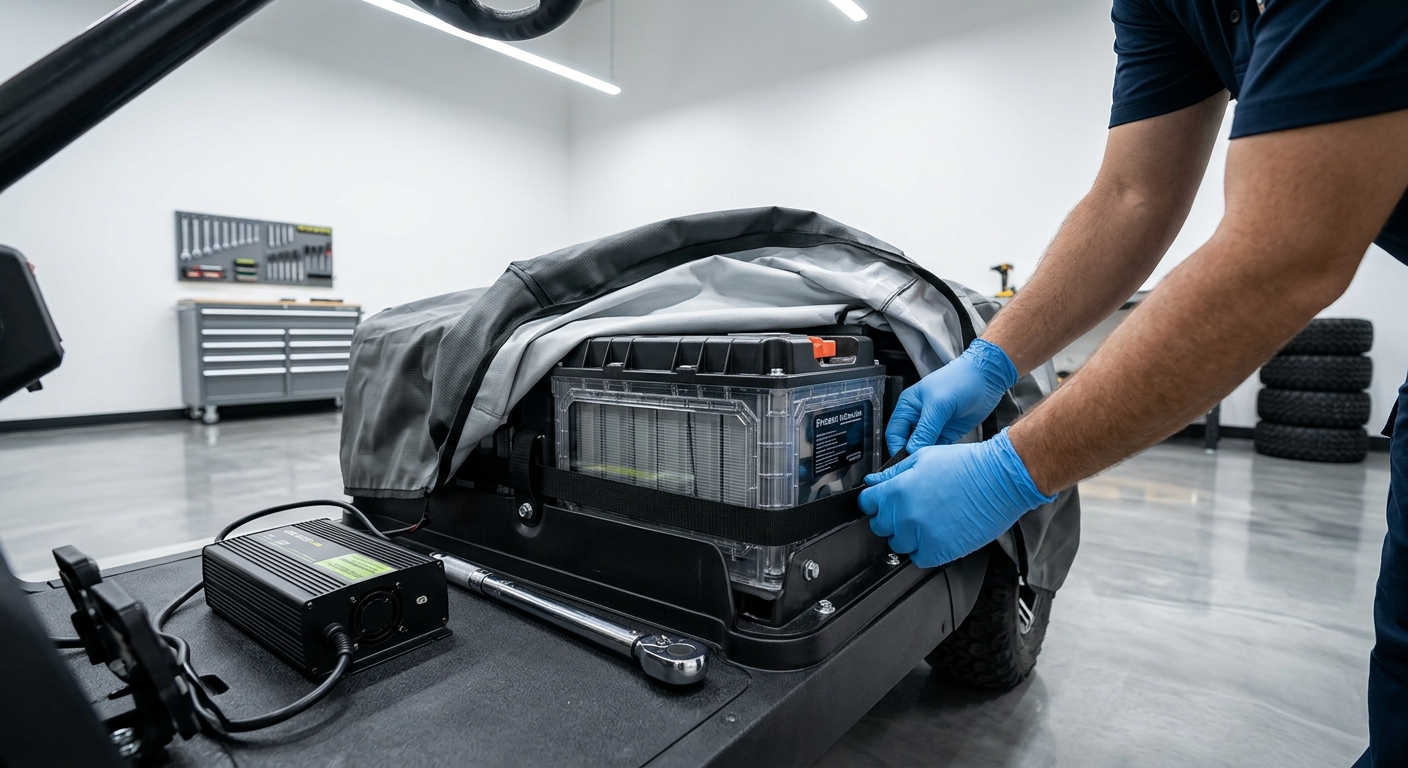
One of the most vital steps in protecting your golf cart is properly managing its batteries. Disconnecting the batteries before a hurricane is a non-negotiable part of the 9 Lifesaving Golf Cart Hurricane Prep Tips for South Florida Owners. This prevents electrical shorts if the cart becomes wet and reduces the risk of battery acid spills, which can cause significant damage to the cart’s frame and components.
For electric golf carts, disconnect the negative terminal cable first. For gasoline carts, disconnect the negative terminal of the starter battery. For prolonged storage or if there’s a high risk of flooding, consider fully removing the batteries and storing them in a dry, elevated location indoors. Ensure batteries are fully charged before disconnecting to prevent deep discharge during storage.
Are Golf Cart Covers Effective Against Hurricane-Force Winds and Rain?
Standard golf cart covers are generally not effective against hurricane-force winds and torrential rain. They are designed for dust and light weather protection, not extreme conditions. High winds can easily tear or rip off typical covers, potentially turning them into dangerous projectiles or leaving your golf cart exposed.
For hurricane conditions, you need a specialized, heavy-duty, hurricane-grade cover designed to be anchored securely. These covers are made from robust, waterproof materials and feature reinforced tie-down points. However, even these are best used in conjunction with indoor storage or robust outdoor securing, as they are a secondary layer of defense, not a primary one, in the overall 9 Lifesaving Golf Cart Hurricane Prep Tips for South Florida Owners strategy.
Need Expert Golf Cart Hurricane Prep or Repairs?
Don’t leave your golf cart’s safety to chance. Whether you need professional hurricane preparation, post-storm damage assessment, or routine maintenance, Phoenix Golf Car is your trusted South Florida partner. Our experts ensure your golf cart is resilient against the elements.
Protecting Your Investment: Insurance and Professional 9 Lifesaving Golf Cart Hurricane Prep Tips for South Florida Owners
Even with the most meticulous preparation, hurricanes can cause unforeseen damage. This is where comprehensive insurance coverage and professional assistance become invaluable components of the 9 Lifesaving Golf Cart Hurricane Prep Tips for South Florida Owners. Understanding your policy and knowing when to seek expert help can significantly reduce the financial burden and stress associated with post-storm recovery.
For many South Florida golf cart owners, their vehicle is more than a leisure item; it’s a vital part of their daily routine. Protecting this asset means not only physical preparation but also financial foresight. Don’t wait until a storm is imminent to review your coverage or seek professional advice.
Understanding Golf Cart Insurance for Hurricane Damage
Golf cart damage from hurricanes in South Florida is typically covered by a comprehensive golf cart insurance policy. This type of coverage usually includes damage from wind, hail, flooding, and falling objects (like trees or debris). It’s crucial to review your specific policy details with your insurance provider to understand your coverage limits, deductibles, and any exclusions.
Some standard homeowner’s policies might offer limited coverage, but a dedicated golf cart policy often provides more extensive protection tailored to the unique risks associated with these vehicles. Ensure your policy is up-to-date and that you understand the claims process before a storm hits. This proactive step is a key element of the 9 Lifesaving Golf Cart Hurricane Prep Tips for South Florida Owners.
Which South Florida Companies Offer Hurricane Preparation Services for Golf Carts?
Several specialized golf cart service providers in South Florida offer comprehensive hurricane preparation services. These services can include secure indoor storage, professional tie-down and anchoring, battery management, and even pre-storm inspections. Engaging with a reputable company like Phoenix Golf Car can provide peace of mind, especially for those who may be evacuating or lack the resources for extensive DIY preparation.
Professional services can also advise on specific community regulations for golf cart readiness and help you acquire hurricane-grade tie-downs or anchoring systems. While there’s an average cost to hurricane-proof a golf cart professionally, the investment can be significantly less than the cost of repairing or replacing a damaged vehicle. For more information on professional services, consider visiting Phoenix Golf Car’s service page.
Common Damage and Post-Storm Recovery: Applying 9 Lifesaving Golf Cart Hurricane Prep Tips for South Florida Owners
Even with the most diligent application of the 9 Lifesaving Golf Cart Hurricane Prep Tips for South Florida Owners, hurricanes can still inflict damage. Understanding the most common types of damage and knowing how to conduct a thorough post-storm inspection are crucial for a safe and effective recovery. Swift and correct action after a hurricane can prevent further complications and ensure your golf cart is restored properly.
The aftermath of a hurricane can be chaotic, but a systematic approach to assessing your golf cart’s condition is vital. Do not rush to start or operate a potentially damaged vehicle, as this could exacerbate issues or pose safety risks.
What Are the Most Common Types of Golf Cart Damage Sustained During a Hurricane?
Golf carts are susceptible to various types of damage during a hurricane. Wind damage often affects body panels, roofs, windshields, and canopies, which can be torn off or shattered. Water damage is particularly insidious, impacting electrical systems, motors, batteries, and controllers, leading to corrosion and component failure.
Impact damage from flying debris, falling trees, or even other vehicles is also common, causing dents, cracks, and structural compromise. Saltwater exposure, if near the coast, accelerates corrosion exponentially. Rust and mold can develop rapidly in damp conditions post-storm, affecting both aesthetics and functionality. These are the primary concerns addressed by the 9 Lifesaving Golf Cart Hurricane Prep Tips for South Florida Owners.
Post-Hurricane Inspection: The Final Step in 9 Lifesaving Golf Cart Hurricane Prep Tips for South Florida Owners
After a hurricane, a careful and systematic inspection of your golf cart is essential before attempting to use it. Begin with a visual check for any obvious damage to the body, tires, canopy, and windshield. Look for signs of water intrusion in the battery compartment, under the seats, and around the motor.
Check all electrical connections for moisture, corrosion, or loose wiring. If the cart was exposed to significant water, do NOT attempt to start it. Instead, have a qualified technician inspect the motor, controller, and wiring. They can safely assess for water damage and perform necessary drying and repairs. This diligent post-storm check is a critical part of the 9 Lifesaving Golf Cart Hurricane Prep Tips for South Florida Owners to prevent further issues.
Even with the best 9 Lifesaving Golf Cart Hurricane Prep Tips for South Florida Owners, damage can occur. Knowing what to look for and when to call a professional can make all the difference in the recovery process. Always prioritize safety and thoroughness over speed when dealing with post-hurricane assessments.
Your Invitation to Unbeatable Golf Cart Protection
The threat of hurricanes is an undeniable reality for South Florida golf cart owners. However, with the right preparation and knowledge, you can significantly mitigate the risks and protect your valuable investment. Embracing these 9 Lifesaving Golf Cart Hurricane Prep Tips for South Florida Owners ensures you are well-prepared for whatever the storm season brings.
From securing your golf cart in a safe location and disconnecting batteries to understanding your insurance coverage and planning for post-storm recovery, each step plays a crucial role. Don’t leave the safety of your golf cart to chance. Proactive measures not only save money but also provide invaluable peace of mind.
For expert assistance with your golf cart’s hurricane readiness or any post-storm repairs, trust the professionals at Phoenix Golf Car. Our team is dedicated to helping South Florida owners keep their golf carts safe and operational. Contact us today to ensure your golf cart is ready for anything.
Frequently Asked Questions About Golf Cart Hurricane Prep
What should I do with my golf cart when a hurricane is approaching South Florida?
When a hurricane approaches South Florida, the first step for golf cart owners is to secure it properly. Consider moving it indoors if possible, disconnecting batteries, and removing any loose accessories. Always follow local emergency guidelines and official advisories for your area.
How can I protect my golf cart from hurricane damage in Florida?
Protecting your golf cart from hurricane damage in Florida involves several steps: secure it indoors if possible, use heavy-duty tie-downs if left outside, disconnect the batteries, remove sensitive electronics, and consider a durable, hurricane-grade cover. Elevating it on blocks can also help with potential flooding.
Where is the safest place to store a golf cart during a hurricane in South Florida?
The safest place to store a golf cart during a hurricane in South Florida is typically inside a sturdy, enclosed structure such as a garage, shed, or a commercial storage facility designed to withstand hurricane-force winds. Avoid open carports or areas prone to flooding.
Are golf cart covers effective against hurricane-force winds and rain?
Standard golf cart covers are generally not effective against hurricane-force winds and torrential rain; they can tear or blow off, potentially causing more damage. For hurricane conditions, seek out specialized, heavy-duty hurricane-grade covers designed to be anchored securely, or prioritize indoor storage.
What essential hurricane supplies are needed for golf cart owners?
Essential hurricane supplies for golf cart owners include heavy-duty tie-down straps, battery terminal wrenches, tarps or robust covers, and potentially wooden blocks to elevate the cart. Having a fully charged portable battery jump starter is also wise for post-storm recovery.
Should golf cart batteries be removed or disconnected before a hurricane?
Yes, golf cart batteries should be disconnected before a hurricane. Removing the negative terminal cable can prevent electrical shorts if the cart gets wet and reduces the risk of battery acid spills. For prolonged storage or flood risk, consider fully removing the batteries and storing them safely indoors.
What kind of insurance covers golf cart damage from hurricanes in South Florida?
Golf cart damage from hurricanes in South Florida is typically covered by a comprehensive golf cart insurance policy. This usually includes damage from wind, hail, and flooding. Review your policy carefully or consult your insurance provider to ensure you have adequate coverage for natural disasters.
What are the most common types of golf cart damage sustained during a hurricane?
Common types of golf cart damage during a hurricane include wind damage to body panels, roofs, and windshields; water damage to electrical systems, motors, and batteries; and impact damage from flying debris or falling trees. Rust and corrosion can also occur rapidly post-storm.
What post-hurricane inspection steps are recommended for a golf cart?
Post-hurricane, carefully inspect your golf cart for any visible damage, especially to the tires, body, and canopy. Check all electrical connections for moisture or corrosion, and ensure the battery compartment is dry. Have a qualified technician inspect the motor, controller, and wiring before attempting to start it, particularly if it was exposed to water.