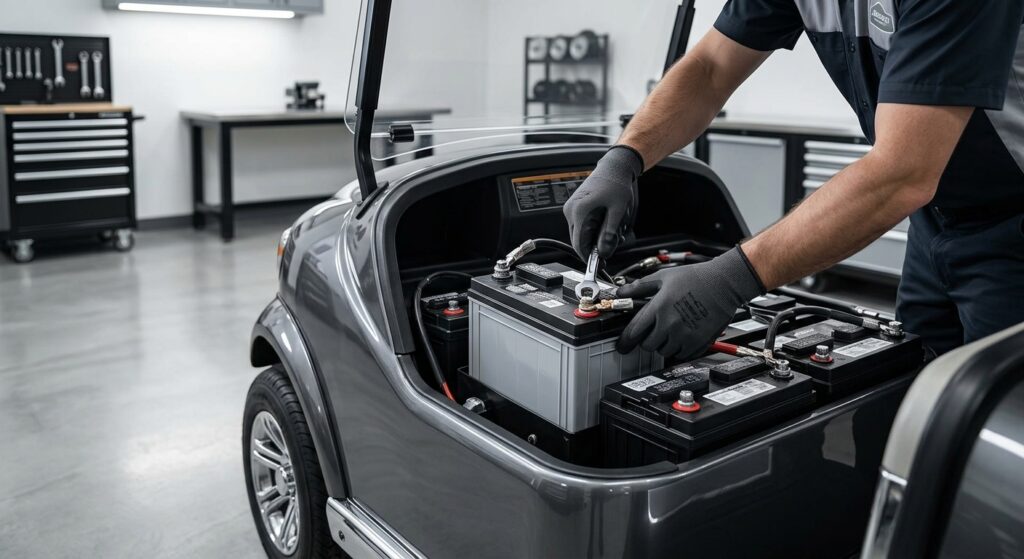
Golf Cart Chargers: 9 Essential Errors for Battery Life
Golf Cart Chargers are crucial for maintaining the health and longevity of your golf cart batteries. However, many owners unknowingly make critical mistakes that drastically shorten battery life, leading to costly replacements and inconvenient breakdowns. Understanding the proper use and care of your Golf Cart Chargers is not just about convenience; it’s about protecting your investment and ensuring your cart is always ready for the course or your daily errands. This comprehensive guide will illuminate the nine most common errors to avoid, providing you with the knowledge to maximize your battery’s performance and extend its lifespan. By mastering these essential practices, you can ensure your golf cart remains a reliable companion for years to come.
Key Takeaways
- Discover the importance of matching your Golf Cart Chargers to your specific battery voltage and type to prevent damage.
- Learn how to avoid common charging errors like overcharging or undercharging, which significantly impact battery health.
- Understand the critical role of regular maintenance for both your batteries and your Golf Cart Chargers.
- Identify when to seek professional help for troubleshooting or replacing your Golf Cart Chargers to ensure optimal performance.
Avoiding Mistake #1: Using the Wrong Golf Cart Chargers
One of the most detrimental errors golf cart owners make is using Golf Cart Chargers that are incompatible with their cart’s battery system. Not all chargers are created equal, and mismatching voltage or amperage can severely damage your batteries, reducing their capacity and lifespan. It’s crucial to understand the different types of golf cart chargers available and how to select the correct one for your specific needs.
There are primarily two types of Golf Cart Chargers: on-board and off-board. On-board chargers are integrated into the cart, offering convenience, while off-board chargers are external units. Both can be automatic, shutting off when the battery is full, or manual. They also vary by voltage (e.g., 36V, 48V) and amperage, which dictates charging speed. Smart chargers are gaining popularity due to their advanced features, which optimize charging cycles and help extend battery life.
Choosing the Correct Golf Cart Chargers for Your System
To choose the correct Golf Cart Chargers, you must match the charger’s voltage to your golf cart’s battery system. For instance, a 48V golf cart requires a 48V charger, and a 36V golf cart needs a 36V charger. Using an incorrect voltage can cause irreversible damage to your batteries or the charger itself, and it poses a significant safety risk. Always consult your golf cart’s manual or a reputable dealer to confirm the exact specifications for optimal and safe charging.
Furthermore, you should never use a standard car battery charger to charge golf cart batteries. Golf carts utilize multiple batteries wired in series, creating a higher voltage system (e.g., six 6V batteries for a 36V system). Car chargers are designed for single 12V batteries and lack the necessary voltage and amperage regulation for golf cart battery packs. This can lead to improper charging, battery damage, and potential hazards. Always invest in dedicated Golf Cart Chargers.
Avoiding Mistake #2: Overcharging Your Golf Cart Batteries
Overcharging is a silent killer of golf cart batteries. Leaving your Golf Cart Chargers connected for too long can lead to excessive heat, water loss, and plate corrosion, all of which reduce battery capacity and shorten its overall lifespan. While older, manual chargers required careful monitoring, modern smart Golf Cart Chargers have largely mitigated this risk.
Smart Golf Cart Chargers with automatic shut-off features are highly recommended and generally worth the investment. These chargers prevent overcharging by monitoring battery voltage and automatically stopping the charging process once a full charge is achieved. This protects your batteries, conserves energy, and simplifies the charging process, ultimately extending the life of your golf cart batteries. It typically takes 8-10 hours to fully charge a golf cart from a depleted state, but this can vary based on battery size and charger amperage.
For optimal battery health, it’s best to charge your golf cart after each significant use. If your cart is stored for an extended period, ensure it receives a
Need Expert Golf Cart Service or a New Charger?
Whether you’re looking for a reliable new golf cart charger, professional battery diagnostics, or even a brand-new custom golf cart, Phoenix Golf Car in Pompano Beach, FL, is your trusted partner. Our experts ensure your golf cart runs perfectly and its batteries last longer.
Frequently Asked Questions About Golf Cart Chargers
Learn more from authoritative resources: Consumer Reports and HGTV.