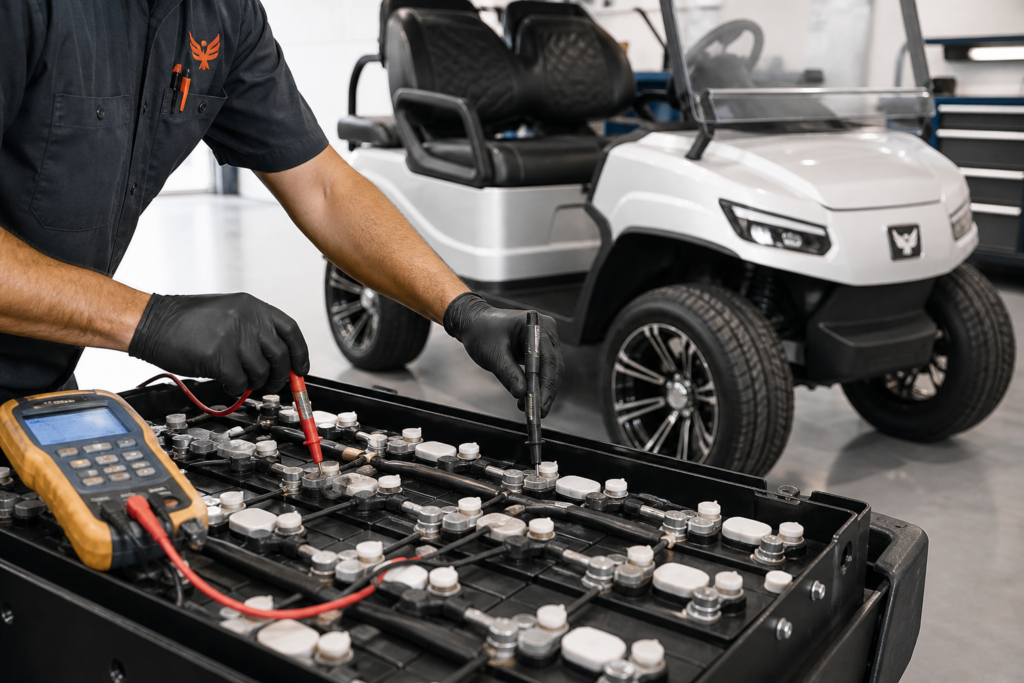
Golf Cart Battery Problems can quickly turn a leisurely ride into a frustrating standstill. For golf cart owners in Pompano Beach and across South Florida, understanding these common issues and knowing how to address them is crucial for maintaining performance and enjoying your vehicle. At Phoenix Golf Car, we specialize in diagnosing and resolving all types of battery issues, ensuring your golf cart remains reliable and ready for the course or community.
This guide will walk you through 7 of the most frequent battery challenges and provide ultimate fixes, from expert troubleshooting to advanced lithium conversions. We aim to equip you with the knowledge to keep your cart running smoothly, backed by the professional services offered by our team.
Key Takeaways
- Identify the 7 most common Golf Cart Battery Problems, including issues with charging, draining, and overall performance.
- Understand the critical role of proper maintenance and charging habits in extending the life and efficiency of your golf cart batteries.
- Learn how professional diagnostics from Phoenix Golf Car can pinpoint underlying issues that DIY solutions might miss.
- Discover the benefits of upgrading to high-performance batteries, including advanced lithium-ion options, for enhanced longevity and power.
- Recognize the signs of battery corrosion and sulfation and the steps to prevent these damaging conditions.
- Explore how Phoenix Golf Car offers comprehensive repair, replacement, and lithium conversion services for all major golf cart brands.
- Realize that proactive service in Pompano Beach, FL, can save you time and money by preventing major battery failures.
Golf Cart Battery Problems: When They Won’t Hold a Charge
One of the most frustrating Golf Cart Battery Problems is when your cart simply refuses to hold a charge. This issue can leave you stranded and disrupt your plans, whether you are heading to the golf course or cruising through your community. A battery that won’t hold a charge often points to underlying issues that require careful diagnosis.
Common Causes of Charging Failure
Several factors can contribute to a golf cart battery’s inability to hold a charge. These include a faulty charger, damaged battery cells, loose or corroded connections, or even an internal short circuit within the battery pack. Sometimes, it is simply a matter of the batteries reaching the end of their lifespan.
Troubleshooting Steps for Homeowners
Before seeking professional help, you can perform a few basic checks. Ensure your charger is functioning correctly by testing it on another battery if possible. Inspect all battery terminals for corrosion and tighten any loose connections. Verify that the water levels in your lead-acid batteries are adequate, topping them off with distilled water if needed.
Phoenix Golf Car’s Expert Diagnostics
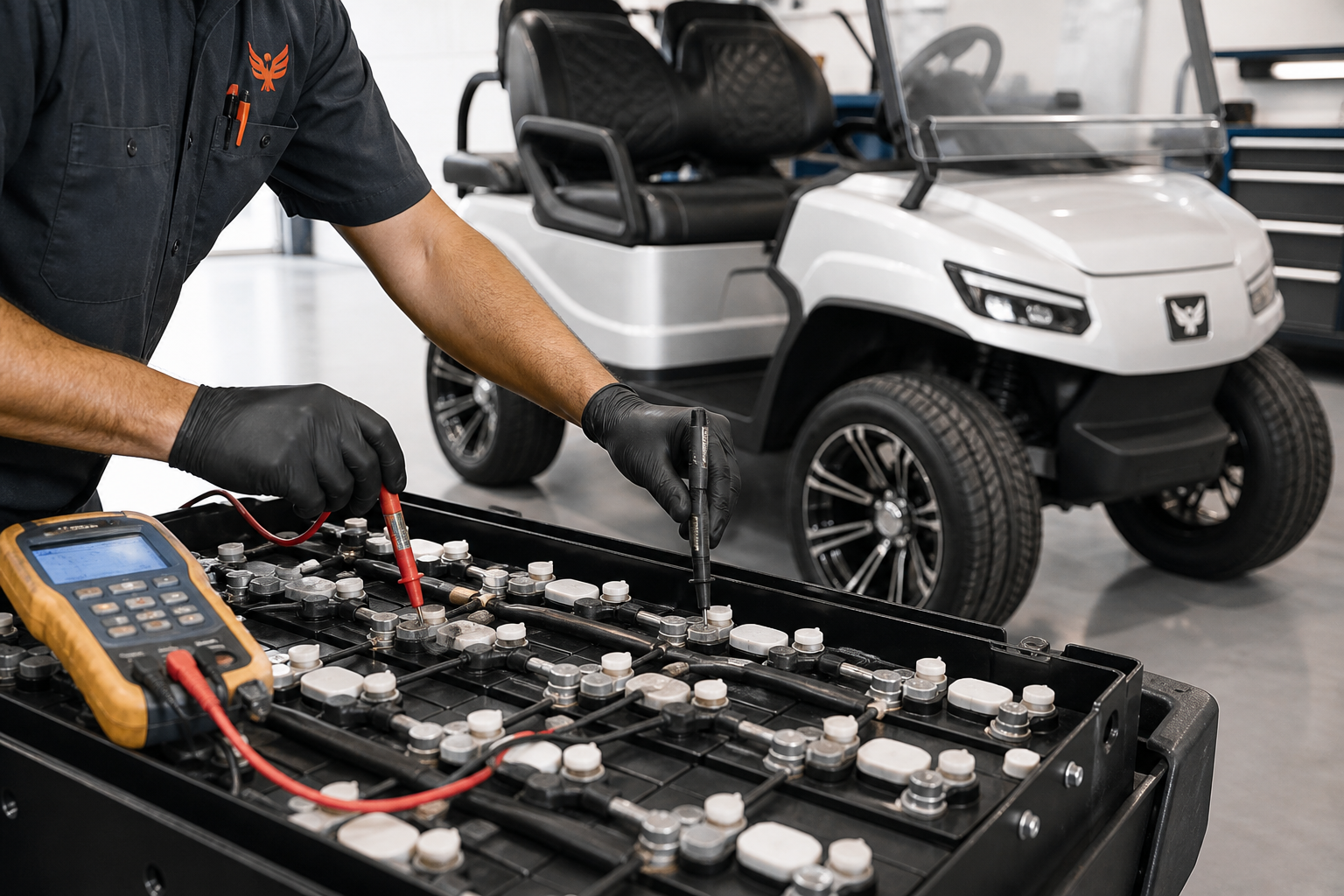
If basic troubleshooting doesn’t resolve the issue, it is time for professional intervention. At Phoenix Golf Car in Pompano Beach, FL, our certified technicians use specialized diagnostic equipment to accurately assess your battery pack. We can identify whether the problem lies with the charger, individual battery cells, or the entire system, providing a precise roadmap for repair.
Uneven Draining and Premature Golf Cart Battery Problems
An often-overlooked issue that leads to significant Golf Cart Battery Problems is uneven draining among the individual batteries in a pack. When one battery drains faster than the others, it creates an imbalance that stresses the entire system, leading to reduced range and premature failure for all batteries. This imbalance can severely impact your cart’s performance.
Understanding Battery Imbalance
In a series-wired battery pack, all batteries should discharge and charge at a similar rate. If one battery has a higher internal resistance or a weaker cell, it will work harder and deplete faster. This forces the remaining batteries to compensate, leading to overall inefficiency and a shorter lifespan for the entire pack.
The Importance of Proper Charging Cycles
Consistent and proper charging is vital to prevent uneven draining. Always allow your golf cart batteries to complete a full charge cycle after each use. Interrupting charge cycles or frequently running batteries to extremely low levels can exacerbate imbalances and accelerate wear.
Phoenix Golf Car’s Balancing and Service Solutions
Phoenix Golf Car offers expert services to address uneven draining. Our technicians can perform load tests on individual batteries to identify weak links within your pack. We can then recommend solutions ranging from rebalancing the pack to replacing specific faulty batteries, ensuring your system operates harmoniously. We also provide high-performance batteries and chargers designed for optimal balance and longevity.
Experience Reliable Golf Cart Performance with Phoenix Golf Car
Don’t let battery issues sideline your golf cart. Our certified technicians at Phoenix Golf Car in Pompano Beach offer expert diagnosis, repair, and replacement services, including advanced lithium conversions.
The Overcharging Golf Cart Battery Problem and How to Prevent It
While undercharging is a common concern, overcharging is another significant factor contributing to battery issues, particularly with lead-acid batteries. This can cause irreversible damage, shorten battery life, and even pose safety risks. Preventing overcharging is key to maintaining your battery health.
The Dangers of Overcharging
Overcharging leads to excessive gassing, which results in significant water loss from the battery cells. This can expose the battery plates, causing sulfation and permanent damage. It also generates excessive heat, which can warp battery cases and, in extreme cases, lead to thermal runaway, a dangerous condition.
Smart Charging Practices and Equipment
Using a smart charger designed for golf cart batteries is the best defense against overcharging. These chargers typically have automatic shut-off features or maintenance modes that prevent continuous charging once the battery is full. Regularly checking your charger’s functionality is also important.
Phoenix Golf Car’s Charger and Battery Management Expertise
At Phoenix Golf Car, we stock a wide array of high-performance batteries and chargers that incorporate advanced charging technologies. Our experts can advise you on the best charging practices and recommend chargers that are specifically designed to protect your batteries from overcharging, extending their operational life. We ensure you have the right tools to prevent this common problem.
Shortened Lifespan: A Major Golf Cart Battery Problem
Experiencing a shortened lifespan is one of the most impactful battery issues for owners. Batteries are a significant investment, and when they fail prematurely, it can be both costly and inconvenient. Understanding the factors that contribute to early battery demise is essential for prevention.
Factors Affecting Battery Longevity
Several elements influence how long your golf cart batteries will last. These include consistent deep discharging, improper charging habits, lack of regular maintenance (especially for lead-acid types), extreme temperatures, and simply using low-quality batteries. The typical lifespan for lead-acid batteries is 3-5 years, while lithium-ion can last 8-10 years or more.
Routine Maintenance for Extended Life
For lead-acid batteries, routine maintenance is paramount. This includes checking water levels monthly and topping off with distilled water, cleaning terminals to prevent corrosion, and ensuring connections are tight. A comprehensive guide to battery care emphasizes these practices for optimal performance. Lithium-ion batteries require less maintenance but still benefit from periodic inspections.
Timely Replacement and Quality Batteries from Phoenix Golf Car
When batteries do reach the end of their useful life, timely replacement is crucial to avoid further damage to your golf cart’s electrical system. Phoenix Golf Car offers a diverse inventory of high-performance batteries from trusted brands like Trojan, US Battery, Interstate, Allied, RoyPow, and Eco Battery. Our technicians can help you choose the right battery type and voltage for your specific Madjax X-Series, E-Series, or other major brand golf cart model, ensuring maximum longevity and performance.
Low Power and Performance Issues
A noticeable drop in speed, sluggish acceleration, or a significantly reduced range are all classic signs of battery issues related to low power and performance. These issues directly impact your driving experience and can indicate that your batteries are struggling to deliver the necessary output.
Symptoms of Underperforming Batteries
Beyond reduced speed and range, you might notice your battery indicator dropping rapidly, or the cart struggling on inclines. These symptoms suggest that the battery pack is not providing consistent voltage or current, often due to aging, internal resistance, or an inability to hold a full charge.
Advanced Testing and Diagnostics
Diagnosing low power issues goes beyond a simple voltage check. Professional technicians at Phoenix Golf Car utilize advanced load testing and impedance testing equipment. These tools can measure the battery’s ability to deliver current under load, revealing hidden weaknesses or failing cells that might not be apparent with a multimeter.
Phoenix Golf Car’s Repair and Restoration Services
Our expert team in Pompano Beach provides comprehensive repair and restoration services for golf cart batteries. Whether it’s replacing a single faulty battery in a pack, reconditioning lead-acid batteries, or performing a full battery system overhaul, we ensure your cart regains its optimal power and performance. We service all major golf cart brands, from compact 2-seaters to 6-passenger limos and rugged utility carts.
Corrosion and Sulfation: Specific Issues
Corrosion on battery terminals and sulfation within the battery cells are two distinct yet interconnected battery issues that can severely hinder performance and shorten lifespan. Both are common, especially in lead-acid batteries, and require specific attention to prevent and treat.
Understanding Corrosion and Its Impact
Corrosion, typically a white or blue-green powdery substance around battery terminals, is caused by the reaction of battery acid with metal terminals and cables. This buildup creates resistance, impeding the flow of electricity and preventing proper charging and discharging. It can also damage cables and connections over time.
The Dangers of Sulfation
Sulfation occurs when lead sulfate crystals build up on the battery plates, usually due to undercharging, deep discharging, or prolonged storage in a discharged state. These crystals harden over time, reducing the battery’s capacity to hold a charge and its overall efficiency. Severe sulfation is often irreversible and a leading cause of battery failure.
Cleaning, Prevention, and Specialized Treatment
Regular cleaning of battery terminals with a wire brush and a baking soda-water solution can remove corrosion. Applying anti-corrosion spray or grease after cleaning helps prevent future buildup. To prevent sulfation, always keep batteries fully charged, especially during storage. For existing sulfation, some battery reconditioning techniques can help, but professional assessment is often needed. Phoenix Golf Car provides thorough battery cleaning and maintenance services, ensuring your connections are pristine and your batteries are protected.
Upgrading from Common Battery Issues: Lithium Conversions and Expert Service
If you’re tired of recurring Golf Cart Battery Problems, an upgrade might be the ultimate solution. For many Pompano Beach golf cart owners, converting to lithium-ion batteries offers a transformative experience, providing superior performance and longevity. Phoenix Golf Car specializes in these advanced conversions.
The Benefits of Lithium-Ion Batteries
Lithium-ion batteries offer numerous advantages over traditional lead-acid batteries. They are significantly lighter, leading to improved speed, range, and less wear on your cart’s suspension. They charge faster, maintain consistent power output throughout their discharge cycle, and boast a much longer lifespan, often 8-10 years or more. This means fewer replacements and less maintenance.
Phoenix Golf Car’s Professional Lithium Conversions
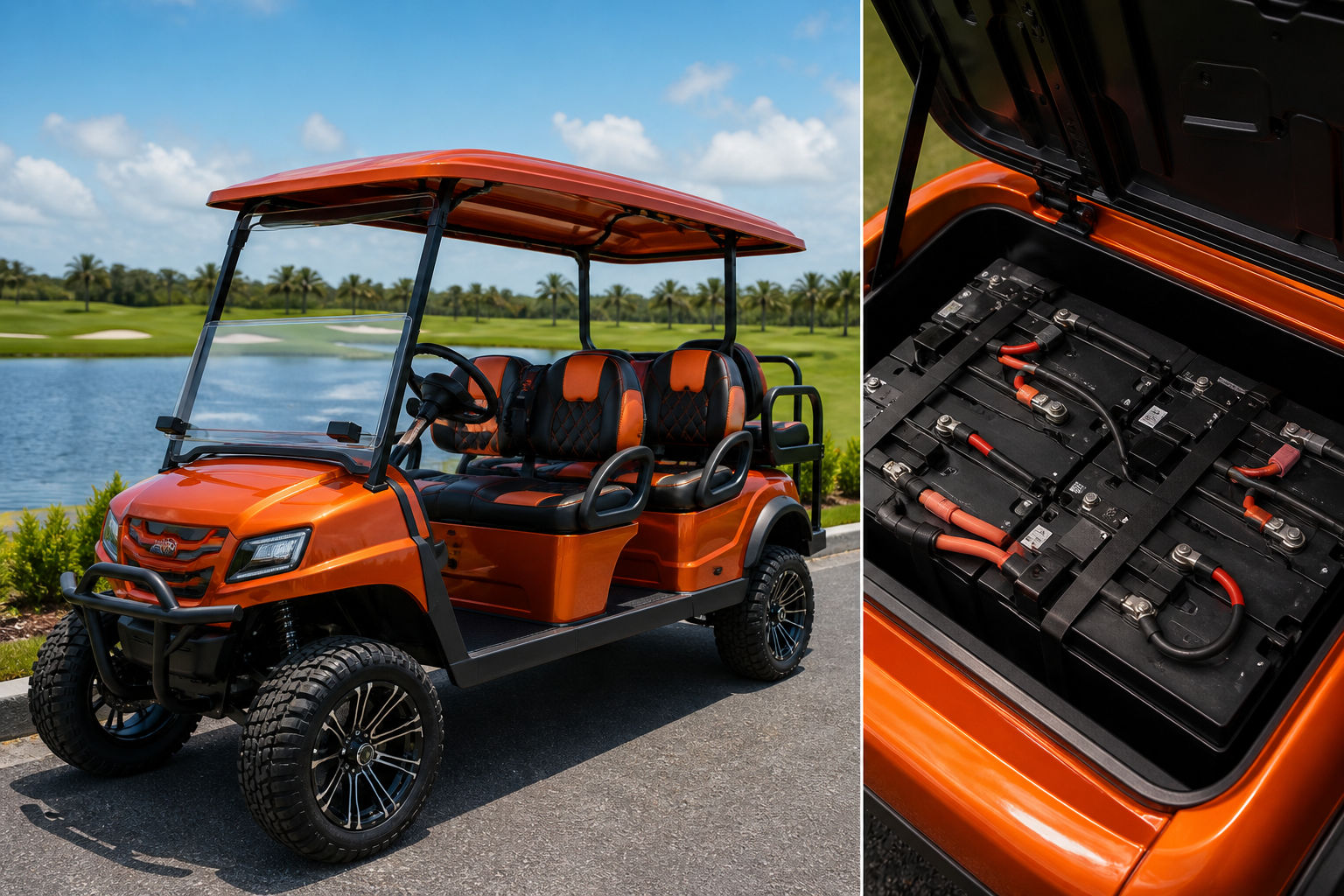
As a premier provider of golf cart solutions, Phoenix Golf Car offers professional lithium conversions for all major golf cart brands. Our certified technicians expertly install high-performance lithium-ion batteries from top brands like Allied, RoyPow, and Eco Battery. We ensure smooth integration with your existing system, providing a durable and high-performance upgrade that eliminates many common battery headaches.
Comprehensive Support and Financing Options
Beyond conversions, Phoenix Golf Car provides a wide array of parts, high-performance batteries, and chargers to keep your vehicle running at peak efficiency. We also offer complete vehicle rebuilds tailored for both personal and commercial use. To make upgrading accessible, we provide flexible financing options and pre-approval services, ensuring a smooth experience for customers looking to improve their local transportation. Visit us in Pompano Beach, FL, to explore how we can solve your battery challenges.
Your Invitation to Reliable Golf Cart Performance
Addressing Golf Cart Battery Problems proactively is key to enjoying uninterrupted rides and extending the life of your vehicle. From understanding why your batteries won’t hold a charge to preventing corrosion and considering advanced lithium conversions, the right knowledge and expert support make all the difference. Phoenix Golf Car is your trusted partner in Pompano Beach, FL, offering comprehensive services for all major golf cart brands.
Don’t let battery issues keep you off the course or out of your community. Our team provides expert diagnostics, repair, and high-quality battery replacements, including professional lithium conversions. Contact Phoenix Golf Car today to schedule your battery service and ensure your golf cart delivers consistent, powerful performance.
Frequently Asked Questions About Golf Cart Battery Problems
How much does it cost to replace golf cart batteries?
Replacing golf cart batteries varies significantly based on battery type (lead-acid vs. lithium), voltage, and brand. Traditional lead-acid battery sets can range from $600 to $1,500, while a high-performance lithium-ion conversion might cost $2,000 to $4,000 or more. Phoenix Golf Car provides transparent quotes after assessing your specific needs and vehicle model.
What are the best brands for golf cart batteries?
For lead-acid batteries, popular and reliable brands include Trojan, US Battery, and Interstate, known for their durability and performance. When considering lithium-ion, top brands like Allied, RoyPow, and Eco Battery offer superior longevity, lighter weight, and consistent power delivery. Phoenix Golf Car stocks and recommends a range of high-quality batteries tailored to different golf cart models and usage requirements.
Can a golf cart battery be overcharged, and what are the effects?
Yes, overcharging a golf cart battery can cause significant damage, especially with lead-acid types. It leads to excessive water loss, plate corrosion, and can severely shorten the battery’s lifespan. Overcharging also generates heat, which can warp battery cases and even pose a safety risk.
Why is one golf cart battery draining faster than the others?
If one battery in your pack is draining faster, it often indicates an imbalance within the system. This could be due to a faulty cell, a loose connection, or a short circuit in that specific battery. Such an imbalance can stress the entire pack and reduce overall performance and lifespan.
What are the common signs of a failing golf cart battery?
Key signs of failing golf cart batteries include a noticeable decrease in range or speed, slow acceleration, or the battery indicator dropping quickly. You might also observe physical symptoms such as bulging battery cases, corrosion around terminals, or a sulfur smell. Consistent difficulty holding a charge is another strong indicator.
Who offers reliable golf cart battery testing services near me?
Phoenix Golf Car in Pompano Beach offers comprehensive golf cart battery testing services. Our expert technicians use specialized diagnostic equipment to accurately assess your battery’s health, identify underlying issues, and recommend the most effective solutions. We ensure your golf cart receives precise and professional attention.
How often should I perform routine maintenance on my golf cart batteries?
For lead-acid batteries, routine maintenance, including checking water levels and cleaning terminals, should ideally be performed monthly. Lithium-ion batteries require significantly less maintenance but still benefit from periodic inspections to ensure connections are secure. Regular professional checks from Phoenix Golf Car can identify potential issues before they become major problems.
Are lithium-ion golf cart batteries a good investment for golf cart battery issues?
Yes, converting to lithium-ion batteries is an excellent investment for many golf cart owners facing recurring battery problems. They offer a longer lifespan, faster charging, consistent power output, and are significantly lighter than traditional lead-acid batteries. Phoenix Golf Car specializes in professional lithium conversions, providing a durable and high-performance upgrade.