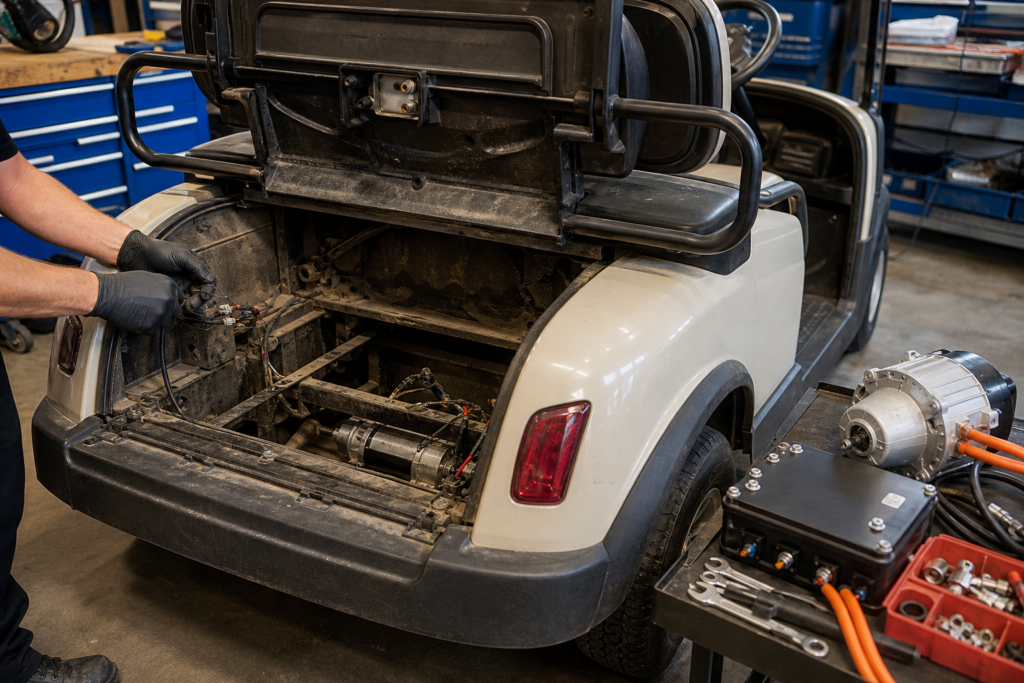
Are you considering transforming your gas-powered golf cart into an efficient, eco-friendly electric model? The right Electric Conversion Steps can revitalize your vehicle, offering quieter operation, reduced emissions, and often, enhanced performance. For golf cart owners in Pompano Beach and across South Florida, understanding these essential steps is the first move towards a powerful and sustainable ride.
Converting your gas golf cart to electric power involves more than just swapping out an engine; it’s a comprehensive upgrade that requires careful planning and expert execution. This guide will walk you through the 7 essential tips for a successful conversion, highlighting how Phoenix Golf Car provides the specialized services and high-quality components needed to achieve amazing results.
Key Takeaways
- Understand the 7 essential Electric Conversion Steps to transform your gas golf cart into an efficient electric vehicle.
- Discover the significant benefits of converting to electric, including lower maintenance and a reduced environmental footprint.
- Learn about the critical components required for a successful conversion, from motors to advanced battery systems.
- Identify how to choose the optimal motor and battery technology, such as professional lithium conversions offered by Phoenix Golf Car.
- Gain insight into the typical costs involved and how Phoenix Golf Car provides transparent pricing and flexible financing options.
- Recognize the value of professional expertise from Phoenix Golf Car, an authorized Madjax dealer specializing in customization and upgrades.
- Avoid common pitfalls in golf cart EV conversions by understanding crucial safety and compatibility considerations.
What are the Essential Electric Conversion Steps for Your Gas Golf Cart?
The essential Electric Conversion Steps for your gas golf cart involve a systematic process of removing the internal combustion engine and its associated components, then installing an electric motor, battery bank, controller, and charging system. This transformation requires careful planning, component selection, and precise installation to ensure safety and optimal performance. For many golf cart owners, this process represents a significant upgrade in efficiency and user experience.
The journey typically begins with a thorough assessment of your existing gas golf cart’s chassis and frame to ensure it can safely support the new electric components. Following this, the gas engine, fuel tank, exhaust system, and transmission are carefully removed. The next phases focus on integrating the new electric drivetrain, which includes mounting the electric motor, installing the battery trays, wiring the controller, and setting up the charging port. Each step demands attention to detail and adherence to safety protocols.
A Step-by-Step Overview of the Conversion Process
Successfully converting a gas golf cart to electric power involves several key stages, each critical to the final outcome. These steps ensure that your converted vehicle is reliable, efficient, and meets your performance expectations.
- Initial Assessment and Planning: Evaluate your golf cart’s condition and determine your performance goals (speed, range, torque). This helps in selecting appropriate components.
- Gas System Removal: Safely remove the gas engine, fuel tank, exhaust, and related components. This step requires proper disposal of fuel and fluids.
- Chassis Preparation: Clean and inspect the frame for any necessary repairs or modifications to accommodate electric components, such as battery trays.
- Motor and Drivetrain Installation: Mount the new electric motor and connect it to the existing differential or a new electric transaxle.
- Battery Bank Installation: Securely install the chosen batteries (lead-acid or lithium) in their designated trays, ensuring proper weight distribution.
- Controller and Wiring: Install the motor controller, which manages power flow, and meticulously wire all electrical components, including the accelerator pedal, forward/reverse switch, and safety cut-offs.
- Charging System Integration and Testing: Install the onboard charger and charging port. Conduct comprehensive testing of all systems to verify functionality, safety, and performance before final delivery.
Why Convert Your Gas Golf Cart to Electric Power?
Converting your gas golf cart to electric power offers a multitude of compelling advantages, making it an increasingly popular choice for owners in South Florida. The primary benefits include significantly reduced operating costs, quieter operation, and a more environmentally friendly footprint. This transition aligns with a growing desire for sustainable mobility solutions, providing a modern upgrade to your existing vehicle.
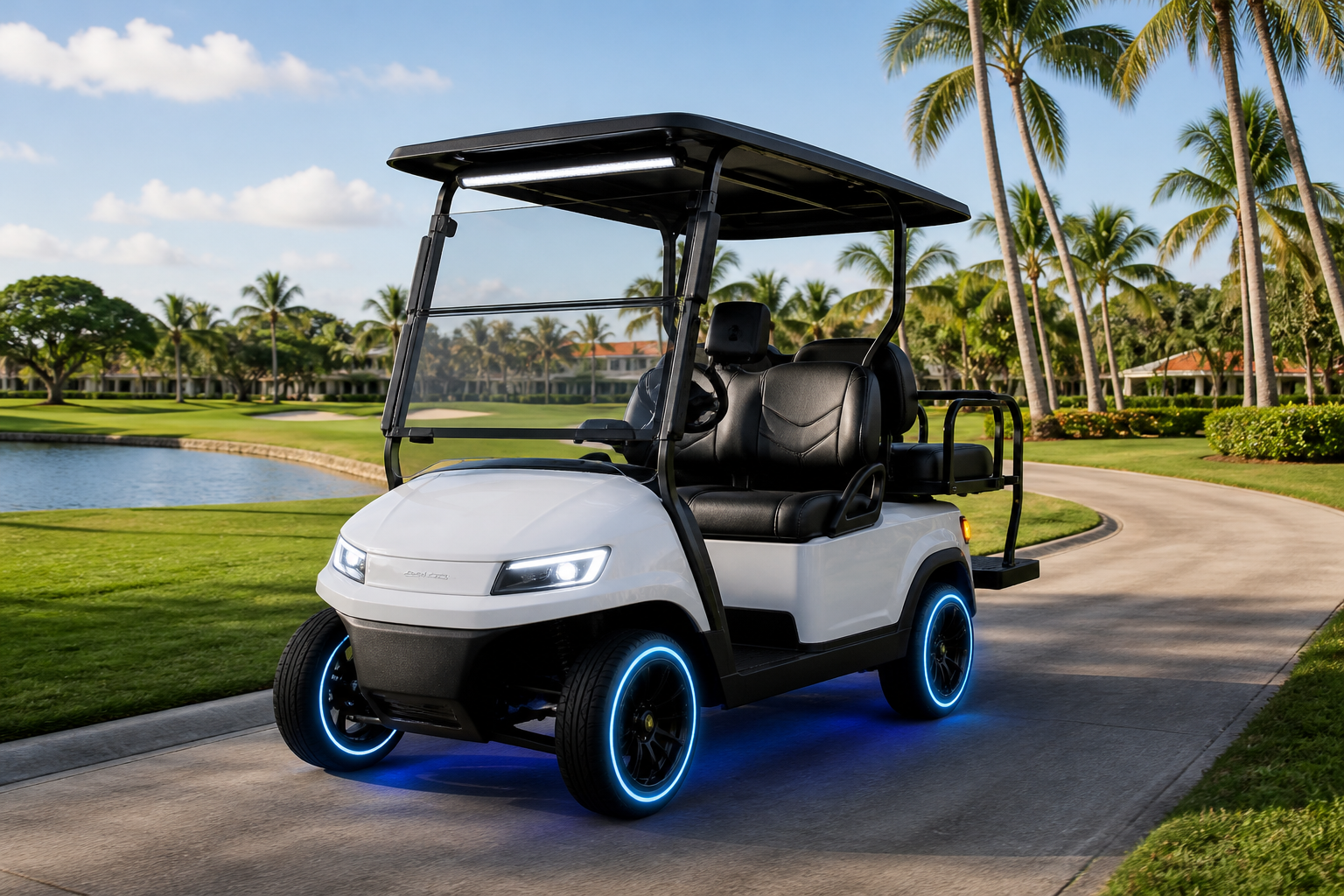
Beyond the environmental impact, electric golf carts typically require less maintenance compared to their gas counterparts. You eliminate the need for oil changes, spark plug replacements, and fuel system upkeep, leading to fewer trips to the service center. The immediate torque of an electric motor also provides a smooth and responsive driving experience, often surpassing the acceleration of many gas models. Phoenix Golf Car actively helps customers transition to green energy through electric golf cart mobility, offering solutions that enhance both performance and eco-consciousness.
Key Advantages of an Electric Golf Cart
Making the switch from gas to electric brings several tangible improvements to your golf cart experience. These benefits contribute to both your enjoyment and your wallet.
- Environmental Impact: Electric golf carts produce zero tailpipe emissions, contributing to cleaner air and a healthier environment, especially important in our beautiful South Florida communities.
- Reduced Noise Pollution: Enjoy a nearly silent ride, perfect for early morning golf rounds, quiet neighborhood cruising, or hunting without disturbing wildlife.
- Lower Running Costs: Electricity is generally much cheaper than gasoline, leading to substantial savings on fuel over the lifespan of your cart.
- Simpler Maintenance: Electric motors have fewer moving parts than gas engines, resulting in less frequent and less complex maintenance requirements.
- Enhanced Performance: Electric motors deliver instant torque, providing quick acceleration and consistent power, particularly useful for climbing inclines.
- Customization Potential: Electric platforms often allow for easier integration of performance upgrades, such as advanced controllers and lithium batteries, for a truly customized ride.
What Components are Necessary for a Golf Cart Electric Conversion?
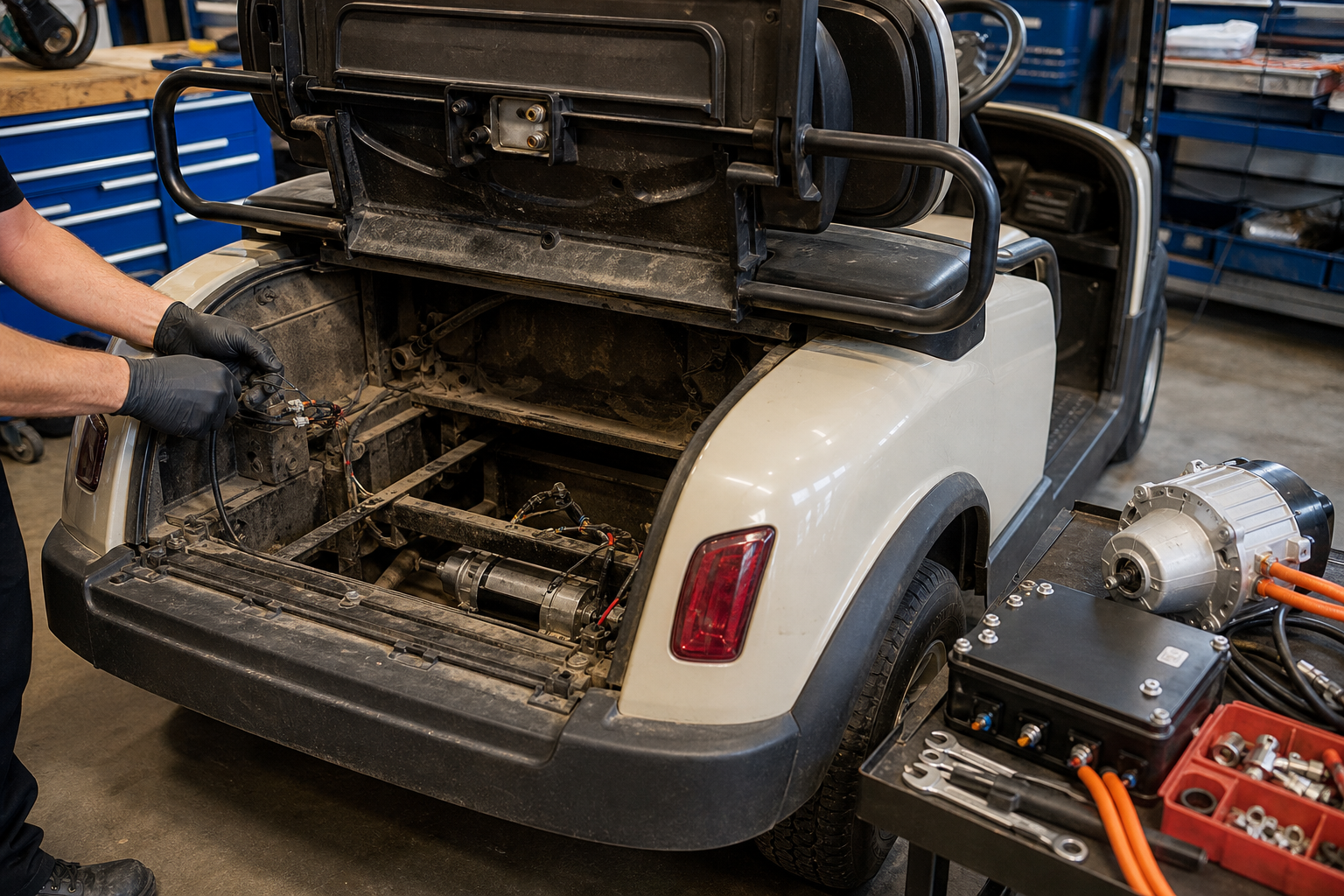
For a successful golf cart electric conversion, several core components are absolutely necessary to replace the gas engine and create a fully functional electric drivetrain. These include an electric motor, a motor controller, a battery bank, a battery charger, and appropriate wiring and safety components. Each part plays a vital role in the overall system, ensuring power delivery, speed control, and reliable operation.
Selecting high-quality components is crucial for the longevity and performance of your converted golf cart. Phoenix Golf Car sells a wide array of parts, high-performance batteries, and chargers, ensuring you have access to the best options for your conversion project. Investing in robust parts from reputable suppliers helps prevent future issues and ensures your electric golf cart performs optimally for years to come.
Essential Parts for Your Electric Drivetrain
Understanding each component’s function will help you make informed decisions during your conversion.
- Electric Motor: This is the heart of your electric golf cart, converting electrical energy into mechanical energy to drive the wheels. Motors come in various power ratings (e.g., 36V, 48V, 72V) and types (series, shunt, AC).
- Motor Controller: The controller acts as the brain, regulating the power flow from the batteries to the motor based on your accelerator input. Upgrading to a higher amperage controller can significantly boost performance.
- Battery Bank: The power source for your electric cart. This typically consists of multiple deep-cycle lead-acid batteries or a single, more advanced lithium battery pack. The voltage (e.g., 36V, 48V) and amp-hour (Ah) rating determine range and power.
- Battery Charger: Essential for recharging your battery bank. Chargers vary in voltage compatibility and charging speed. An intelligent charger can extend battery life.
- Wiring and Cables: Heavy-gauge cables are required to handle the high current flow between the batteries, controller, and motor. Proper sizing and insulation are critical for safety and efficiency.
- Solenoid: A heavy-duty relay that acts as a main switch, connecting the battery pack to the controller when the accelerator is pressed.
- Forward/Reverse Switch: Allows you to change the direction of the golf cart.
- Accelerator Pedal Assembly: Sends a signal to the controller, dictating the desired speed.
- Battery Meter: Provides a visual indication of your battery’s state of charge, preventing unexpected power loss.
How Do You Choose the Right Motor and Battery for Your Golf Cart Conversion?
Choosing the right motor and battery for your golf cart conversion is paramount, as these components dictate your vehicle’s performance, range, and overall efficiency. Your selection should align with your intended use, whether it’s for leisurely cruising, hauling heavy loads, or handling challenging terrain. Factors like voltage, amp-hour capacity, and battery chemistry (lead-acid versus lithium) will significantly influence your cart’s capabilities.
For optimal results, consider the voltage of your system (typically 36V, 48V, or 72V) and the amp-hour rating of your batteries, which directly impacts your driving range. Phoenix Golf Car offers professional lithium conversions for golf carts, providing superior power density, longer lifespan, and faster charging compared to traditional lead-acid options. As an authorized Madjax dealer, Phoenix Golf Car also has access to high-performance components like the X-Series and E-Series, ensuring you get quality parts that integrate effectively with your conversion.
Making Informed Choices for Power and Longevity
The motor and battery are the core of your electric golf cart. Here’s how to select them wisely:
Motor Selection
Your motor choice depends on your performance needs:
- Speed vs. Torque: Shunt motors (often found in older carts) are good for general use. Series motors offer higher torque for hills and heavy loads, while AC motors provide excellent efficiency, speed, and torque control, often seen in newer, high-performance electric carts.
- Voltage Match: Ensure your motor’s voltage matches your battery bank’s voltage (e.g., a 48V motor for a 48V battery system).
- Power Rating: Motors are rated in horsepower (HP) or kilowatts (kW). Higher ratings generally mean more power and speed.
Battery Selection
This is arguably the most critical decision, impacting range, weight, and cost:
- Lead-Acid Batteries: More affordable upfront, but heavier, have a shorter lifespan (typically 3-5 years), and require regular maintenance (watering). They are a common choice for budget-conscious conversions.
- Lithium-Ion Batteries: A significant upgrade, offering lighter weight, longer lifespan (8-10+ years), faster charging, and zero maintenance. While the initial cost is higher, the long-term savings and performance benefits often outweigh it. Phoenix Golf Car specializes in these advanced lithium conversions.
- Capacity (Ah): Amp-hours determine your cart’s range. A higher Ah rating means you can drive longer on a single charge. Consider your typical usage and desired range when selecting capacity.
How Much Does an Electric Golf Cart Conversion Typically Cost?
The cost of an electric golf cart conversion can vary significantly, typically ranging from $2,000 to $6,000 or more, depending on whether you opt for a DIY approach or professional installation, and the quality of components chosen. The most substantial portion of the budget is usually allocated to the battery bank and the electric motor, with lithium battery upgrades representing a higher initial investment but offering long-term savings.
For those considering a professional conversion, Phoenix Golf Car provides tailored solutions with transparent pricing. We offer flexible financing options to assist with purchases and services, making the transition to an electric golf cart more accessible for our South Florida customers. The total cost will depend on factors like the desired voltage, battery chemistry (lead-acid vs. lithium), motor power, and any additional performance or luxury upgrades you choose.
Cost Factors to Consider
Understanding what drives the cost will help you budget effectively for your conversion.
- Battery Type: Lithium-ion battery packs are more expensive than lead-acid batteries, often adding $1,000-$3,000 to the total cost. However, their longevity and performance can justify the investment.
- Motor and Controller: High-performance motors and controllers designed for increased speed or torque will naturally cost more than standard replacement units.
- DIY vs. Professional Installation: Doing it yourself can save on labor costs but requires significant technical skill and time. Professional services, like those at Phoenix Golf Car, ensure correct installation, warranty coverage, and peace of mind, typically adding $1,000-$2,500 in labor.
- Additional Upgrades: Customization, luxury upgrades, new wiring harnesses, heavy-duty solenoids, and advanced charging systems will all add to the overall expense.
Ready to Transform Your Golf Cart with an Electric Conversion?
Phoenix Golf Car specializes in expert electric conversions, upgrading your gas golf cart for enhanced performance, efficiency, and eco-friendly cruising in Pompano Beach and South Florida.
How Phoenix Golf Car Elevates Your Electric Conversion Steps
At Phoenix Golf Car, we don’t just perform Electric Conversion Steps; we engineer a superior driving experience for our customers across Pompano Beach and the wider South Florida area. Our approach combines technical expertise with a deep understanding of golf cart performance and customization. We provide expert maintenance and repair services for all major golf cart brands, ensuring that every conversion is built on a solid foundation of quality and reliability.
We specialize in professional lithium conversions, offering a significant upgrade in power, range, and lifespan for your golf cart. As an authorized Madjax dealer, we have access to top-tier components, including X-Series and E-Series parts, allowing us to deliver unparalleled customization and luxury upgrades. Whether you’re seeking a quieter ride, increased speed, or a more sustainable vehicle, our team is equipped to transform your gas golf cart into a high-performing electric model.
Our Commitment to Quality and Performance
Choosing Phoenix Golf Car for your electric conversion means partnering with a team dedicated to excellence.
- Expertise You Can Trust: Our certified technicians possess extensive experience in golf cart mechanics and electrical systems, ensuring every conversion is performed to the highest standards.
- Premium Components: We use only high-quality parts, including advanced lithium batteries and efficient motors, many sourced as an authorized Madjax dealer. We also sell a wide array of parts, high-performance batteries, and chargers directly.
- Customization and Upgrades: Beyond the conversion, we specialize in customization and luxury upgrades, from custom bodies and seating to advanced lighting and audio systems, making your golf cart truly unique.
- Comprehensive Service: From initial consultation to post-conversion support, we offer a complete service package. We stand by our work, providing expert maintenance and repair services for all major golf cart brands.
- Local Focus: Serving Pompano Beach, FL, and the broader South Florida region, we understand the local climate and usage patterns, tailoring our recommendations to your specific needs.
What are Common Mistakes to Avoid in Golf Cart Electric Conversions?
When undertaking golf cart electric conversions, several common mistakes can lead to performance issues, safety hazards, or costly repairs. These often include selecting incompatible components, inadequate wiring, improper battery management, and neglecting crucial safety protocols. Avoiding these pitfalls is essential for a successful and reliable conversion that delivers the expected benefits.
One of the most frequent errors is underestimating the complexity of electrical systems, leading to incorrect wiring or insufficient cable gauges, which can cause overheating or power loss. Another significant mistake is choosing a battery system that doesn’t match the motor and controller’s voltage or capacity requirements, resulting in poor range or reduced power. Consulting with professionals like Phoenix Golf Car can help you address these challenges and ensure your Electric Conversion Steps are executed flawlessly.
Ensuring a Smooth and Safe Conversion
Being aware of potential problems can save you time, money, and frustration.
- Incompatible Components: Using a motor, controller, or battery bank that isn’t designed to work together can lead to inefficiencies, damage, or complete system failure. Always ensure voltage and amperage ratings are compatible.
- Insufficient Wiring: Undersized wiring can overheat, melt, and pose a fire risk. Always use heavy-gauge cables appropriate for the current draw of your electric system.
- Improper Battery Installation and Management: Incorrectly wiring batteries (series vs. parallel), failing to secure them properly, or neglecting a battery management system (BMS) for lithium packs can severely impact performance and safety.
- Neglecting Safety Precautions: Working with high-voltage electrical systems requires extreme caution. Always disconnect power, wear protective gear, and follow manufacturer guidelines to prevent electric shock or injury.
- Overlooking the Differential: The existing gas golf cart differential may not be suitable for the torque of an electric motor, potentially leading to premature wear or damage. Sometimes, an electric transaxle upgrade is necessary.
- Poor Grounding: Inadequate grounding can cause electrical issues and safety hazards. Ensure all components are properly grounded to the chassis.
- Lack of Professional Expertise: While DIY conversions are possible, complex electrical work is best handled by experienced technicians. Phoenix Golf Car provides expert installation and troubleshooting, preventing common mistakes and ensuring a reliable conversion.
Your Journey to an Electric Golf Cart Begins Here
Embarking on the journey of converting your gas golf cart to electric power is a smart investment in efficiency, performance, and environmental responsibility. The Electric Conversion Steps outlined in this guide provide a clear roadmap to transforming your vehicle into a modern, quiet, and powerful electric model. By understanding the components, costs, and potential pitfalls, you are well-equipped to make informed decisions for your golf cart’s future.
For golf cart owners in Pompano Beach and across South Florida, Phoenix Golf Car stands as your trusted partner for expert electric conversions. Our team is ready to provide professional lithium conversions, customization, and comprehensive support to ensure your converted golf cart exceeds expectations. Visit Phoenix Golf Car today to discuss your conversion project and take the first step towards a greener, more enjoyable ride.
Frequently Asked Questions About Electric Conversions
What is the typical cost for an electric golf cart conversion?
Electric golf cart conversion costs vary significantly based on battery type (lead-acid vs. lithium), motor size, and additional upgrades. DIY projects typically range from $2,000 to $6,000, while professional services from Phoenix Golf Car offer tailored solutions with transparent pricing, ensuring quality components and expert installation.
How long does a professional electric golf cart conversion usually take?
A professional electric golf cart conversion from a specialist like Phoenix Golf Car typically takes between one to two weeks, depending on the complexity of the project and the availability of parts. This timeframe includes thorough disassembly, component installation, wiring, and extensive testing to ensure optimal performance and safety.
What driving range can I expect after converting my gas golf cart to electric?
The expected driving range after an electric conversion depends primarily on the battery capacity and the golf cart’s efficiency. With a well-designed system, many converted golf carts can achieve ranges of 25 to 50 miles on a single charge. Lithium battery upgrades can further extend this range and improve overall longevity.
Are there common mistakes to avoid during a golf cart EV conversion?
Common mistakes during a golf cart EV conversion include selecting incompatible components, inadequate wiring, improper battery management, and neglecting safety protocols. It is crucial to follow manufacturer guidelines and consider professional assistance from experts like Phoenix Golf Car to avoid costly errors and ensure a reliable, safe conversion.