For your golf cart’s performance and safety, reliable Golf Cart Brake Parts are non-negotiable. Whether you’re cruising through your community in Pompano Beach, FL, or managing a fleet of utility carts, properly functioning brakes ensure peace of mind. This article will guide you through 7 essential steps to understand, maintain, and service your golf cart’s braking system, ensuring your rides are always safe and controlled.
Key Takeaways
- Prioritize regular inspection of your golf cart’s braking system, ideally annually, to identify wear before it compromises safety.
- Understand the 10 core components of your golf cart’s brakes, from shoes to cables, to better recognize signs of needed service.
- Address common brake issues like grinding or a spongy pedal promptly to prevent further damage and ensure effective stopping.
- Consider professional service from experts like Phoenix Golf Car for complex repairs or replacements, especially for critical components like brake cables.
- Recognize the specific needs of electric versus gas golf cart brake systems to ensure appropriate maintenance and part selection.
Understanding the 10 Essential Golf Cart Brake Parts for Peak Performance
To truly ensure your golf cart operates safely, it’s vital to understand the components that make up its braking system. These Golf Cart Brake Parts work in concert to provide reliable stopping power, whether you’re on a busy course or your neighborhood streets in South Florida. Knowing each part’s role helps you identify potential issues early and communicate effectively with service technicians.
Key Components of Your Golf Cart’s Braking System
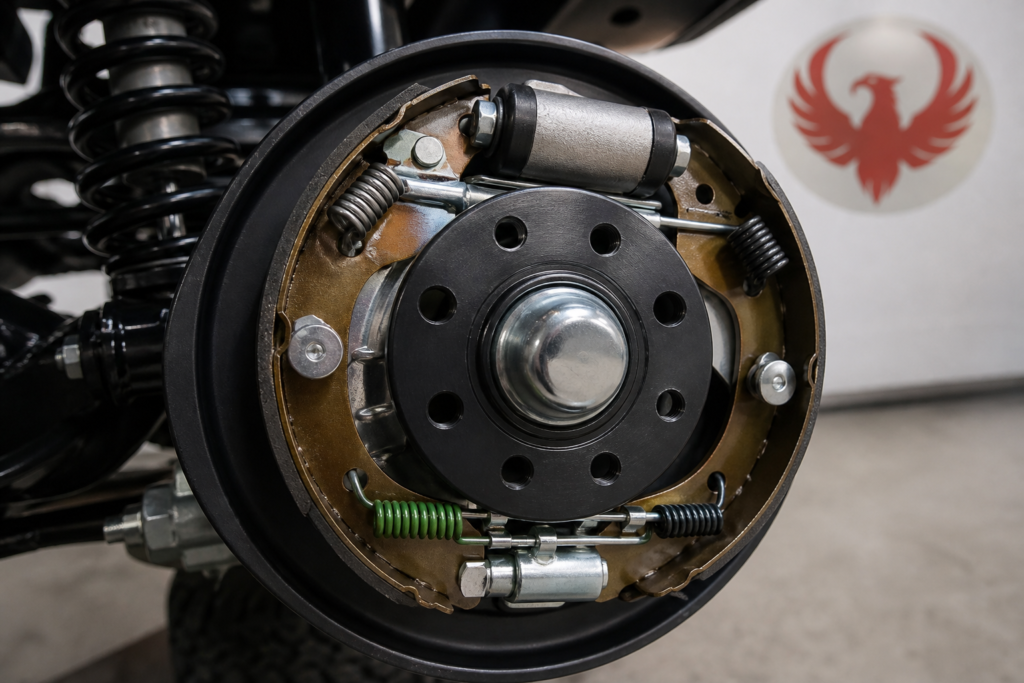
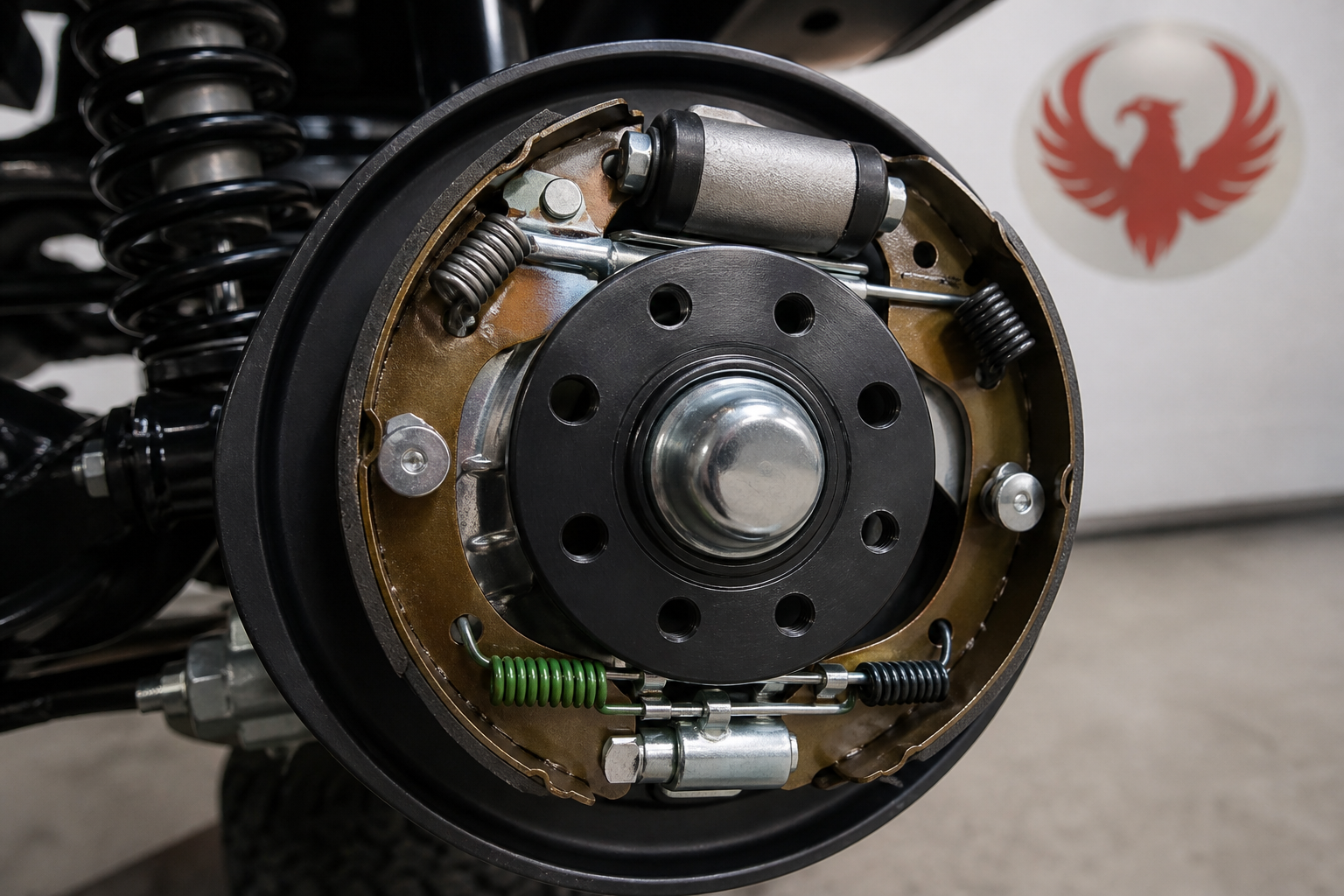
- Brake Drums: These are metal housings attached to the wheels. When the brakes are applied, the brake shoes press against the inner surface of the drum, creating friction to slow the wheel.
- Brake Shoes: Lined with friction material, these crescent-shaped components are pushed outward against the brake drum. Over time, the friction material wears down and requires replacement.
- Brake Cables: These mechanical cables connect the brake pedal to the wheel assemblies, transmitting the force from your foot to engage the brakes. Stretched or frayed cables reduce braking effectiveness.
- Wheel Cylinders (Hydraulic Systems): Found in golf carts with hydraulic brakes, these cylinders convert hydraulic pressure from the master cylinder into mechanical force to push the brake shoes against the drum.
- Master Cylinder (Hydraulic Systems): This component converts the brake pedal’s mechanical force into hydraulic pressure, which is then sent through brake lines to the wheel cylinders.
- Brake Pedal Assembly: The primary interface for the driver, this assembly includes the pedal itself and the linkage that activates the braking system.
- Return Springs: These springs pull the brake shoes back to their original position when the brake pedal is released, ensuring the shoes don’t drag against the drum.
- Adjusters: Manual or automatic adjusters maintain the correct clearance between the brake shoes and the drum as the shoes wear, ensuring consistent braking.
- Lug Nuts/Bolts: While not directly part of the braking mechanism, these secure the wheels to the hub, and their proper torque is crucial for overall wheel and brake system integrity.
- Brake Fluid (Hydraulic Systems): This incompressible fluid transmits pressure from the master cylinder to the wheel cylinders in hydraulic systems. Regular checks for fluid level and contamination are essential.
How Golf Cart Brake Drums and Shoes Ensure Reliable Stopping Power
The drum brake system, a common design in many golf carts, including popular models like the Madjax X-Series and E-Series sold by Phoenix Golf Car, relies on a simple yet effective principle of friction. When you press the brake pedal, a series of linkages and cables or hydraulic pressure activates the brake shoes. These shoes then press firmly against the inside surface of the rotating brake drum.
This contact generates friction, which converts the kinetic energy of the moving golf cart into heat, effectively slowing and stopping the vehicle. The brake drum, typically made of cast iron, is designed to withstand this heat and provide a consistent surface for the shoes to engage. For optimal performance, both the brake shoes and drums must be in good condition, free from excessive wear or contamination.
Maintaining the integrity of these components is paramount for safety. If the brake shoes are excessively worn, or the drums are scored or warped, the braking efficiency will be significantly reduced. This can lead to longer stopping distances and an unsafe driving experience. Regular inspection of these critical parts is a key step in ensuring your golf cart’s reliability.
Troubleshooting Your Golf Cart Brakes: Common Issues and Solutions
Ineffective golf cart brakes can be a significant safety concern, but many common issues have identifiable symptoms. Understanding these signs allows you to address problems promptly, often preventing more extensive and costly repairs. A spongy brake pedal, grinding noises, or the cart pulling to one side are all indicators that your braking system needs attention.
Common Brake Problems and What They Mean
- Spongy or Soft Brake Pedal: This often indicates air in the hydraulic lines (if applicable), low brake fluid, or a problem with the master cylinder. For cable-operated brakes, it might mean stretched cables or improper adjustment.
- Grinding or Squealing Noise: A grinding sound typically points to severely worn brake shoes where the metal backing plate is contacting the brake drum. Squealing can also indicate worn shoes or contamination.
- Golf Cart Pulls to One Side When Braking: This usually suggests uneven braking force between the wheels. It could be caused by a seized wheel cylinder, a contaminated brake shoe on one side, or an improperly adjusted brake cable.
- Increased Stopping Distance: If your golf cart takes longer to stop than usual, it’s a clear sign of reduced braking efficiency. This can be due to worn brake shoes, stretched cables, or contaminated drums.
- Parking Brake Not Holding: A parking brake that fails to hold the cart securely often means the parking brake cable is stretched or the adjustment is incorrect.
While some minor adjustments might be within the scope of a handy owner, diagnosing and repairing brake issues safely often requires specialized knowledge and tools. For residents in Pompano Beach, FL, Phoenix Golf Car offers expert diagnostics for all major golf cart brands, ensuring your brake system is thoroughly inspected and repaired correctly.
When to Inspect and Replace Your Golf Cart Brake Parts: Signs of Wear to Watch For
Regular inspection and timely replacement of your golf cart’s braking components are critical for maintaining safety and preventing unexpected failures. We recommend an annual brake system inspection, a service Phoenix Golf Car expertly provides for all electric and gasoline-powered golf carts in South Florida. This proactive approach helps catch wear and tear before it becomes a hazard.
Key Indicators for Brake Part Replacement
- Brake Shoes: Visually inspect the friction material on your brake shoes. If the material is less than 1/16th of an inch thick, or if you see rivets, it’s time for replacement. You might also notice a decrease in stopping power or a grinding noise.
- Brake Drums: Check the inner surface of the brake drums for deep grooves, scoring, or excessive rust. A warped drum can cause pulsation or uneven braking. While some minor resurfacing is possible, often replacement is the safer option.
- Brake Cables: Look for fraying, kinks, or excessive slack in the brake cables. If the cables appear stretched or if the brake pedal has too much travel before engaging, they likely need replacing.
- Wheel Cylinders (Hydraulic): Inspect for any signs of fluid leaks around the wheel cylinders. A leaking cylinder indicates a failing seal and requires immediate replacement to maintain hydraulic pressure.
- Brake Fluid (Hydraulic): Brake fluid should be clear or light amber. If it appears dark or cloudy, it may be contaminated or old, and a flush and refill are recommended.
The lifespan of brake components can vary significantly based on usage, terrain, and maintenance. Heavy use, especially on hilly terrain, will accelerate wear. By adhering to a regular inspection schedule, you can ensure your golf cart remains safe and reliable for years to come.
Replacing Golf Cart Brake Cables: A Step-by-Step Guide for Maintenance
Replacing worn or stretched brake cables is a common maintenance task for many golf cart owners. While it can be a DIY project for those with mechanical aptitude, precise adjustment is crucial for balanced and effective braking. Incorrectly installed cables can lead to dangerous uneven braking or a complete loss of stopping power.
General Steps for Brake Cable Replacement
- Gather Tools: You’ll typically need a jack, jack stands, wheel chocks, wrenches (metric and standard), pliers, and possibly a cable puller.
- Lift and Secure: Safely lift the rear of your golf cart using a jack and secure it on jack stands. Chock the front wheels to prevent movement.
- Remove Wheels and Drums: Take off the rear wheels, then carefully remove the brake drums to access the brake assembly.
- Disconnect Old Cable: Locate where the brake cable connects to the brake pedal assembly and the wheel hub assembly. Disconnect it from both ends. Note the routing of the cable for reinstallation.
- Install New Cable: Route the new brake cable exactly as the old one was. Connect it securely to the brake pedal assembly and then to the wheel hub assembly.
- Adjust Brakes: This is the most critical step. Adjust the tension of the new cables at both the equalizer (if present) and the wheel adjusters to ensure both wheels engage evenly and the brake pedal has the correct amount of free play. A good starting point is to adjust until the wheel drags slightly, then back off until it spins freely with minimal drag.
- Test Thoroughly: Before driving, pump the brake pedal several times. Lower the cart and test the brakes at a very slow speed in a safe, open area. Check for even stopping and proper parking brake function.
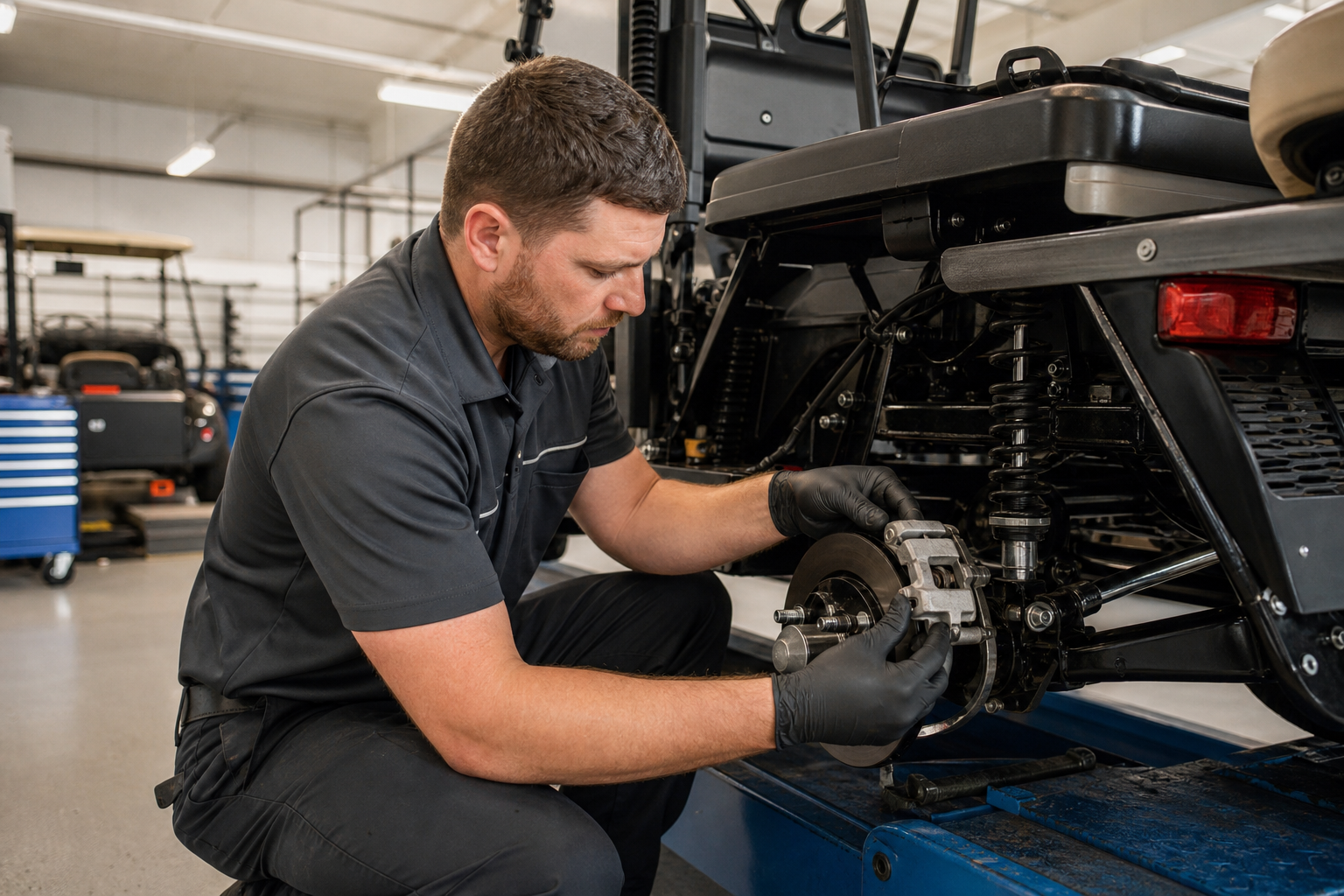
For guaranteed safety and peace of mind, especially with critical components like brake cables, professional installation is highly recommended. The certified technicians at Phoenix Golf Car in Pompano Beach, FL, have the expertise and specialized tools to ensure your brake cables are replaced and adjusted perfectly, regardless of your golf cart’s make or model.
Phoenix Golf Car’s Expert Approach to Golf Cart Brake Service and Parts
At Phoenix Golf Car, located in Pompano Beach, FL, we understand that reliable braking components are fundamental to your safety and enjoyment. Serving the entire South Florida region, we specialize in comprehensive brake system diagnostics, repair, and parts replacement for all major golf cart brands, whether they are electric or gasoline-powered. Our commitment is to keep your ride stopping safely and performing optimally.
We pride ourselves on being an authorized Madjax dealer, offering specific components for popular models like the Madjax X-Series and E-Series. However, our expertise extends far beyond a single brand. Our skilled technicians are equipped to service and supply compatible brake parts for EZ-GO, Club Car, Yamaha, and many other manufacturers. We ensure you receive the right fit and highest quality for your specific golf cart.
Our services range from routine brake inspections, which we recommend annually, to full system overhauls. If your golf cart exhibits a spongy pedal, grinding noises, or simply isn’t stopping as effectively as it should, our team can diagnose the precise issue. We stock a wide array of individual brake parts, including brake shoes, drums, cables, and hydraulic components, as well as complete brake kits.
We can recommend and install high-quality aftermarket or OEM parts to restore your golf cart’s stopping power.
Choosing Phoenix Golf Car means entrusting your golf cart to professionals who prioritize your safety. We don’t just replace parts; we ensure your entire braking system is meticulously inspected, adjusted, and tested to meet the highest safety standards. Our goal is to provide you with a golf cart that offers unrivaled safety and performance on every journey.
Ensure Peak Safety with Phoenix Golf Car Brake Service
At Phoenix Golf Car, we specialize in comprehensive brake system diagnostics and expert parts replacement for all golf cart makes and models. Trust our certified technicians to keep your ride reliably safe.
Electric vs. Gas Golf Cart Brake Components: What You Need to Know
While the fundamental principle of friction braking remains consistent, there are some key differences and considerations regarding brake components between electric and gasoline-powered golf carts. Understanding these distinctions can help you ensure proper maintenance and part selection for your specific vehicle. Phoenix Golf Car technicians are adept at servicing both types of systems in South Florida.
Similarities in Braking Systems
Both electric and gas golf carts typically utilize drum brakes on the rear wheels. This means they share common components such as brake drums, brake shoes, brake cables, and return springs. The basic mechanical action of the brake pedal engaging these components to slow the vehicle is largely the same across both power types.
Many modern golf carts, regardless of power source, may also incorporate hydraulic braking systems, featuring master cylinders, wheel cylinders, and brake fluid. The maintenance and troubleshooting for these shared components are similar for both electric and gas models.
Key Differences and Considerations
- Regenerative Braking (Electric Carts): Electric golf carts often feature regenerative braking, where the electric motor acts as a generator when the accelerator is released or the brake pedal is lightly pressed. This helps slow the cart and recharges the battery, reducing wear on the mechanical brake components. This feature can sometimes make the mechanical brakes feel less engaged during light braking.
- Engine Braking (Gas Carts): Gasoline golf carts benefit from engine braking, where the engine’s compression helps slow the vehicle when the accelerator is released. This also reduces reliance on the mechanical brakes compared to a free-wheeling vehicle.
- Weight and Torque: Gas golf carts, especially older models, can sometimes be heavier and have different torque characteristics, which might influence brake wear over time. Electric carts, particularly those with powerful motors, also require robust braking to manage their stopping force effectively.
- Part Integration: Specific brake components, especially cables and linkages, can be designed differently to integrate with the unique chassis and powertrain layouts of electric versus gas models. It’s crucial to use parts specifically designed for your cart’s power type.
Regardless of whether you own an electric or gas golf cart, Phoenix Golf Car has the expertise to handle your brake service needs. We stock a wide variety of brake components suitable for both types, ensuring your vehicle receives the correct parts for optimal safety and performance.
Ensuring your golf cart has reliable Golf Cart Brake Parts is paramount for safety and longevity. By understanding the essential components and following these 7 crucial steps, you can maintain your cart with confidence. For expert service, quality parts, and peace of mind in South Florida, trust the team at Phoenix Golf Car to keep your electric or gas golf cart stopping safely.
Common Questions About Golf Cart Brake Parts
What are the essential components of golf cart brake parts?
Essential components typically include brake shoes, brake drums, brake cables, and the parking brake assembly. For hydraulic systems, master cylinders, brake fluid, and lines are also critical. Phoenix Golf Car stocks a comprehensive range for various makes and models.
How do golf cart brake drums and shoes function?
Brake shoes press against the inner surface of the brake drum when the pedal is applied. This friction slows the rotation of the wheels, bringing the golf cart to a stop. Proper contact between these components is vital for effective braking.
Why are my golf cart brakes not working effectively?
Ineffective braking can stem from worn brake shoes, stretched cables, contaminated drums, or improper adjustment. It’s crucial to have your brake system inspected by professionals like Phoenix Golf Car to diagnose and fix the exact issue safely.
How do you replace golf cart brake cables?
Replacing brake cables involves disconnecting the old cable from both the brake pedal and the wheel hub assembly, then carefully routing and attaching the new cable. This task often requires specific tools and proper adjustment to ensure balanced braking. For guaranteed safety, consider professional installation at Phoenix Golf Car.
Where can I purchase compatible golf cart brake parts for my EZ-GO?
Phoenix Golf Car is a premier supplier of golf cart components, including a wide selection of compatible brake parts for EZ-GO models. We ensure you get the right fit and quality for optimal performance. Visit our shop or explore our online catalog.
What are the common signs of worn-out golf cart brake pads?
Common signs include a spongy brake pedal, grinding noises when braking, increased stopping distance, or the golf cart pulling to one side. Visually inspect the brake shoes for thinning material. Timely replacement is essential for maintaining safety.
When should golf cart brake parts be inspected or replaced?
Brake components should be inspected annually or every 150-200 operating hours, whichever comes first. Replace parts when they show significant wear, damage, or when performance degrades. Regular maintenance at Phoenix Golf Car can extend the life of your brake system.
Do electric and gas golf carts use different brake components?
While many core braking principles are similar, specific brake components can vary between electric and gas golf carts, especially regarding their integration with the powertrain. It’s important to use parts designed for your cart’s specific power type. Phoenix Golf Car technicians can help identify the correct components.