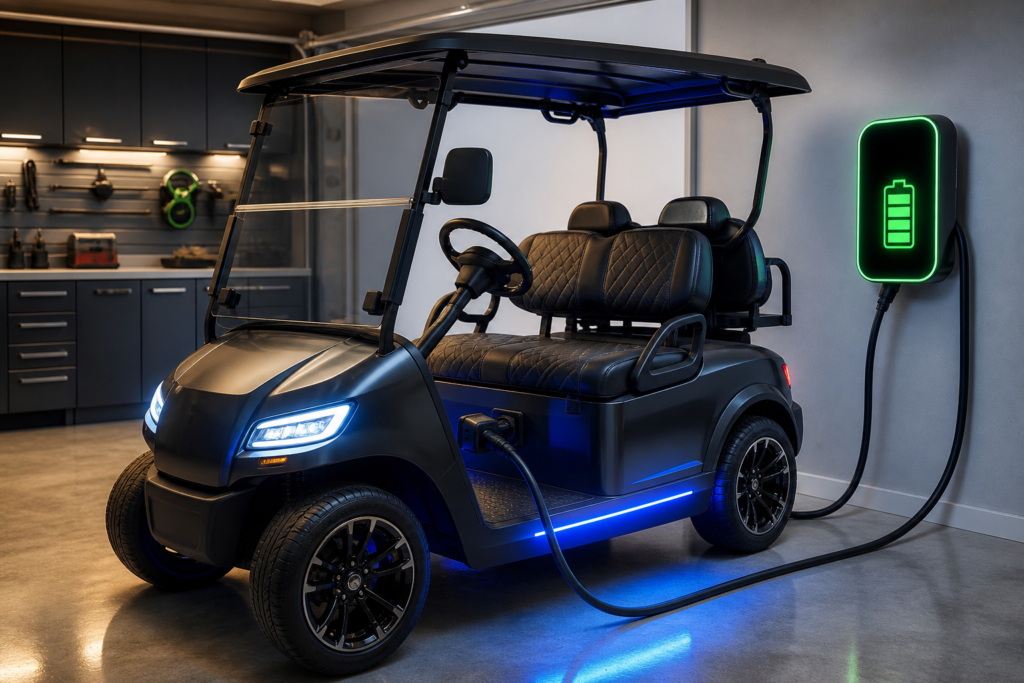
Golf Cart Battery Charging is a fundamental aspect of golf cart ownership, yet it’s often surrounded by misconceptions that can significantly shorten battery life and impact performance. Many owners unknowingly fall prey to common myths, leading to premature battery failure and costly replacements. Understanding the correct procedures and debunking these myths is crucial for maximizing the longevity and efficiency of your golf cart’s power source.
This comprehensive guide will illuminate the truth behind 7 powerful golf cart battery charging myths. We’ll provide expert insights and practical advice to help you maintain your batteries optimally, ensuring your golf cart delivers reliable performance for years to come. From understanding proper charging cycles to selecting the right equipment, we’ll cover everything you need to know to become a master of battery care.
Key Takeaways
- Discover the proper procedure for Golf Cart Battery Charging to extend battery lifespan significantly.
- Learn why charging after every use, regardless of discharge, is essential for deep-cycle batteries.
- Debunk the myth that overcharging is always harmful, understanding how modern chargers protect your batteries.
- Identify the critical differences between various golf cart chargers and why compatibility matters for optimal performance.
- Uncover the truth about battery maintenance during storage and how to prevent self-discharge and sulfation.
- Understand why using a car charger for golf cart batteries is a dangerous and damaging practice.
- Gain actionable tips for troubleshooting common charging issues and ensuring your system functions flawlessly.
Understanding Proper Golf Cart Battery Charging
The foundation of a long-lasting golf cart battery lies in consistent and correct Golf Cart Battery Charging practices. Many owners overlook the nuances of deep-cycle battery care, assuming a simple plug-and-play approach is sufficient. However, these specialized batteries require a specific charging regimen to maintain their chemical integrity and deliver optimal power over time.
The proper procedure for charging golf cart batteries involves plugging in your charger immediately after each use, regardless of how short the trip. This prevents the batteries from sitting in a partially discharged state, which can lead to sulfation – a primary cause of capacity loss. Ensure your charger is compatible with your battery type (lead-acid or lithium) and voltage (e.g., 36V or 48V).
The Importance of Regular Golf Cart Battery Charging
Regular charging is paramount for deep-cycle batteries. Unlike automotive starting batteries, golf cart batteries are designed to be discharged deeply and recharged many times. However, allowing them to remain discharged for extended periods can cause irreversible damage. Consistent Golf Cart Battery Charging after every use helps to equalize the cells and prevent voltage imbalances, which are critical for overall battery health.
How long does it typically take to fully charge a golf cart battery? Generally, a complete charging cycle can take anywhere from 8 to 12 hours. This duration depends on the battery’s state of discharge, its age, and the charger’s amperage. Always allow the charger to complete its cycle automatically, which often includes a trickle charge or float phase, indicating a full charge. Interrupting this process can be detrimental.
Myth #1: Only Charge When Your Batteries Are Almost Dead
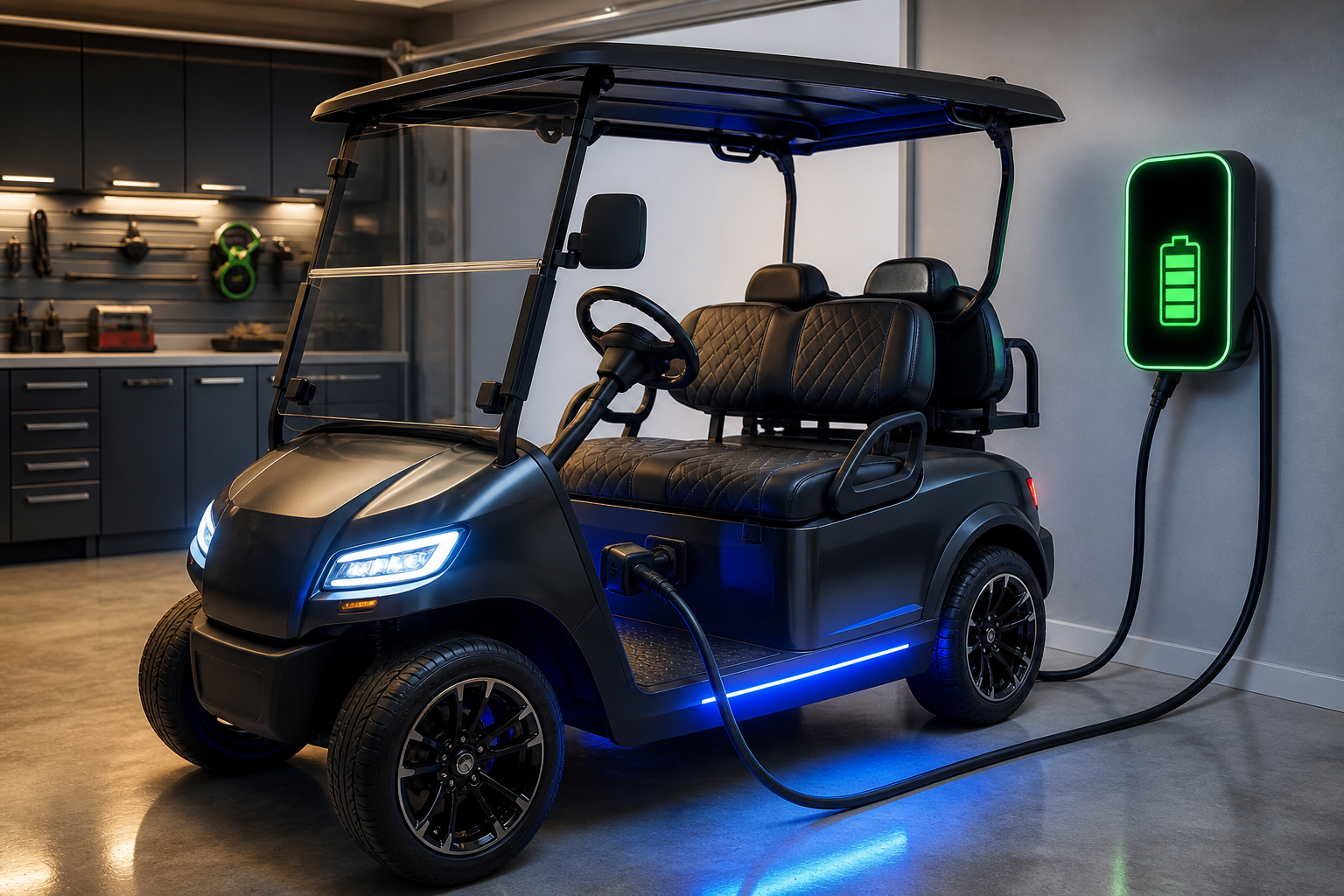
One of the most pervasive myths about Golf Cart Battery Charging is that you should wait until your batteries are nearly depleted before plugging them in. This idea, perhaps stemming from old beliefs about nickel-cadmium batteries, is fundamentally harmful to deep-cycle lead-acid golf cart batteries. These batteries thrive on frequent, shallow discharges rather than deep ones.
The Truth About Golf Cart Battery Charging Cycles
For optimal battery health, you should charge your golf cart batteries after every use, even if you’ve only driven a short distance. This practice prevents the formation of lead sulfate crystals on the battery plates, a process known as sulfation. Sulfation reduces the battery’s capacity and overall lifespan. Consistent charging ensures the batteries are always topped off, minimizing this damaging effect.
Think of it like this: each time you discharge your battery, a chemical reaction occurs. Recharging immediately reverses this reaction. Waiting too long allows the sulfate to harden, making it more difficult for the charger to convert it back, thus reducing the battery’s ability to hold a charge. This is a key factor affecting golf cart battery charging time and efficiency over the long run.
Myth #2: Overcharging Damages Your Golf Cart Batteries
Many golf cart owners fear leaving their charger plugged in for too long, believing it will inevitably lead to overcharging and battery damage. While excessive, uncontrolled charging can indeed be harmful, modern golf cart chargers are designed with advanced technology to prevent this very issue. This myth often leads to premature unplugging, which is far more damaging than perceived overcharging.
Smart Chargers and Golf Cart Battery Charging Safety
Today’s smart chargers feature multi-stage charging profiles (bulk, absorption, float) that automatically detect when your batteries are full. Once charged, they switch to a low-amperage float or maintenance mode, delivering just enough current to counteract self-discharge without causing harm. This ensures your batteries remain fully charged without being overcooked.
What are the common signs of overcharging golf cart batteries? In older, non-smart chargers, signs might include excessive gassing (bubbling) and a strong sulfuric odor, high temperatures, or bulging battery cases. However, with a modern, properly functioning smart charger, these issues are largely mitigated. Always allow the charger to complete its full cycle, indicated by an automatic shut-off or a green light, to ensure proper Golf Cart Battery Charging.
Myth #3: All Chargers Are the Same for Golf Cart Battery Charging
Assuming any charger will work for your golf cart batteries is a common and potentially expensive mistake. Chargers are not universal; they are specifically designed to match the voltage and chemistry of your battery pack. Using an incompatible charger can lead to inefficient charging, damage to your batteries, or even safety hazards.
Choosing the Right Golf Cart Battery Charging Equipment
What type of charger is best for deep cycle golf cart batteries? A smart charger specifically designed for deep cycle applications is essential. These chargers optimize the Golf Cart Battery Charging process, preventing overcharging and extending battery life. You must match the charger’s voltage (e.g., 36V or 48V) to your golf cart’s battery system. The differences between 36V and 48V golf cart chargers are significant, as they deliver different voltage outputs and charging algorithms.
Furthermore, consider the amperage of the charger. A higher amperage charger will charge faster, but it must be appropriate for your battery bank’s capacity. Always consult your golf cart’s manual or a trusted dealer like Phoenix Golf Car to ensure you select the correct charger. Using the wrong charger can prevent your golf cart battery from charging to full capacity or cause irreversible damage.
Optimize Your Golf Cart Battery Charging with Phoenix Golf Car!
Ensure maximum battery life and peak performance for your golf cart with expert service and top-tier chargers from our Pompano Beach specialists.
Myth #4: You Don’t Need to Charge a Stored Golf Cart
Many golf cart owners believe that if a cart is stored for an extended period, especially during off-season months, the batteries don’t require attention. This is a critical error that can lead to irreversible battery damage and a dead battery pack when you’re ready to use it again. Batteries naturally self-discharge over time, and leaving them uncharged accelerates this process and promotes sulfation.
How often should golf cart batteries be charged if not in use? For lead-acid batteries, it’s recommended to charge them once every 3-4 weeks to maintain a full charge. Lithium-ion batteries have a much lower self-discharge rate and can typically hold a charge for several months. Always store golf carts with fully charged batteries and disconnect the main battery pack or use a battery maintainer if storing for extended periods.
This proactive approach to Golf Cart Battery Charging during storage is vital for longevity.
Myth #5: Always Add Water Before Golf Cart Battery Charging
For lead-acid batteries, maintaining proper electrolyte levels is crucial. However, the timing of when to add distilled water is often misunderstood. Adding water before charging can lead to overflow and acid spills, especially if the batteries are already low on charge and the electrolyte expands during the charging process.
The correct procedure for lead-acid batteries is to check water levels after the Golf Cart Battery Charging cycle is complete. Only add distilled water if the plates are exposed before charging. Otherwise, wait until the batteries are fully charged, then fill the cells to about 1/4 inch above the plates. This prevents overfilling and ensures the electrolyte level is accurate when the battery is at its fullest state.
Myth #6: A Car Charger Works for Golf Cart Battery Charging
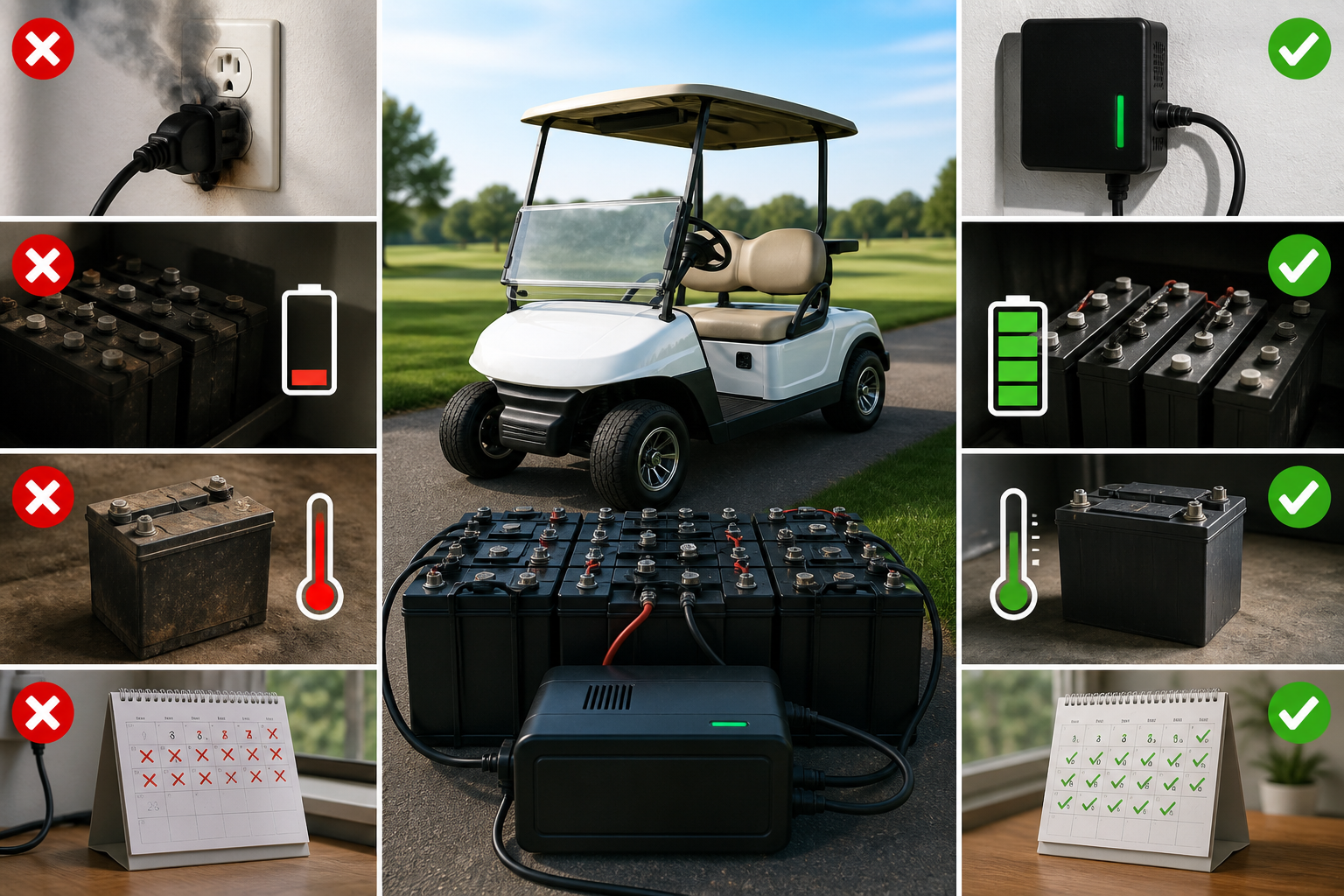
In a pinch, some golf cart owners might be tempted to use a standard car battery charger for their golf cart. This is a dangerous and damaging practice. Car battery chargers are designed for starting batteries, which have different charging requirements (higher amperage, shorter duration) than deep-cycle golf cart batteries. Using an incompatible charger can severely damage your golf cart batteries.
Can I use a regular car battery charger for golf cart batteries? Absolutely not. Car chargers can overcharge deep-cycle batteries, causing electrolyte boil-off, plate damage, and even battery explosions due to hydrogen gas buildup. Always use a charger specifically designed for your golf cart’s battery type and voltage. For safe and effective Golf Cart Battery Charging, invest in the correct equipment.
Myth #7: Deep Discharging Extends Golf Cart Battery Life
Another common myth suggests that occasionally running your golf cart batteries until they are almost completely dead will somehow
Your Top Questions About Golf Cart Battery Charging Answered
What is the proper procedure for charging golf cart batteries?
The proper procedure for golf cart battery charging involves plugging in your charger immediately after each use, regardless of how short the trip. Ensure your charger is compatible with your battery type (lead-acid or lithium) and voltage.
Do not interrupt the charging cycle prematurely; allow the charger to complete its cycle automatically, which often includes a trickle charge phase. Always charge in a well-ventilated area and avoid overfilling electrolyte levels before charging. Check water levels in lead-acid batteries after charging.
How long does it typically take to fully charge a golf cart battery?
The typical time to fully charge golf cart batteries depends on several factors, including the battery’s state of discharge, its age, and the charger’s amperage. Generally, a complete golf cart battery charging cycle can take anywhere from 8 to 12 hours. Deeply discharged batteries or older batteries may require more time, while newer, partially discharged batteries might finish sooner. Always allow the charger to shut off automatically, indicating a full charge.
Why won’t my golf cart battery charge to full capacity?
Several issues can prevent your golf cart battery from charging to full capacity. Common reasons include a faulty charger, sulfated or aged batteries, a dead cell in one of the batteries, loose or corroded battery terminals, or an issue with the golf cart’s onboard computer or charging port. It’s advisable to test individual battery voltage and have a professional inspect the charging system if problems persist with your golf cart battery charging.
What are the common signs of overcharging golf cart batteries?
Common signs of overcharging golf cart batteries include excessive gassing (bubbling) and a strong sulfuric odor, high temperatures around the battery terminals or casing, and bulging or cracking of the battery case. Overcharging can significantly reduce battery life by causing electrolyte boil-off in lead-acid batteries and can damage lithium-ion cells. Modern smart chargers are designed to prevent overcharging by automatically shutting off or entering a float mode after the golf cart battery charging cycle is complete.
How often should golf cart batteries be charged if not in use?
If golf cart batteries are not in use, they should still be charged regularly to prevent self-discharge and sulfation. For lead-acid batteries, it’s recommended to charge them once every 3-4 weeks to maintain a full charge. Lithium-ion batteries have a much lower self-discharge rate and can typically hold a charge for several months.
Always store golf carts with fully charged batteries and disconnect the main battery pack or use a battery maintainer if storing for extended periods to ensure optimal golf cart battery charging and longevity.
What type of charger is best for deep cycle golf cart batteries?
For deep cycle golf cart batteries, a smart charger specifically designed for deep cycle applications is best. These chargers typically feature multi-stage charging profiles (bulk, absorption, float) that optimize the golf cart battery charging process, prevent overcharging, and extend battery life. Ensure the charger’s voltage and amperage match your battery pack’s requirements (e.g., 36V or 48V) and that it is compatible with your battery chemistry (lead-acid, AGM, gel, or lithium).
How can I safely charge my golf cart batteries indoors?
To safely charge your golf cart batteries indoors, ensure the area is well-ventilated to dissipate hydrogen gas released by lead-acid batteries, which is flammable. Avoid charging near open flames or ignition sources. Place the charger on a stable, dry surface and ensure all connections are secure. Always follow the manufacturer’s instructions for your specific charger and golf cart. For enhanced safety, consider a smart charger with automatic shut-off features to prevent overcharging during the golf cart battery charging process.
How do I know if my golf cart batteries are fully charged?
You can determine if your golf cart batteries are fully charged by several indicators. Most modern smart chargers will have an indicator light or display that signals when the golf cart battery charging cycle is complete and the batteries are full. You can also use a voltmeter to check the total voltage of your battery pack; for a 48V system, it should read around 50.9V or higher after resting for a few hours.
For lead-acid batteries, a hydrometer can measure the specific gravity of the electrolyte in each cell, which indicates the state of charge. A fully charged lead-acid battery should have a specific gravity of approximately 1.265-1.280.
Can I use a regular car battery charger for golf cart batteries?
No, you should not use a regular car battery charger for golf cart batteries. Car battery chargers are typically designed for starting batteries, which have different charging requirements (higher amperage, shorter duration) than deep-cycle golf cart batteries. Using an incompatible charger can damage your golf cart batteries, shorten their lifespan, and potentially create unsafe charging conditions due to incorrect voltage or current delivery.
Always use a charger specifically designed for your golf cart’s battery type and voltage for proper golf cart battery charging.
Learn more from authoritative resources: Consumer Reports and HGTV.