Golf Cart Engine Diagnostics: 5 Ultimate Secrets for Smooth Rides
Golf Cart Engine Diagnostics is the cornerstone of maintaining a high-performing and reliable golf cart. Without proper understanding and application of diagnostic techniques, even minor issues can escalate into significant problems, leading to frustrating breakdowns and costly repairs. This comprehensive guide will unlock 5 ultimate secrets to effective Golf Cart Engine Diagnostics, ensuring your golf cart delivers smooth, consistent rides every time you hit the course or cruise your community.
Whether you’re a seasoned golf cart owner or new to the world of gas-powered vehicles, mastering these diagnostic principles will empower you to identify, troubleshoot, and often resolve common engine issues. We’ll delve into everything from basic troubleshooting for starting problems to advanced insights into ignition and fuel systems, providing you with the authoritative knowledge needed to keep your golf cart in peak condition. Discover how proactive Golf Cart Engine Diagnostics can transform your ownership experience.
Key Takeaways for Golf Cart Engine Diagnostics
- Learn the most common engine problems in gas golf carts and how to identify their symptoms early.
- Master essential troubleshooting steps for a golf cart engine that won’t start, including checks for fuel, spark, and battery.
- Discover the vital diagnostic tools required for effective Golf Cart Engine Diagnostics and repair.
- Understand how to pinpoint the causes of power loss, sputtering, and backfiring through systematic Golf Cart Engine Diagnostics.
- Recognize when professional Golf Cart Engine Diagnostics is necessary and how to choose a reliable service provider.
Understanding Golf Cart Engine Diagnostics: The Foundation of Smooth Performance
The ability to perform effective Golf Cart Engine Diagnostics is crucial for any owner aiming for consistent, trouble-free operation. A well-maintained engine not only ensures reliability but also extends the lifespan of your vehicle, saving you money and frustration in the long run. By understanding the common issues and the principles behind diagnosing them, you gain a significant advantage in keeping your golf cart running smoothly. This foundational knowledge is the first step towards becoming a proactive owner.
Gas golf carts, like any internal combustion engine, are susceptible to a range of problems that can impact performance. These issues often manifest as starting difficulties, loss of power, sputtering, or unusual noises. Recognizing these symptoms early is key to preventing more severe damage. Effective Golf Cart Engine Diagnostics allows you to pinpoint the root cause, whether it’s a simple fix or an indication of a more complex underlying problem.
Many common problems stem from the fuel system, ignition system, or air intake. A clogged fuel filter, a fouled spark plug, or a dirty air filter can all lead to noticeable performance degradation. Regular inspection and timely intervention based on accurate Golf Cart Engine Diagnostics are far more effective than waiting for a complete breakdown. This proactive approach ensures your golf cart is always ready for your next adventure.
Common Gas Golf Cart Engine Problems Requiring Golf Cart Engine Diagnostics
Gas golf carts often experience issues such as starting difficulties, loss of power, sputtering, excessive smoke, and unusual noises. These can stem from fuel system clogs, ignition system failures, dirty air filters, or worn engine components. For example, a golf cart that struggles to start might have a weak battery, a faulty starter solenoid, or a problem with fuel delivery. Each symptom provides a clue for effective Golf Cart Engine Diagnostics.
Another frequent complaint is a golf cart engine losing power or sputtering. This often points to issues within the fuel or ignition systems, such as a clogged fuel filter, a dirty carburetor, a weak fuel pump, or a faulty spark plug. Excessive smoke can indicate oil burning or an overly rich fuel mixture, both requiring prompt Golf Cart Engine Diagnostics. Understanding these common problems is the first step in effective troubleshooting.
Secret 1: Mastering Basic Golf Cart Engine Diagnostics for Starting Issues
A golf cart engine that won’t start is one of the most common and frustrating problems. However, many starting issues can be resolved with basic Golf Cart Engine Diagnostics. Begin by checking the fuel level, battery charge, and spark plug condition. Ensure the choke is properly engaged, especially on cold starts. When you press the pedal, listen for clicking sounds from the solenoid or starter motor. A single click often indicates a failing solenoid, while no sound at all could point to battery issues or a faulty starter.
Can I perform basic Golf Cart Engine Diagnostics at home? Yes, many initial checks are straightforward. You can inspect the battery terminals for corrosion, check the fuel lines for kinks, and ensure the air filter isn’t completely blocked. These simple steps can often identify the problem without needing specialized tools. However, for complex electrical or fuel delivery faults, professional Golf Cart Engine Diagnostics is recommended to avoid further damage and ensure safe operation.
Step-by-Step Golf Cart Engine Diagnostics for No-Start Scenarios
To troubleshoot a golf cart engine that won’t start, follow a systematic approach. First, verify the battery is fully charged and its terminals are clean and tight. Next, check the fuel tank for adequate fuel and ensure the fuel filter isn’t clogged. Remove the spark plug and inspect its condition; a fouled or wet plug can prevent ignition. Test for spark by grounding the plug against the engine block while cranking. If there’s no spark, the issue might be with the ignition coil or module. Listen for the starter engaging; if it clicks but doesn’t crank, suspect the starter solenoid. These steps are fundamental to effective Golf Cart Engine Diagnostics.
What are the signs of a failing starter or solenoid in a golf cart engine? Signs of a failing starter include grinding noises, slow cranking, or no engine turnover when the pedal is pressed. A failing solenoid often manifests as a single click when trying to start, but no starter engagement. Both can lead to a golf cart engine that won’t start, requiring proper Golf Cart Engine Diagnostics to differentiate between them. A multimeter can help test voltage at the starter and solenoid to confirm their function.
Secret 2: Essential Tools for Effective Golf Cart Engine Diagnostics
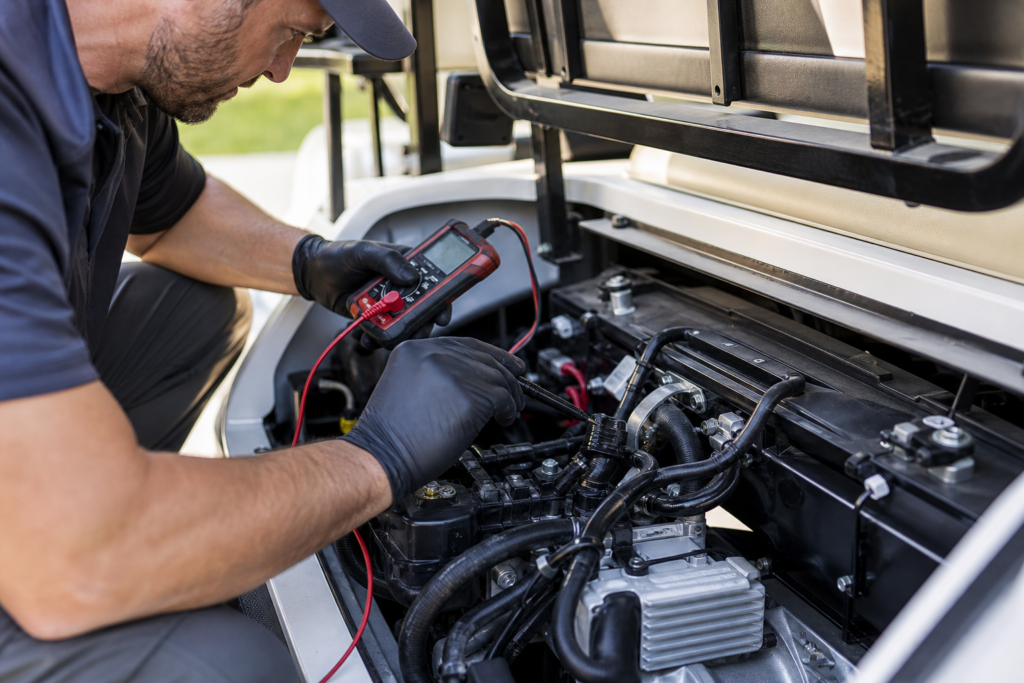
Having the right tools is paramount for accurate Golf Cart Engine Diagnostics. While some basic checks can be done with minimal equipment, a dedicated toolkit will significantly enhance your ability to troubleshoot and repair. Essential tools for golf cart engine repair include a multimeter for electrical tests, a spark plug tester, a fuel pressure gauge, a compression tester, and a carburetor adjustment tool. These instruments allow you to systematically evaluate key engine systems.
For more advanced issues, an OBD-II scanner (if applicable to the model, though less common on older golf carts) or specialized diagnostic software may be needed. Investing in quality tools is an investment in your golf cart’s longevity and performance. They empower you to perform thorough Golf Cart Engine Diagnostics, preventing guesswork and ensuring precise repairs. Always refer to your golf cart’s service manual for specific tool requirements and procedures.
Building Your Golf Cart Engine Diagnostics Toolkit
A multimeter is indispensable for checking battery voltage, continuity in wiring, and resistance in components like ignition coils. A spark plug tester quickly confirms if your ignition system is delivering a strong spark. A fuel pressure gauge helps identify issues with the fuel pump or clogged fuel lines, which are critical for proper Golf Cart Engine Diagnostics. A compression tester reveals the health of your engine’s cylinders, indicating potential valve or piston ring wear.
For carburetor issues, specialized adjustment tools are necessary to fine-tune the air-fuel mixture. While these tools may seem like an initial expense, they pay for themselves by enabling accurate Golf Cart Engine Diagnostics and reducing reliance on professional services for every minor issue. Always prioritize safety when using any diagnostic tool, following manufacturer guidelines and wearing appropriate protective gear.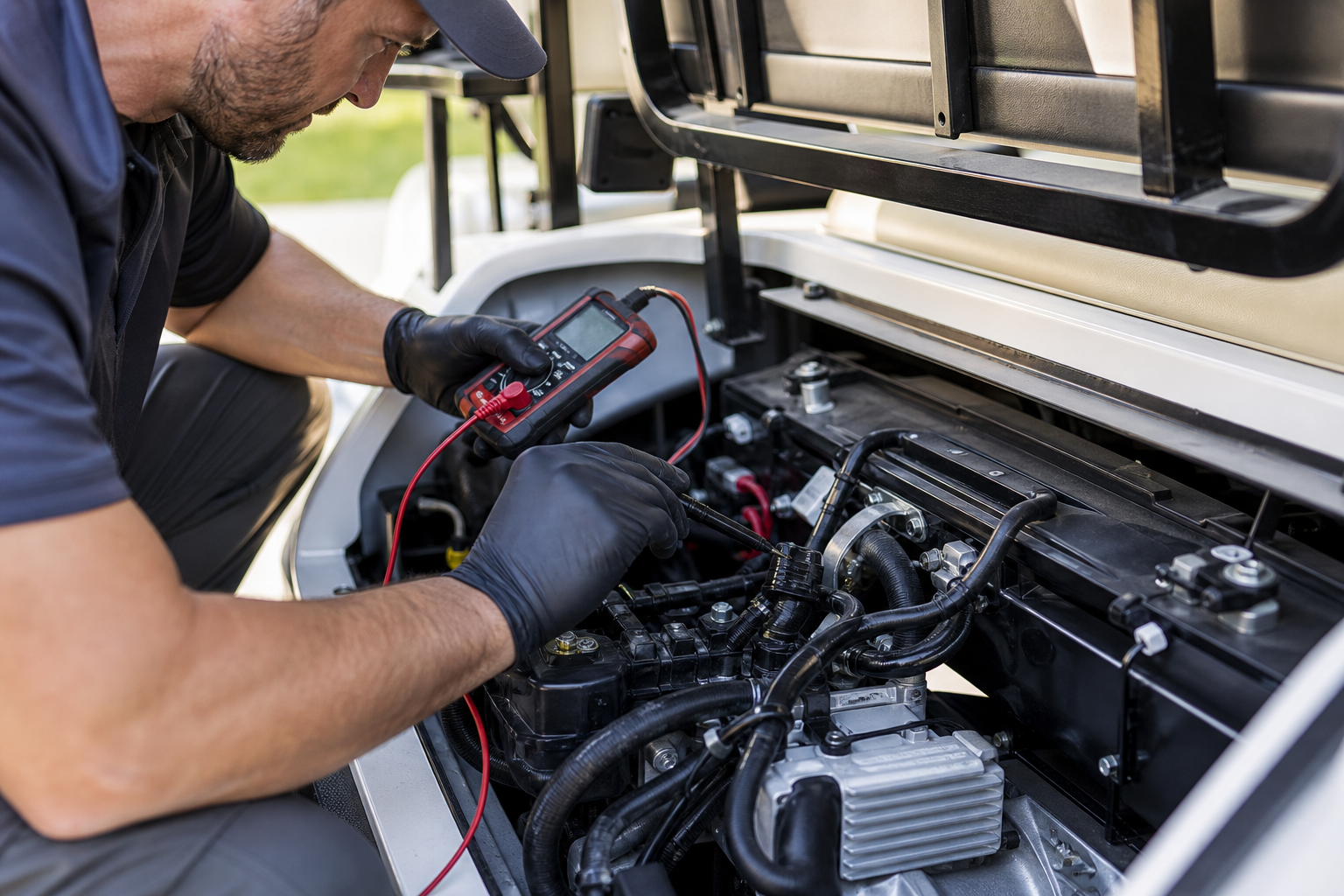
Secret 3: Diagnosing Power Loss and Sputtering with Golf Cart Engine Diagnostics
Engine power loss or sputtering in a golf cart typically indicates fuel or ignition system problems. Common culprits include a clogged fuel filter, dirty carburetor, weak fuel pump, faulty spark plug, or an issue with the ignition coil. Air filter blockage can also restrict airflow, leading to reduced performance. Effective Golf Cart Engine Diagnostics requires systematically checking each of these components to isolate the problem. Start with the simplest checks, like inspecting the air filter and fuel filter, before moving to more complex systems.
What does it mean if my golf cart engine is backfiring? Backfiring in a golf cart engine usually points to an issue with the air-fuel mixture or ignition timing. It can be caused by a lean fuel mixture (too much air, not enough fuel), incorrect valve timing, a worn exhaust system, or ignition problems like a faulty spark plug or timing advance issue. Addressing backfiring promptly through thorough Golf Cart Engine Diagnostics is important to prevent potential engine damage and ensure safe operation.
Pinpointing Power Issues Through Golf Cart Engine Diagnostics
When facing power loss, begin by ensuring your fuel tank contains fresh, clean fuel. Inspect the fuel filter for clogs and replace it if necessary. Check the fuel pump for proper operation; a weak pump won’t deliver enough fuel to the carburetor. Next, examine the spark plug for fouling or wear and test for a strong spark. A weak spark can lead to incomplete combustion and power loss. These steps are vital for initial Golf Cart Engine Diagnostics.
For sputtering, a dirty or improperly adjusted carburetor is a prime suspect. Carburetor issues can cause an inconsistent air-fuel mixture, leading to erratic engine performance. Also, check for vacuum leaks around the intake manifold, which can introduce unmetered air and lean out the mixture. Proper Golf Cart Engine Diagnostics involves ruling out each potential cause systematically to arrive at an accurate solution. Consulting your golf cart’s service manual can provide specific troubleshooting charts.
Secret 4: Advanced Ignition and Fuel System Golf Cart Engine Diagnostics
Delving deeper into the ignition and fuel systems is often necessary for persistent issues. How can I check the spark plug and ignition system on my golf cart? To check the spark plug, remove it and inspect its condition for fouling, wear, or incorrect gap. Test for spark by grounding the plug against the engine block while cranking (ensure safety precautions are followed). For the ignition system, inspect the coil, ignition module, and all associated wiring for corrosion, damage, or loose connections. A dedicated spark tester can confirm proper spark delivery for comprehensive Golf Cart Engine Diagnostics.
How do I diagnose carburetor issues on a gas golf cart engine? Diagnose carburetor issues by inspecting for fuel leaks, adjusting the idle mixture screw, and checking for clogged jets or passages. Symptoms like rough idling, stalling, poor acceleration, or excessive smoke often suggest a dirty or improperly adjusted carburetor. Cleaning or rebuilding the carburetor may be necessary. This requires careful disassembly and reassembly, making it a more advanced aspect of Golf Cart Engine Diagnostics that might warrant professional assistance.
Spark Plug and Ignition System Golf Cart Engine Diagnostics
Beyond a simple spark test, a multimeter can be used to test the resistance of the ignition coil and the functionality of the ignition module. Consult your golf cart’s service manual for the correct resistance values. A faulty ignition coil will produce a weak or intermittent spark, directly impacting engine performance and potentially causing misfires or backfiring. Ensuring all wiring connections are secure and free from corrosion is also a critical part of thorough Golf Cart Engine Diagnostics for the ignition system.
If your golf cart has an electronic ignition, checking the pulse generator or pickup coil might be necessary. These components send signals to the ignition module, dictating spark timing. Any malfunction here will severely disrupt the engine’s operation. Proper voltage and signal checks with a multimeter are essential for accurate Golf Cart Engine Diagnostics in these areas. Always disconnect the battery before working on electrical components to prevent accidental shocks or damage.
Carburetor Golf Cart Engine Diagnostics and Solutions
Diagnosing carburetor issues often involves visual inspection for external leaks, which can indicate a faulty gasket or float bowl. Adjusting the idle mixture screw can help fine-tune the air-fuel ratio for smoother idling. However, if the carburetor is dirty, it will require cleaning. This involves removing the carburetor, disassembling it, and cleaning all jets and passages with carburetor cleaner and compressed air. A clogged main jet, for instance, will lead to power loss at higher RPMs, a key indicator during Golf Cart Engine Diagnostics.
If cleaning doesn’t resolve the issue, a carburetor rebuild kit might be necessary, replacing worn gaskets, O-rings, and the float needle. Proper reassembly and adjustment are crucial for optimal performance. For those uncomfortable with carburetor disassembly, professional Golf Cart Engine Diagnostics and repair can ensure the job is done correctly, preventing further complications. A well-functioning carburetor is vital for efficient fuel delivery and engine responsiveness.
Expert Golf Cart Engine Diagnostics by Phoenix Golf Car
Phoenix Golf Car offers unparalleled expertise in Golf Cart Engine Diagnostics, ensuring your vehicle receives the precise care it needs for a flawless performance on the course or around the community.
Secret 5: Professional Golf Cart Engine Diagnostics and Maintenance
While many basic issues can be tackled at home, there comes a point when professional Golf Cart Engine Diagnostics becomes indispensable. Where can I find a reliable golf cart engine repair service near me? Look for local dealerships, specialized golf cart repair shops, or certified mechanics with experience in small engines. A reputable service provider will have the specialized tools, training, and experience to diagnose complex problems accurately and efficiently. For example, a professional might use advanced tools to check engine timing or perform detailed fuel system analysis, as detailed by sources like SAE International on engine diagnostics.
What is the average cost for professional golf cart engine diagnostic services? The cost can vary widely depending on your location, the complexity of the issue, and the specific golf cart model. Basic diagnostic fees might range from $75 to $150, which typically covers the time spent identifying the problem. Any subsequent repairs would be an additional cost. It’s always wise to get a detailed quote before authorizing any work. This transparency is a hallmark of excellent Golf Cart Engine Diagnostics services.
How often should a golf cart engine be tuned up or inspected? Regular maintenance is key to preventing major issues. Most manufacturers recommend a tune-up or inspection every 100-200 hours of operation or at least once a year, whichever comes first. This includes checking spark plugs, air and fuel filters, oil levels, and general engine health. Proactive Golf Cart Engine Diagnostics during these inspections can catch potential problems before they escalate. For genuine replacement parts for your specific golf cart engine model, always consult authorized dealers or reputable online suppliers to ensure compatibility and quality.
The Value of Expert Golf Cart Engine Diagnostics
For complex issues, such as common fault codes for specific golf cart engine brands or advanced engine performance tuning, a professional service is invaluable. These tasks require specialized knowledge and equipment that most home mechanics don’t possess. Expert technicians can interpret fault codes, perform detailed sensor readings, and make precise adjustments that optimize engine performance. This level of expertise ensures that your golf cart runs at its absolute best, providing reliable and powerful operation.
Who offers advanced golf cart engine performance tuning and diagnostics? Many specialized golf cart shops offer these services. They can fine-tune carburetors, adjust valve clearances, and even install performance upgrades if desired. For instance, Phoenix Golf Car provides comprehensive services, including advanced Golf Cart Engine Diagnostics and performance tuning, ensuring your cart receives top-tier care. Choosing a service with a strong reputation for excellence in Golf Cart Engine Diagnostics guarantees peace of mind and superior results.
Choosing the Right Partner for Your Golf Cart Engine Diagnostics Needs
When selecting a service provider for your golf cart, consider their experience with your specific make and model, their diagnostic capabilities, and their reputation for customer service. Ask about their diagnostic process and what kind of warranty they offer on parts and labor. A reliable partner will provide clear explanations of the issues found during Golf Cart Engine Diagnostics and transparent pricing for repairs. This ensures you make informed decisions about your golf cart’s maintenance and repair needs.
Don’t hesitate to ask for references or check online reviews. A trusted service center will prioritize accurate Golf Cart Engine Diagnostics to address the root cause of problems, rather than simply treating symptoms. This approach saves you time and money in the long run and keeps your golf cart running efficiently for years to come. Investing in quality professional service is an investment in your golf cart’s future performance and reliability.
Your Ultimate Guide to Golf Cart Engine Diagnostics
Mastering Golf Cart Engine Diagnostics is an essential skill for any golf cart owner seeking reliable and smooth rides. We’ve explored 5 ultimate secrets, from understanding common problems and basic troubleshooting for starting issues to utilizing essential diagnostic tools and delving into advanced ignition and fuel system checks. Recognizing the signs of power loss, sputtering, and backfiring, and knowing how to address them, empowers you to maintain your golf cart’s performance.
While DIY efforts can resolve many minor issues, understanding when to seek professional Golf Cart Engine Diagnostics is equally crucial. Expert technicians possess the specialized tools and knowledge to tackle complex problems, ensuring your golf cart receives the precise care it needs. By applying these secrets, you’re not just fixing problems; you’re investing in the longevity, efficiency, and enjoyment of your golf cart for years to come. Embrace these diagnostic principles for an unparalleled driving experience.
Frequently Asked Questions About Golf Cart Engine Diagnostics
What are the most common engine problems in gas golf carts?
Gas golf carts often experience issues such as starting difficulties, loss of power, sputtering, excessive smoke, and unusual noises. These can stem from fuel system clogs, ignition system failures, dirty air filters, or worn engine components. Regular maintenance can prevent many of these common problems.
How do I troubleshoot a golf cart engine that won’t start?
Begin by checking the fuel level, battery charge, and spark plug condition. Ensure the choke is properly engaged and the starter engages when the pedal is pressed. Listen for clicking sounds from the solenoid or starter motor. A professional Golf Cart Engine Diagnostics can pinpoint electrical or fuel delivery faults quickly.
What diagnostic tools are essential for golf cart engine repair?
Essential tools for golf cart engine diagnostics include a multimeter for electrical tests, a spark plug tester, a fuel pressure gauge, a compression tester, and a carburetor adjustment tool. For more advanced issues, an OBD-II scanner (if applicable to the model) or specialized diagnostic software may be needed.
Why is my golf cart engine losing power or sputtering?
Engine power loss or sputtering in a golf cart typically indicates fuel or ignition system problems. Common culprits include a clogged fuel filter, dirty carburetor, weak fuel pump, faulty spark plug, or an issue with the ignition coil. Air filter blockage can also restrict airflow, leading to reduced performance.
How can I check the spark plug and ignition system on my golf cart?
To check the spark plug, remove it and inspect its condition for fouling or wear. Test for spark by grounding the plug against the engine block while cranking. For the ignition system, inspect the coil, ignition module, and wiring for corrosion or damage. A spark tester can confirm proper spark delivery for Golf Cart Engine Diagnostics.
What does it mean if my golf cart engine is backfiring?
Backfiring in a golf cart engine usually points to an issue with the air-fuel mixture or ignition timing. It can be caused by a lean fuel mixture (too much air, not enough fuel), incorrect valve timing, a worn exhaust system, or ignition problems like a faulty spark plug or timing advance issue.
How do I diagnose carburetor issues on a gas golf cart engine?
Diagnose carburetor issues by inspecting for fuel leaks, adjusting the idle mixture screw, and checking for clogged jets or passages. Symptoms like rough idling, stalling, poor acceleration, or excessive smoke often suggest a dirty or improperly adjusted carburetor. Cleaning or rebuilding the carburetor may be necessary.
What are the signs of a failing starter or solenoid in a golf cart engine?
Signs of a failing starter include grinding noises, slow cranking, or no engine turnover when the pedal is pressed. A failing solenoid often manifests as a single click when trying to start, but no starter engagement. Both can lead to a golf cart engine that won’t start, requiring proper Golf Cart Engine Diagnostics.
Can I perform basic golf cart engine diagnostics at home?
Yes, many basic golf cart engine diagnostics can be performed at home. You can check the battery, fuel level, air filter, spark plug, and basic wiring connections. However, for complex issues or if you’re unsure, professional Golf Cart Engine Diagnostics is recommended to avoid further damage and ensure safe operation.