Lithium Conversion Process: 5 Transformative Steps to Upgrade Your Golf Cart
The Lithium Conversion Process is revolutionizing how golf cart owners experience their vehicles. Gone are the days of heavy, high-maintenance lead-acid batteries that limit range and performance. Today, an upgrade to lithium-ion power offers a brilliant path to enhanced efficiency, extended lifespan, and a significantly improved driving experience. This guide will walk you through the essential steps and benefits of making this powerful transition for your golf cart.
In this comprehensive guide, we will explore the science behind lithium batteries, detail the practical steps involved in upgrading your golf cart, and explain why this investment yields remarkable long-term value. Discover how to unlock superior performance and reliability, ensuring your golf cart is always ready for the course or your community. Consider this your definitive resource for understanding and executing a successful lithium upgrade.
Key Takeaways
- Understand how the Lithium Conversion Process provides immediate performance gains and long-term benefits for your golf cart.
- Learn the crucial steps involved in upgrading from lead-acid to lithium batteries for enhanced efficiency and range.
- Discover why selecting the right lithium battery system and professional installation is paramount for optimal results.
- Evaluate the impressive longevity and reduced maintenance of lithium batteries, making them a smart investment for golf cart owners.
Understanding the Lithium Conversion Process for Golf Carts
Your golf cart’s performance is directly tied to its power source. For years, lead-acid batteries were the standard, but their limitations in weight, lifespan, and consistent power delivery are well-known. The Lithium Conversion Process involves replacing these traditional batteries with advanced lithium-ion alternatives, fundamentally transforming your golf cart’s capabilities. This upgrade is not just about a new battery; it’s about embracing a superior energy solution that enhances every aspect of your vehicle.
The primary goal of the Lithium Conversion Process is to equip your golf cart with a power system that offers greater efficiency, extended range, and significantly reduced maintenance. This transition results in a lighter vehicle, which improves acceleration and handling, and a battery that delivers consistent power throughout its charge cycle, unlike lead-acid batteries that fade as they discharge. For any golf cart owner seeking a reliable and powerful upgrade, understanding this process is the first step.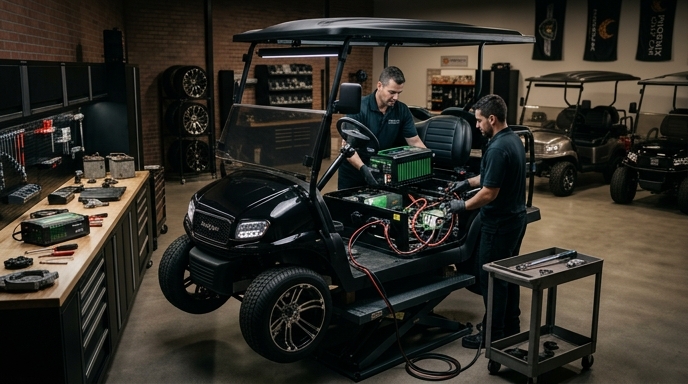
The Importance of the Lithium Conversion Process for Performance
The conversion of lithium into battery-grade materials is crucial for electric vehicle batteries, including those in golf carts. This refinement ensures the high-energy density, lightweight nature, and durability required for optimal performance. When applied to golf carts, this means a battery that charges faster, lasts longer, and provides more consistent power. This translates directly to a golf cart that can tackle more rounds, climb hills with ease, and maintain speed without degradation.
While the industrial extraction of lithium from hard rock ores like spodumene involves complex processes of crushing, flotation, roasting, and acid leaching to create battery-grade compounds, for golf cart owners, the focus shifts to the finished product. These advanced materials are what make the difference in your golf cart’s new power system. The global supply chain for these materials, with main conversion facilities in countries like Chile, Argentina, Australia, and China, ensures the availability of high-quality lithium batteries for golf cart upgrades.
Environmental Considerations of the Lithium Conversion Process
Considering the environmental impact is a key aspect of any upgrade. The Lithium Conversion Process offers significant environmental advantages over traditional lead-acid batteries. Lithium-ion batteries are lighter, reducing the overall energy consumption of the golf cart. Furthermore, they have a much longer lifespan, meaning fewer batteries need to be manufactured and disposed of over time. While the extraction and conversion of raw lithium have environmental considerations such as water usage and energy consumption, ongoing advancements like Direct Lithium Extraction (DLE) aim to minimize these impacts, offering a more sustainable future for battery technology. These efforts contribute to a greener choice for your golf cart.
5 Brilliant Steps in the Lithium Conversion Process
Upgrading your golf cart with a lithium battery is a straightforward process when handled correctly. These 5 steps outline a brilliant approach to ensure a seamless and successful Lithium Conversion Process, providing you with a golf cart that performs better and lasts longer.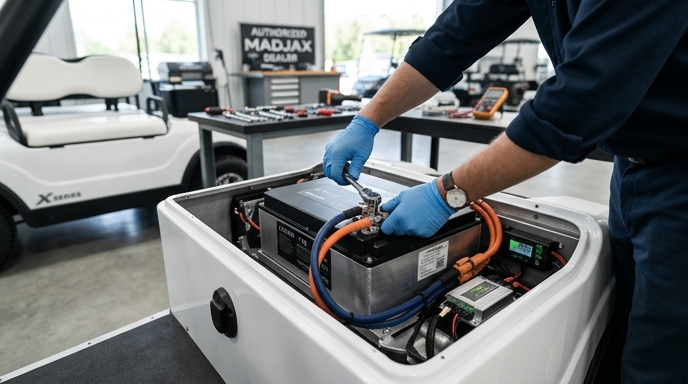
Step 1: Assessing Your Golf Cart for Lithium Conversion Process
The first step is a thorough assessment of your current golf cart. This involves checking the existing battery compartment dimensions, the voltage of your cart (typically 36V or 48V), and any specific requirements for your model. It’s crucial to ensure compatibility with lithium battery kits. Leading golf cart lithium battery manufacturers offer a range of solutions designed to fit various makes and models, making the initial assessment a key part of a successful Lithium Conversion Process.
Step 2: Selecting the Right Lithium Battery System
Choosing the correct lithium battery system is paramount. Golf cart owners will encounter options like Lithium Iron Phosphate (LiFePO4 or LFP) batteries, which are known for their safety, stability, and long cycle life. These are often preferred for golf cart applications due to their robust performance. Consider factors such as amp-hour (Ah) capacity for range, peak power output, and the integrated Battery Management System (BMS), which protects the battery from overcharging, over-discharging, and temperature extremes. Reputable providers will guide you through these choices, ensuring you get the best fit for your needs.
Step 3: Installation and the Lithium Conversion Process
Once you have your new lithium battery kit, the installation begins. This typically involves safely removing the old lead-acid batteries, cleaning the battery compartment, and then carefully placing the new, lighter lithium battery pack. Wiring connections must be precise, and any new components like a dedicated lithium charger or voltage reducer for accessories need to be integrated correctly. While many kits are designed for a relatively easy swap, professional installation is highly recommended to ensure safety, proper function, and to maximize the lifespan of your new battery system. This ensures the entire Lithium Conversion Process is executed flawlessly.
Step 4: Charger Compatibility and System Testing
A critical part of the Lithium Conversion Process is ensuring you have the correct charger. Lithium batteries require a specific charging profile different from lead-acid batteries. Using an incompatible charger can damage the battery or reduce its lifespan. After installation, a full system test is performed to verify all connections are secure, the battery is charging correctly, and the golf cart operates as expected. This step confirms that your upgrade is fully functional and ready for use.
Step 5: Enjoying the Benefits and Ongoing Care
With the conversion complete, you can immediately enjoy the transformative benefits: extended range, consistent power, faster charging, and virtually maintenance-free operation. Unlike lead-acid batteries, lithium batteries do not require watering or terminal cleaning. Ongoing care primarily involves simply plugging in your golf cart after use. This final step in the Lithium Conversion Process is all about experiencing the superior performance and convenience of your upgraded golf cart.
Ready to Experience a Better Golf Cart?
Transform your golf cart with a professional Lithium Conversion Process by the experts at Phoenix Golf Car. Enjoy extended range, consistent power, and a maintenance-free experience. Don’t settle for less – upgrade today!
Benefits and Advancements in the Lithium Conversion Process
The benefits of undertaking a Lithium Conversion Process for your golf cart extend far beyond just a new battery. This upgrade fundamentally enhances the vehicle’s usability, longevity, and overall value. Understanding these advantages, alongside the latest technological advancements, can help you appreciate the true potential of this investment.
One of the most significant advantages is the substantial weight reduction. Lithium batteries are considerably lighter than their lead-acid counterparts, which immediately improves the golf cart’s acceleration, top speed, and handling. This lighter load also reduces wear and tear on components like tires and suspension, potentially extending the life of other parts of your golf cart. The consistent power output means no more slowing down as your battery drains, providing a reliable and enjoyable ride from start to finish.
Enhanced Range and Longevity with the Lithium Conversion Process
A key driver for the Lithium Conversion Process is the dramatic increase in range. Lithium batteries typically offer 2-3 times the range of lead-acid batteries on a single charge, making them ideal for long days on the course or extensive community use. Furthermore, their lifespan is exceptional, often lasting 5-10 times longer than lead-acid batteries, with many offering 10 years or more of service. This longevity translates to significant cost savings over time, as you won’t need to replace batteries as frequently.
The capital costs for setting up industrial lithium conversion plants can be substantial, ranging from hundreds of millions to over a billion dollars. However, for the consumer, the cost of a golf cart lithium conversion kit and installation is far more accessible. While the initial outlay might be higher than replacing lead-acid batteries, the long-term savings from reduced maintenance, extended lifespan, and improved performance often make the Lithium Conversion Process a financially sound decision. You can find detailed technical specifications for lithium conversion equipment and kits from reputable golf cart battery manufacturers and suppliers, ensuring you make an informed choice.
Latest Advancements in Lithium Conversion Technology for Golf Carts
The field of lithium battery technology is constantly evolving. Latest advancements include improved energy density, allowing for even smaller and lighter batteries with greater capacity. Faster charging speeds are also becoming standard, with some lithium systems capable of fully charging in just a few hours. Enhanced Battery Management Systems (BMS) are making batteries safer and more efficient, with features like advanced cell balancing and temperature monitoring. These innovations directly benefit golf cart owners, offering more powerful, reliable, and user-friendly battery solutions. The complete Lithium Conversion Process from raw material to finished product can take months at an industrial scale, but for the end-user, a golf cart conversion can be completed in a matter of hours by a professional.
Choosing the Right Lithium Conversion Process Provider
Embarking on a Lithium Conversion Process for your golf cart is a significant upgrade, and selecting the right provider is crucial for a successful outcome. An expert provider ensures not only the correct installation but also offers valuable guidance on choosing the best system for your specific needs. Look for companies with a strong reputation, specialized knowledge in golf cart conversions, and excellent customer support.
Leading technology providers for golf cart lithium battery kits include companies like RoyPow, Allied Battery, and EcoBattery, among others. These manufacturers focus on producing high-quality, safe, and efficient battery systems specifically designed for golf cart applications. They often provide comprehensive kits that include the battery, charger, and any necessary accessories, simplifying the overall conversion. For example, Phoenix Golf Car is a trusted local expert that can guide you through the entire selection and installation process, ensuring a seamless upgrade. You can learn more about their services and other golf cart solutions by visiting their official website.
Understanding Lithium Carbonate vs. Lithium Hydroxide in the Conversion Process
When considering lithium batteries, you might encounter terms like lithium carbonate and lithium hydroxide. These refer to different forms of refined lithium used in battery manufacturing, impacting the final battery chemistry. Lithium carbonate is often used in Lithium Iron Phosphate (LFP) batteries, which are highly stable and durable, making them excellent for golf carts due to their safety and long cycle life. Lithium hydroxide, on the other hand, is typically used in higher-energy-density batteries like NMC (Nickel Manganese Cobalt) chemistries, often found in electric vehicles requiring maximum range and power.
For golf cart applications, LFP batteries derived from lithium carbonate conversion processes are generally preferred due to their robust performance, safety, and cost-effectiveness. The choice of chemistry directly affects the battery’s characteristics, such as energy density, power output, and thermal stability. An informed provider will explain these differences and recommend the optimal battery type for your golf cart’s Lithium Conversion Process, ensuring you get the best balance of performance and longevity.
Your Investment in the Lithium Conversion Process: Cost and Value
The decision to undertake a Lithium Conversion Process for your golf cart is an investment in its future performance and your enjoyment. While the initial cost may be higher than simply replacing lead-acid batteries, the long-term value proposition is compelling. This includes significant savings on maintenance, reduced electricity bills due to higher charging efficiency, and the extended lifespan of the battery itself.
The cost of a golf cart lithium conversion kit typically ranges depending on the voltage (36V or 48V), amp-hour capacity, and brand. Installation costs will vary based on the complexity of your golf cart model and the service provider. However, when you factor in the elimination of costly lead-acid battery replacements every few years, the minimal maintenance, and the enhanced performance, the total cost of ownership over the lifespan of a lithium battery is often lower. This makes the Lithium Conversion Process a financially savvy choice for many golf cart owners.
Challenges in Optimizing the Efficiency of Lithium Conversion for Golf Carts
While the benefits are clear, challenges in optimizing the efficiency of the Lithium Conversion Process for golf carts primarily revolve around seamless integration and safety. Ensuring the battery’s BMS communicates effectively with the golf cart’s existing electrical system, and that all wiring is correctly sized and protected, is critical. Another challenge is selecting a battery that perfectly matches the golf cart’s power demands without being oversized or undersized, which can impact efficiency and cost. Reputable installers address these challenges through expert knowledge and high-quality components, guaranteeing a safe and efficient upgrade.
The raw materials required for the Lithium Conversion Process in a golf cart, beyond the lithium source itself, include a robust Battery Management System (BMS), appropriate wiring and connectors, a compatible charger, and potentially a voltage reducer for 12V accessories. Each component plays a vital role in the safety and efficiency of the overall system. Ensuring these components are of high quality and correctly installed is paramount for a successful and long-lasting conversion. This comprehensive approach underscores the value of professional expertise in the Lithium Conversion Process.
Your Invitation to a Transformed Golf Cart Experience
The Lithium Conversion Process offers a remarkable opportunity to revitalize your golf cart, transforming it into a more powerful, efficient, and enjoyable vehicle. From extended range and consistent power to reduced maintenance and a longer lifespan, the benefits are clear and compelling. This upgrade is not just about replacing batteries; it’s about investing in a superior driving experience that saves you time and money in the long run.
If you are ready to embrace the future of golf cart power, your journey begins with an expert consultation. The professionals at Phoenix Golf Car are dedicated to providing bespoke conversion plans that yield elegant, high-performing results, ensuring your golf cart is a reflection of you at your very best. We invite you to contact Phoenix Golf Car today to schedule your Lithium Conversion Process consultation. Your journey toward renewed confidence and unparalleled golf cart performance awaits.
Frequently Asked Questions About the Lithium Conversion Process
Learn more from authoritative resources: Consumer Reports and HGTV.